Introduction
The Chestnut Long-tongued Bat (Lionycteris spurrelli) is an intriguing mammal species that plays a vital role in the ecosystems of Central and South America. Known for its specialized feeding habits and unique physical adaptations, this bat is a prominent pollinator, contributing significantly to the health and sustainability of tropical forests. This article explores the various facets of the Chestnut Long-tongued Bat, from its physical characteristics and habitat to its behavior, diet, and conservation status, providing a comprehensive overview of this remarkable species.
Physical Description
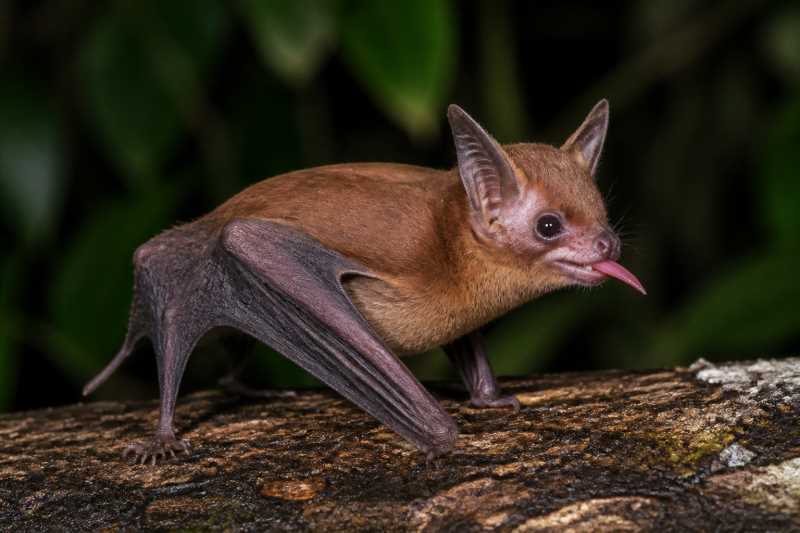
The Chestnut Long-tongued Bat is a small-sized bat characterized by its distinctive chestnut-colored fur. The fur is soft and dense, providing insulation and camouflage in its natural habitat. One of the most notable features of this species is its elongated tongue, which can extend far beyond its mouth. This adaptation is crucial for accessing nectar deep within flowers, making it an effective pollinator.
The bat’s body length ranges from 5 to 7 centimeters, with a wingspan of approximately 25 to 30 centimeters. It has a slender build, which aids in maneuverability among dense foliage. The wings are long and narrow, designed for rapid and agile flight. The face of the Chestnut Long-tongued Bat is adorned with a short snout and large eyes, enhancing its ability to navigate and forage in low-light conditions.
Range and Habitat
The Chestnut Long-tongued Bat is predominantly found in the tropical regions of Central and South America. Its range extends from southern Mexico through Central America, including countries such as Costa Rica and Panama, to northern parts of South America like Colombia, Venezuela, and Ecuador.
This bat species thrives in humid tropical forests and is often associated with areas abundant in flowering plants. It is commonly found in lowland forests and can also inhabit montane forests up to elevations of 1,500 meters. The Chestnut Long-tongued Bat prefers environments with a high density of flowering plants, as these provide ample feeding opportunities.
Behavior and Diet
The Chestnut Long-tongued Bat is predominantly nocturnal, engaging in foraging activities during the night. It is a nectarivorous species, relying heavily on nectar as its primary food source. The bat’s long tongue is perfectly adapted for extracting nectar from tubular flowers, making it an essential pollinator for many plant species.
In addition to nectar, the Chestnut Long-tongued Bat may also consume pollen and occasionally small insects. Its diet plays a crucial role in the pollination of various plant species, contributing to the biodiversity and health of tropical ecosystems.
Socially, these bats are known to form small colonies, often roosting in tree hollows, caves, or man-made structures during the day. They exhibit a high degree of social interaction and communication, using a combination of vocalizations and physical gestures.
Identification Tips (Field Recognition Cues)
Identifying the Chestnut Long-tongued Bat in the wild requires keen observation and attention to detail. Here are some tips to help with field recognition:
- Coloration: Look for the distinctive chestnut-brown fur, which stands out against the green foliage.
- Size and Shape: Note the small size and slender build, with a wingspan ranging from 25 to 30 centimeters.
- Tongue Length: If observed feeding, the bat’s long, protruding tongue is a key identifying feature.
- Flight Pattern: Watch for rapid and agile flight movements, often in proximity to flowering plants.
- Habitat: Focus on areas with a high density of flowering plants, particularly in tropical forest regions.
Conservation Status (with Threats and Protections)
The Chestnut Long-tongued Bat is currently listed as Least Concern on the IUCN Red List. However, like many species dependent on specific habitats, it faces several threats that could impact its populations in the future.
Threats
- Habitat Loss: Deforestation and land conversion for agriculture are significant threats, leading to the loss of vital feeding and roosting sites.
- Climate Change: Alterations in climate patterns can affect the availability of flowering plants, thus impacting food sources.
- Pesticide Use: The use of pesticides can reduce insect populations and contaminate nectar sources, indirectly affecting the bats.
Protections
Efforts to conserve the Chestnut Long-tongued Bat include:
- Protected Areas: Establishing and maintaining protected areas that preserve critical habitats.
- Reforestation Initiatives: Programs aimed at reforesting and restoring degraded areas to enhance biodiversity.
- Research and Monitoring: Conducting studies to monitor population trends and understand ecological needs.
Frequently Asked Questions
1. What role does the Chestnut Long-tongued Bat play in its ecosystem?
The Chestnut Long-tongued Bat is a vital pollinator for many tropical plants. Its feeding habits facilitate the transfer of pollen between flowers, promoting genetic diversity and the reproduction of plant species.
2. How does the Chestnut Long-tongued Bat’s tongue help it feed?
The bat’s long tongue is specially adapted to reach deep into tubular flowers, allowing it to access nectar that other animals cannot. This adaptation makes it an effective pollinator.
3. Where can I observe the Chestnut Long-tongued Bat in the wild?
To observe these bats, visit tropical forests in Central and South America, particularly areas with abundant flowering plants. Early evening and nighttime are the best times for observation.
4. What are the main threats to the Chestnut Long-tongued Bat?
The primary threats include habitat loss due to deforestation, climate change affecting food availability, and contamination from pesticide use.
5. Are there conservation efforts in place for the Chestnut Long-tongued Bat?
Yes, several conservation efforts aim to protect this species, including the establishment of protected areas, reforestation initiatives, and ongoing research and monitoring to track population health and habitat needs.
Related posts