Crabeater Seal (Lobodon carcinophaga): An In-Depth Exploration
Introduction
The Crabeater Seal, scientifically known as Lobodon carcinophaga, is an enigmatic marine mammal inhabiting the icy realms of the Antarctic. Despite its misleading name, the Crabeater Seal primarily feeds on krill, a small crustacean that forms the basis of its diet, rather than crabs. These seals are the most numerous of all seal species, with an estimated population of 7 to 75 million individuals. This article delves into the fascinating world of the Crabeater Seal, exploring its physical characteristics, habitat, behavior, and conservation status.
Physical Description
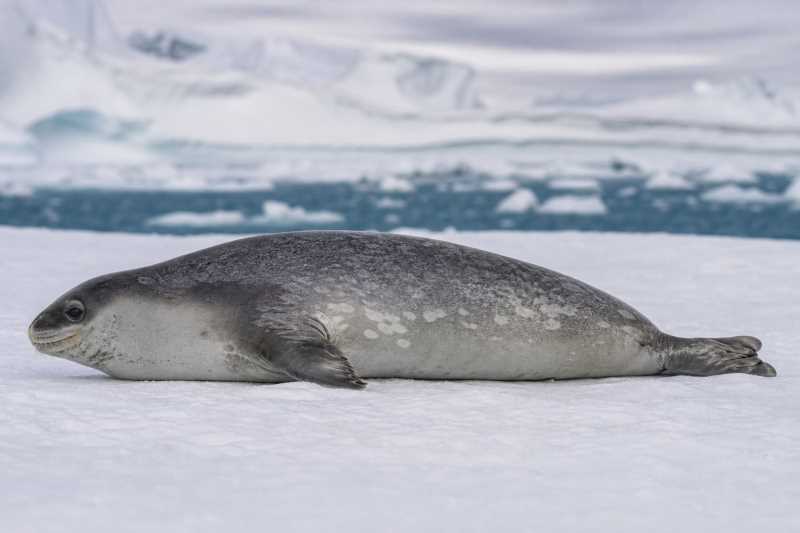
The Crabeater Seal is a medium-sized pinniped, characterized by its slender body and elongated, dog-like snout. Adult seals typically measure between 2 and 2.5 meters in length and weigh approximately 200 to 300 kilograms. They exhibit a coat that varies in color from dark brown to silvery-gray, depending on the season and an individual’s age. This coloration provides excellent camouflage against the icy Antarctic environment.
One of the most distinctive features of the Crabeater Seal is its uniquely adapted teeth, which are specially designed to filter krill from the water. The teeth possess intricate cusps that interlock, allowing the seal to sieve krill as it expels water from its mouth. This adaptation is critical for its survival, given the abundance of krill in its habitat.
Range and Habitat
Crabeater Seals are endemic to the Antarctic region, where they occupy a circumpolar distribution around the continent. They are frequently found on pack ice, which provides a critical platform for resting, molting, and breeding. During the austral summer, these seals may venture further north in search of food, often reaching the sub-Antarctic islands.
The seals’ preference for pack ice stems from its role as a safe haven from predators such as the Leopard Seal and Orca. The continually shifting ice floes also provide access to open water, where the seals forage for their primary food source, krill.
Behavior and Diet
Crabeater Seals lead a primarily solitary existence, although they are known to congregate in large groups during the breeding season or in areas of abundant food. These seals are highly agile swimmers, capable of reaching speeds up to 25 km/h and diving to depths of around 600 meters, although most foraging occurs at shallower depths.
The diet of the Crabeater Seal is overwhelmingly dominated by Antarctic krill. These seals employ a unique feeding strategy, utilizing their specialized teeth to filter large quantities of krill from the surrounding waters. Despite their reliance on this single food source, Crabeater Seals are highly successful foragers, capable of consuming several kilograms of krill daily.
Identification Tips
Field identification of the Crabeater Seal can be challenging due to its resemblance to other Antarctic seals. However, several key characteristics can aid in recognition:
- Body Shape and Size: Compared to other seals, Crabeaters have a more streamlined and elongated body, with a noticeable tapering at both ends.
- Coloration: Their fur color can vary significantly but typically appears lighter than that of the Weddell or Leopard Seals.
- Teeth Structure: While not visible from a distance, their uniquely cusped teeth are a definitive feature when observed up close.
- Behavior: Crabeater Seals often display a characteristic ‘head-up’ posture when resting on ice, a subtle cue that distinguishes them from other species.
Conservation Status
The Crabeater Seal is currently classified as "Least Concern" by the International Union for Conservation of Nature (IUCN). However, the species faces several threats that could impact its population in the future. Climate change poses the most significant long-term threat, as rising temperatures and diminishing sea ice could alter the availability of their krill prey and suitable habitat.
While the seals are not currently targeted by commercial sealing, changes in krill fishing practices could indirectly affect their food supply. Additionally, increased human activity in the Antarctic region poses potential risks, such as pollution and disturbance from tourism and research operations.
Conservation efforts for the Crabeater Seal focus on monitoring population trends and maintaining the ecological integrity of the Antarctic environment. International agreements, such as the Antarctic Treaty System and the Convention for the Conservation of Antarctic Marine Living Resources (CCAMLR), play crucial roles in protecting these seals and their habitat.
Frequently Asked Questions
How do Crabeater Seals adapt to their icy environment?
Crabeater Seals have several adaptations to thrive in the Antarctic climate, including a thick layer of blubber for insulation and energy storage, a specialized circulatory system to reduce heat loss, and a fur coat that changes color seasonally for camouflage.
What is the main diet of Crabeater Seals?
Contrary to their name, Crabeater Seals primarily feed on Antarctic krill. They have evolved specialized teeth to effectively filter and consume large quantities of krill from the water.
How do Crabeater Seals communicate?
Crabeater Seals communicate through vocalizations and body language. They produce a range of sounds, including grunts and whistles, which are used for social interactions and during the breeding season.
What is the average lifespan of a Crabeater Seal?
Crabeater Seals typically live for about 20 to 25 years in the wild. Their lifespan can be influenced by factors such as predation, food availability, and environmental conditions.
Are Crabeater Seals endangered?
Currently, Crabeater Seals are not considered endangered. They are classified as "Least Concern" due to their large population size and wide distribution. However, ongoing monitoring is essential to detect any future population declines.
Related posts