Introduction
The Five-toed Pygmy Jerboa, scientifically known as Cardiocranius paradoxus, is a fascinating species that captivates researchers and wildlife enthusiasts alike. Renowned for its diminutive size and remarkable adaptations, this species represents one of nature’s most intriguing evolutionary paths. Jerboas, in general, are small rodents that belong to the family Dipodidae, known for their jumping abilities and nocturnal habits. The Five-toed Pygmy Jerboa, in particular, stands out due to its unique physical characteristics and specific habitat preferences, making it a subject of significant scientific interest.
In this article, we delve into various aspects of the Five-toed Pygmy Jerboa, including its physical description, natural habitat, behavior, and diet. We also provide tips for identifying this elusive creature in the wild and discuss its current conservation status, including the threats it faces and the efforts being made to protect it. Finally, we address some frequently asked questions that provide additional insights into this remarkable mammal.
Physical Description
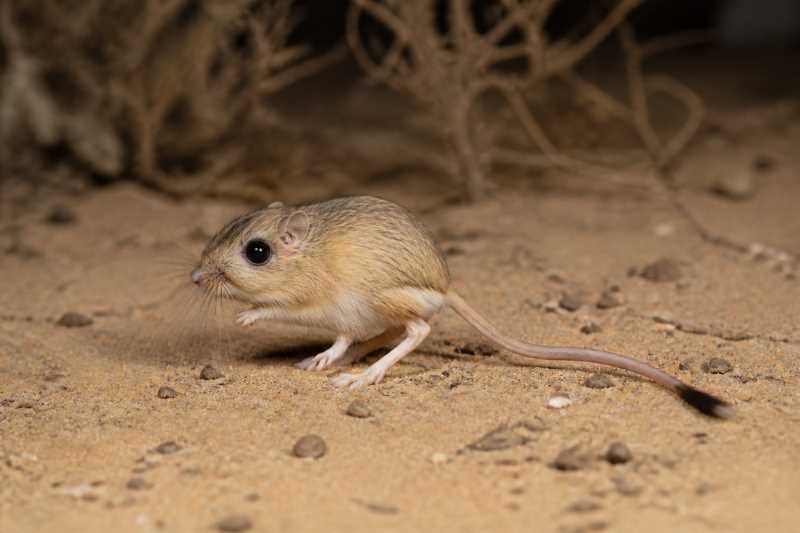
The Five-toed Pygmy Jerboa is notable for its incredibly small size, with adults typically measuring between 4.5 and 5.2 centimeters in body length. Weighing just 3 to 4 grams, it is one of the smallest rodents in the world. This pygmy jerboa species is characterized by its distinctively elongated hind legs, which are significantly longer than its forelimbs, a common trait among jerboas that aids in their ability to hop and jump efficiently.
The name "Five-toed" refers to the number of toes on its hind feet, which is a distinguishing feature of the species. Its tail is relatively long, often exceeding the length of its body, and is covered in fine hair with a tufted end. The tail serves not only as a balance aid when jumping but also as a support when the jerboa stands upright.
The fur of the Five-toed Pygmy Jerboa is soft and dense, typically displaying a sandy or yellowish-brown coloration that provides effective camouflage against the desert and steppe environments it inhabits. Its underbelly is usually lighter, often white or pale gray, which helps it blend into its surroundings and evade predators.
Range and Habitat
The Five-toed Pygmy Jerboa inhabits a range that primarily extends across the arid and semi-arid regions of Central Asia. It is predominantly found in countries such as Kazakhstan, Mongolia, and northern China. These areas are characterized by harsh climatic conditions, with extreme temperatures and limited vegetation.
The preferred habitat of the Five-toed Pygmy Jerboa includes sandy deserts, steppes, and semi-desert regions where it can exploit its exceptional jumping abilities to navigate the open terrain. It often occupies burrows that provide shelter from predators and extreme weather. These burrows are typically self-dug and consist of simple, shallow chambers that the jerboa uses for resting during the day.
Adapted to its arid environment, the Five-toed Pygmy Jerboa has evolved to survive on minimal water intake, deriving most of its moisture needs from the food it consumes, which is a critical adaptation for survival in such dry regions.
Behavior and Diet
As a nocturnal creature, the Five-toed Pygmy Jerboa is most active during the night, when it emerges from its burrow to forage for food. Its diet primarily consists of seeds, insects, and various plant materials, which it finds scattered across the desert floor. The jerboa’s keen sense of hearing and smell aids in locating food sources in the dark.
The jerboa’s highly developed hind legs are not only crucial for evading predators but also for covering large distances in search of food. It relies on a leaping gait, which is energy-efficient and allows it to quickly move between feeding sites. Socially, the Five-toed Pygmy Jerboa is generally solitary, coming together with others only for mating purposes.
During the breeding season, which occurs in the spring and summer months, females give birth to litters typically consisting of two to six young after a gestation period of around 25 to 35 days. The young are born blind and hairless but develop rapidly, achieving independence within a few weeks.
Identification Tips (Field Recognition Cues)
Identifying the Five-toed Pygmy Jerboa in the wild can be challenging due to its small size and elusive nature. However, there are several field recognition cues that can assist in spotting this tiny mammal:
- Distinctive Jumping Motion: Look for its characteristic hopping movement, facilitated by its long hind legs, especially during nocturnal hours.
- Tail Length and Tuft: Note its long tail with a tufted end, which is often visible even when the rest of the animal is obscured by grass or sand.
- Size and Coloration: Recognize its tiny size and sandy coloration, which blends with its desert surroundings.
- Tracks and Burrows: Search for small tracks and simple burrows in sandy or steppe areas, indicative of jerboa activity.
Conservation Status (with Threats and Protections)
The Five-toed Pygmy Jerboa is currently classified as "Least Concern" by the International Union for Conservation of Nature (IUCN). Despite this relatively secure status, the species faces several threats that could impact its populations in the future.
Threats:
- Habitat Degradation: Agricultural expansion and human encroachment are leading to habitat destruction and fragmentation.
- Climate Change: Alterations in weather patterns and increased desertification pose significant risks to its habitat.
- Predation: Natural predators include birds of prey and larger mammalian carnivores.
Protections:
Efforts to protect the Five-toed Pygmy Jerboa include habitat preservation initiatives and research to better understand its ecological needs. Conservationists advocate for the protection of desert and steppe environments to ensure the long-term survival of this species.
Frequently Asked Questions
1. What is unique about the Five-toed Pygmy Jerboa’s locomotion?
The Five-toed Pygmy Jerboa is known for its remarkable jumping ability, facilitated by its elongated hind legs. This unique mode of locomotion allows it to efficiently travel across its desert habitat, covering significant distances while conserving energy.
2. How does the Five-toed Pygmy Jerboa survive in arid environments?
This species has evolved to survive in arid environments by deriving moisture from its food, minimizing its water needs. Its burrowing behavior also provides protection from extreme temperatures and predators.
3. Where can I observe the Five-toed Pygmy Jerboa in the wild?
To observe the Five-toed Pygmy Jerboa, one should visit the arid and semi-arid regions of Central Asia, particularly in Kazakhstan, Mongolia, and northern China. Look for them during the night, when they are most active.
Related posts