Introduction
Salt’s Dik-dik (Madoqua saltiana) is a small antelope species native to the arid and semi-arid regions of the Horn of Africa. Known for their petite size and endearing appearance, these remarkable creatures have adapted to thrive in challenging environments. This article explores various aspects of Salt’s Dik-dik, including their physical characteristics, habitat, behavior, and conservation status.
Physical Description
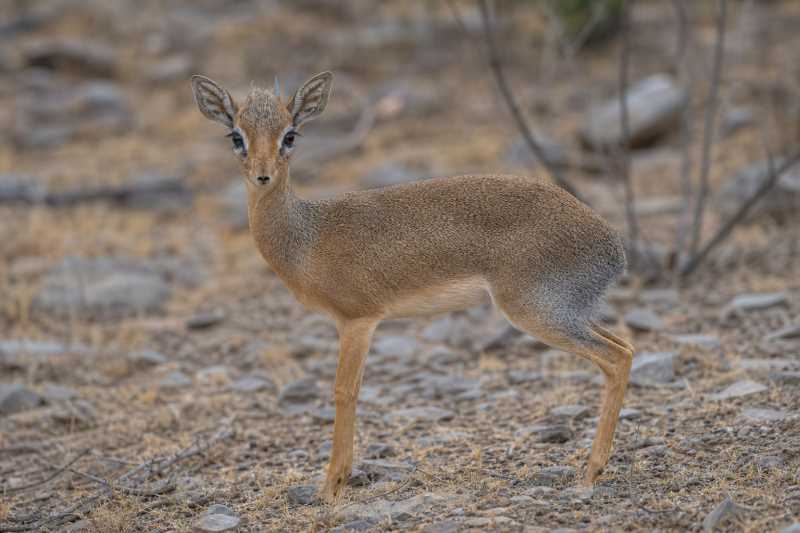
Salt’s Dik-dik is a diminutive antelope with a distinctive appearance that sets it apart from other members of the antelope family. Standing at an average shoulder height of 30 to 40 centimeters (approximately 12 to 16 inches) and weighing between 2.5 to 4.5 kilograms (5.5 to 10 pounds), these animals are among the smallest antelopes in the world.
The most notable feature of Salt’s Dik-dik is its elongated, tubular snout, which serves a critical role in regulating body temperature and conserving moisture—a crucial adaptation for life in arid climates. Their coat is generally a sandy brown or gray, providing effective camouflage against the rocky and scrubby landscapes they inhabit. Additionally, their large, dark eyes are surrounded by a ring of white fur, enhancing their visual acuity and giving them a distinctive look.
Range and Habitat
Salt’s Dik-dik are primarily found in the Horn of Africa, with their range extending across Ethiopia, Somalia, Djibouti, and Eritrea. They inhabit a variety of arid and semi-arid environments, including savannas, shrublands, and rocky outcrops. Their preferred habitats are characterized by sparse vegetation and scattered acacia trees, which offer both food and shelter from predators.
These antelopes have a remarkable ability to adapt to harsh conditions, thriving in areas with limited water resources. Their physiological and behavioral adaptations allow them to extract sufficient moisture from their diet, minimizing their dependence on direct water sources.
Behavior and Diet
Salt’s Dik-dik are primarily crepuscular, being most active during the early morning and late afternoon when temperatures are cooler. They are highly territorial animals, with mating pairs establishing and defending territories that range from 2 to 5 hectares (approximately 5 to 12 acres). Territorial boundaries are marked using dung piles, and both males and females participate in territorial defense.
The social structure of Salt’s Dik-dik is centered around monogamous pairs, with mates typically bonding for life. Offspring are born after a gestation period of about six months, usually during the rainy season when food is more abundant.
In terms of diet, Salt’s Dik-dik are herbivores that primarily feed on leaves, shoots, and fruits. They have a preference for acacia leaves, which provide both nutrition and moisture. Their diet is supplemented by grasses and herbs, allowing them to maintain a balanced intake of nutrients.
Identification Tips (Field Recognition Cues)
Identifying Salt’s Dik-dik in the field requires attention to several key features:
- Size and Shape: Look for a small, delicate antelope with a slender build and long, thin legs.
- Snout: The elongated snout is a unique characteristic that distinguishes them from other antelopes.
- Coat Color: Their sandy brown or gray coat provides excellent camouflage, so pay attention to movement against the landscape.
- Eye Markings: The presence of white rings around their eyes is a helpful identification cue.
- Behavior: Observing their territorial behavior and monogamous pairing can also aid in identification.
Conservation Status (With Threats and Protections)
Currently, Salt’s Dik-dik is classified as a species of Least Concern by the International Union for Conservation of Nature (IUCN). However, they face several threats that could impact their populations in the future.
Threats
- Habitat Loss: Expansion of agricultural activities and human settlements poses a significant threat to their natural habitats.
- Hunting and Poaching: Although not extensively hunted, they are sometimes targeted for their skins and as a source of bushmeat.
- Climate Change: Changes in climate patterns may alter their habitats, affecting food and water availability.
Protections
Efforts to conserve Salt’s Dik-dik include habitat preservation initiatives and the establishment of protected areas within their range. Public awareness campaigns are also crucial in reducing human-wildlife conflicts and promoting the sustainable management of natural resources.
Frequently Asked Questions
What is the average lifespan of Salt’s Dik-dik in the wild?
In the wild, Salt’s Dik-dik typically live for about 5 to 10 years, although they can live longer in captivity where they are protected from predators and environmental stresses.
How do Salt’s Dik-dik communicate with each other?
Salt’s Dik-dik communicate through a combination of vocalizations, scent marking, and body language. They use a variety of sounds to alert each other of danger, and scent marking is crucial for establishing and maintaining territories.
Are Salt’s Dik-dik endangered?
Currently, Salt’s Dik-dik are not considered endangered and are listed as a species of Least Concern. However, ongoing threats such as habitat loss and hunting could impact their populations in the future.
What adaptations help Salt’s Dik-dik survive in arid environments?
Key adaptations include their ability to extract moisture from their diet, reducing their need for direct water sources, and their physical adaptations such as the elongated snout, which helps in thermoregulation and moisture conservation.
How do Salt’s Dik-dik care for their young?
After birth, the young dik-dik are hidden in vegetation to protect them from predators. Both parents play a role in territorial defense, ensuring the safety and well-being of their offspring until they are old enough to fend for themselves.
Related posts