Introduction
The White-tailed Jackrabbit (Lepus townsendii) is a fascinating species known for its incredible adaptability to diverse environments and its remarkable speed. As a member of the Leporidae family, it is one of the most intriguing mammals found in North America. This article delves deep into the various aspects of the White-tailed Jackrabbit, providing insights into its physical characteristics, natural habitat, behavior, diet, and conservation status. Whether you are a wildlife enthusiast or a researcher, understanding this species’ life is both educational and rewarding.
Physical Description
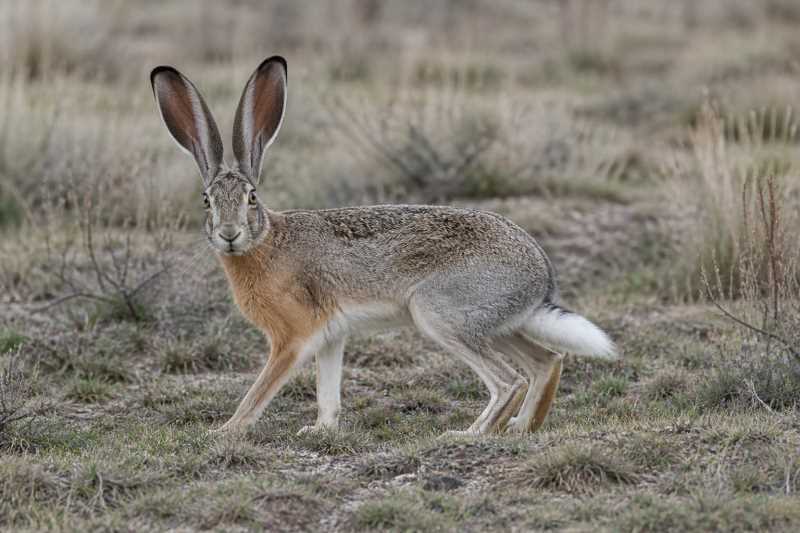
The White-tailed Jackrabbit is notable for its large size and unique physical features. Adult White-tailed Jackrabbits typically weigh between 6 and 10 pounds, making them one of the largest hare species. They possess long ears, which can grow up to 4 inches, allowing them to detect predators efficiently. Their fur changes color with the seasons; during summer, they exhibit a brownish-gray coat, which turns white in the winter, providing excellent camouflage in snowy environments. Their name derives from their distinct white tail, a characteristic rarely found in other jackrabbits.
Their powerful hind legs are built for speed and endurance, enabling them to escape predators with remarkable agility. White-tailed Jackrabbits can leap distances of up to 10 feet and reach speeds of up to 40 miles per hour, making them one of the fastest animals in their habitat.
Range and Habitat
The White-tailed Jackrabbit is predominantly found in the North American regions, ranging from the central United States to southern Canada. They thrive in open grasslands, prairies, and agricultural fields, where they can find ample food and cover. These areas provide the necessary vegetation for both nourishment and protection against predators.
Despite their preference for open terrains, White-tailed Jackrabbits have demonstrated a significant level of adaptability, surviving in diverse environments, including deserts and high-altitude regions. Their ability to inhabit a wide range of ecosystems is a testament to their resilience and evolutionary success.
Behavior and Diet
White-tailed Jackrabbits are primarily nocturnal, meaning they are most active during the night. This behavior helps them avoid the heat of the day and reduces the risk of predation. They are solitary creatures, except during the breeding season when they seek partners.
Their diet is mainly herbivorous, consisting of grasses, forbs, and shrubs. During the winter months, when vegetation is scarce, they feed on twigs and bark. Their ability to digest fibrous plant material efficiently allows them to extract necessary nutrients from their diet.
Breeding occurs in the spring, with females capable of producing multiple litters each year. A typical litter contains 4 to 6 leverets, which are born fully furred and with their eyes open, ready to face the challenges of their environment.
Identification Tips (Field Recognition Cues)
Identifying a White-tailed Jackrabbit in the field requires attention to detail. Key identification tips include:
- Size and Shape: Look for a large hare with long ears and powerful hind legs.
- Fur Color: Observe the seasonal changes in fur color. Brownish-gray in summer and white in winter.
- Tail: The distinct white tail is a significant identifier, especially when compared to other jackrabbits.
- Behavior: Note their nocturnal activity and rapid, zigzag running pattern when startled.
Conservation Status (With Threats and Protections)
The White-tailed Jackrabbit is currently listed as a species of least concern by the International Union for Conservation of Nature (IUCN). However, they face several threats that could impact their populations in the future.
Threats:
- Habitat Loss: Urban expansion and agricultural development have led to the fragmentation of their natural habitats.
- Climate Change: Alterations in climate patterns can affect their food sources and habitats.
- Predation: Natural predators include coyotes, foxes, and birds of prey.
Protections:
Conservation efforts focus on habitat preservation and management, ensuring that these animals continue to thrive in their natural environments. Efforts to maintain grasslands and prairies, alongside initiatives to mitigate climate change impacts, are crucial for their continued survival.
Frequently Asked Questions
1. What is the average lifespan of a White-tailed Jackrabbit?
White-tailed Jackrabbits typically live up to five years in the wild. However, their lifespan can be shorter due to predation and environmental factors.
2. How fast can a White-tailed Jackrabbit run?
White-tailed Jackrabbits can reach speeds of up to 40 miles per hour, allowing them to evade predators effectively.
3. Are White-tailed Jackrabbits endangered?
Currently, the White-tailed Jackrabbit is not considered endangered. They are listed as a species of least concern, but habitat loss and other factors could pose future threats.
4. What do White-tailed Jackrabbits eat during the winter?
In winter, White-tailed Jackrabbits feed on twigs, bark, and any available vegetation, adapting their diet to the season’s constraints.
5. Where can I observe White-tailed Jackrabbits in the wild?
White-tailed Jackrabbits are best observed in open grasslands and prairies across central North America, particularly during dawn or dusk when they are most active.
Related posts