Wallace’s Tarsier: A Unique Nocturnal Primate
Introduction
Wallace’s Tarsier (Tarsius wallacei) is a captivating small primate named after the renowned British naturalist Alfred Russel Wallace. This species is a member of the Tarsiidae family, known for their distinctive morphology and intriguing behaviors. Wallace’s Tarsier is endemic to central Sulawesi, Indonesia, and has drawn the attention of researchers and conservationists due to its unique ecological niche and the environmental threats it faces. Understanding this species is crucial for its conservation and offers insights into the biodiversity of the Sulawesi region.
Physical Description
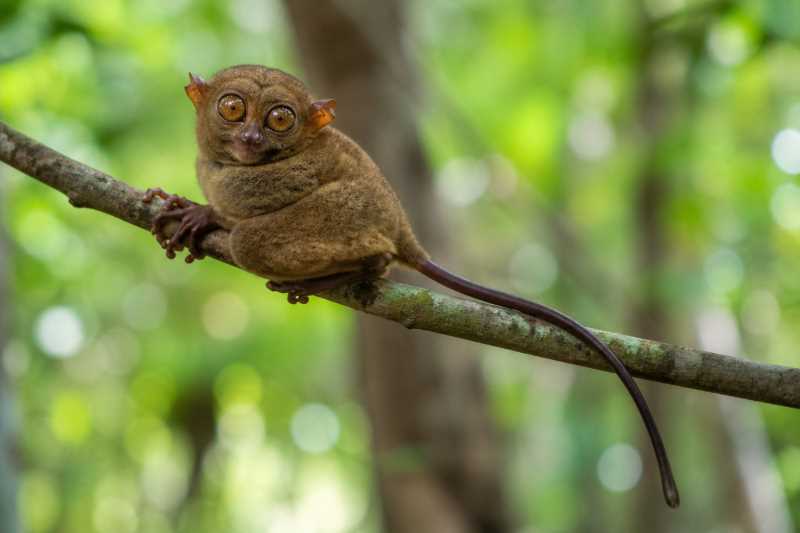
Wallace’s Tarsier is a tiny, nocturnal primate distinguished by its enormous eyes, which are perfectly adapted for night vision. The eyes of a tarsier are so large that they cannot move within their sockets, so the tarsier turns its head to look around, similar to an owl. This remarkable adaptation is essential for its survival in the dense, dark forests of Sulawesi.
The average body length of Wallace’s Tarsier ranges from 10 to 15 centimeters, excluding the tail, which can be as long as 20 to 25 centimeters. Their fur is soft and ranges in color from gray to brown, providing camouflage among the trees and foliage. They have long fingers and toes with adhesive pads that aid in gripping branches, which is vital for their arboreal lifestyle.
One of the most distinctive features of Wallace’s Tarsier is its elongated ankle bones, known as tarsi, from which the genus gets its name. These elongated bones enable them to leap distances up to 40 times their body length, a critical ability for moving swiftly through the forest canopy to hunt and evade predators.
Range and Habitat
Wallace’s Tarsier is found exclusively on the island of Sulawesi in Indonesia, specifically in the central part of the island. This region is characterized by its rich biodiversity and unique ecosystems. The tarsier inhabits primary and secondary lowland rainforests, montane forests, and sometimes plantations.
The dense forest canopy of Sulawesi provides the essential cover and resources that Wallace’s Tarsier needs for survival. They are highly arboreal and rely on the vertical complexity of the forest to find food and shelter. The availability of suitable tree hollows and dense foliage is crucial for their roosting during the day.
Behavior and Diet
Wallace’s Tarsier is a nocturnal and predominantly solitary creature, although it may sometimes be seen in small family groups. They are most active during the night when they hunt and forage for food. Their diet primarily consists of insects and small vertebrates, such as lizards and birds. Tarsiers are exceptional hunters, utilizing their acute vision and remarkable leaping ability to catch prey.
Communication among Wallace’s Tarsiers is primarily through vocalizations, which include a variety of calls used for mating, territory defense, and alerting others to danger. They also use scent marking as a means of communication and territory establishment.
Identification Tips (Field Recognition Cues)
Identifying Wallace’s Tarsier in the wild can be challenging due to its nocturnal habits and elusive nature. However, there are several key characteristics and behaviors to look for:
- Large Eyes: Their disproportionately large eyes reflect light and are often the first feature noticed at night when illuminated by a flashlight.
- Leaping Ability: Watch for their distinctive jumping movements between trees and branches, aided by their elongated tarsi.
- Vocalizations: Listen for their high-pitched calls, especially during the night.
- Fur Coloration: Look for their gray to brown fur, which helps them blend into their environment.
- Tail: The long, slender tail can often be seen hanging down from branches as they move.
Conservation Status (with Threats and Protections)
Wallace’s Tarsier is currently listed as "Vulnerable" on the IUCN Red List of Threatened Species. The primary threats to its survival include habitat loss due to deforestation, agricultural expansion, and human encroachment. The forests of Sulawesi are being cleared at alarming rates for palm oil plantations and logging, significantly reducing the available habitat for tarsiers.
Conservation efforts are underway to protect the remaining habitat of Wallace’s Tarsier. These include the establishment of protected areas and national parks in Sulawesi, as well as initiatives to promote sustainable forestry practices. Education and awareness campaigns are also crucial in engaging local communities to participate in conservation efforts and reduce human-wildlife conflict.
Frequently Asked Questions
What makes Wallace’s Tarsier unique among primates?
Wallace’s Tarsier is unique due to its enormous eyes, elongated ankle bones, and incredible leaping ability. These adaptations allow it to be an effective nocturnal hunter in the dense forests of Sulawesi.
How does Wallace’s Tarsier communicate with others?
Wallace’s Tarsier communicates through a variety of vocalizations and scent marking. Their calls serve multiple purposes, including mating, territory defense, and alerting others to danger.
What threats does Wallace’s Tarsier face?
The primary threats to Wallace’s Tarsier are habitat loss due to deforestation and human encroachment. Conservation efforts are essential to protect their remaining habitat and ensure their survival.
Where can Wallace’s Tarsier be found?
Wallace’s Tarsier is found exclusively in the central region of Sulawesi, Indonesia, inhabiting primary and secondary lowland rainforests and montane forests.
How can I help in the conservation of Wallace’s Tarsier?
You can help by supporting conservation organizations working in Sulawesi, promoting awareness about the species, and advocating for sustainable forestry practices to protect their habitat.
Related posts