Introduction
The Sun Bear (Helarctos malayanus), also known as the "honey bear" due to its voracious appetite for honeycombs and honey, is the smallest member of the bear family. Native to the tropical forests of Southeast Asia, this elusive mammal is recognized for its short, sleek coat and distinctive chest patch, which often resembles a rising or setting sun. Despite its relatively small size compared to other bear species, the Sun Bear plays an integral role in its ecosystem, contributing to seed dispersal and maintaining the health of forest habitats. Unfortunately, this fascinating species faces numerous challenges, including habitat loss and poaching, which threaten its survival. This article delves into the physical characteristics, habitat, behavior, and conservation status of the Sun Bear, offering valuable insights into this unique species.
Physical Description
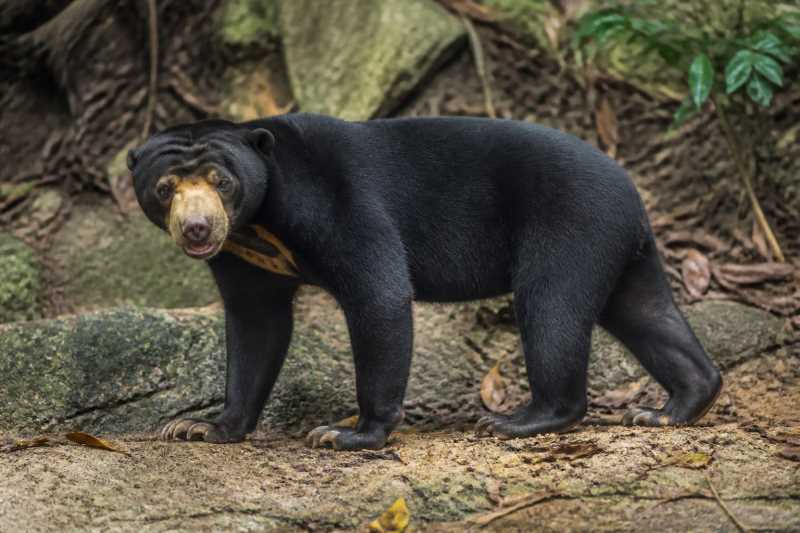
The Sun Bear is easily distinguishable by its small stature and unique physical features. Adult Sun Bears typically weigh between 60 to 150 pounds (27 to 68 kilograms) and reach a length of about 4 to 5 feet (1.2 to 1.5 meters) from head to tail. This makes them the smallest of the bear species, a stark contrast to their larger relatives like the Brown Bear or Polar Bear.
One of the most striking features of the Sun Bear is its short, sleek, black coat, which helps it stay cool in the humid tropical climate. The coat is sparse compared to other bear species, reflecting an adaptation to its warm environment. The Sun Bear’s most distinctive feature is the crescent-shaped patch of pale fur on its chest, which varies in color from yellow to white and is said to resemble a rising sun. This marking is unique to each individual, much like a human fingerprint.
Sun Bears also have an extraordinarily long tongue, measuring up to 10 inches (25 centimeters), which they use to extract honey and insects from crevices. Their wide, powerful jaws and large canines are adapted for tearing through wood to reach insects and honeycombs.
Range and Habitat
Sun Bears are native to the tropical forest regions of Southeast Asia, with their range extending from the eastern Himalayas to the islands of Sumatra and Borneo. They are primarily found in countries such as Myanmar, Thailand, Malaysia, Indonesia, and on the island of Borneo. These bears are highly dependent on forest habitats, particularly lowland tropical rainforests and montane forests.
The dense, humid forests provide the Sun Bear with ample food sources, such as fruits, insects, and small vertebrates. These forests also offer crucial shelter and protection from predators. However, Sun Bears can sometimes be found in disturbed habitats, such as logged forests and agricultural areas, where remnants of their natural habitat remain.
Behavior and Diet
Sun Bears are solitary animals, primarily nocturnal, although they may be active during the day in undisturbed areas. They are excellent climbers, often seen scaling trees to forage for food or to escape threats. Their curved claws and strong limbs make them adept at climbing, where they can access fruits and other food sources that are otherwise out of reach.
Their diet is omnivorous but varies depending on the availability of food. Sun Bears primarily consume fruits, insects, and small vertebrates. They have a particular fondness for honey, which is a rich source of energy. Sun Bears use their long tongues to extract honey from hives and their powerful claws to tear open logs in search of termites and ants.
Sun Bears play a crucial ecological role as seed dispersers, contributing to forest regeneration and biodiversity. By consuming a wide variety of fruits, they help spread seeds throughout the forest.
Identification Tips (field recognition cues)
Identifying a Sun Bear in the wild can be challenging due to their elusive nature and the dense habitats they occupy. However, certain characteristics can aid in their identification:
- Size: Look for the small stature of the Sun Bear compared to other bear species.
- Coat: Observe the short, sleek black coat and the distinctive chest patch.
- Chest Marking: The unique crescent-shaped patch on their chest is a key identifier.
- Behavior: They are often seen climbing trees or foraging on the forest floor.
- Sounds: Listen for their vocalizations, which include grunts and roars, especially during feeding.
Conservation Status (with threats and protections)
The Sun Bear is currently classified as Vulnerable by the International Union for Conservation of Nature (IUCN). Their population is declining due to several significant threats:
- Habitat Loss: Deforestation for agriculture, palm oil plantations, and logging severely reduces their natural habitat.
- Poaching: Sun Bears are hunted for their body parts, including gallbladders and paws, used in traditional medicines and delicacies.
- Human-Wildlife Conflict: As human populations encroach on forest areas, conflicts arise, leading to the persecution of Sun Bears.
Conservation efforts are underway to protect this species. These include:
- Protected Areas: Establishing and enforcing protected areas to conserve critical habitats.
- Anti-Poaching Measures: Strengthening laws and regulations to combat illegal hunting and trade.
- Public Awareness: Educating local communities about the ecological role of Sun Bears and promoting coexistence.
Frequently Asked Questions
What is the primary diet of Sun Bears?
Sun Bears are omnivorous, primarily consuming fruits, insects, and small vertebrates. They have a particular fondness for honey and use their long tongues to extract it from hives.
How do Sun Bears contribute to their ecosystem?
Sun Bears play a vital role as seed dispersers, aiding in forest regeneration. By consuming a variety of fruits, they help spread seeds, contributing to biodiversity.
Why are Sun Bears considered vulnerable?
The Sun Bear is classified as Vulnerable due to habitat loss from deforestation, poaching for traditional medicine, and human-wildlife conflict. Conservation efforts focus on habitat protection and anti-poaching measures.
How can I identify a Sun Bear in the wild?
Look for their small size, short black coat, and distinctive chest patch. Sun Bears are often seen climbing trees or foraging on the forest floor.
What conservation efforts are in place for Sun Bears?
Conservation efforts include establishing protected areas, enforcing anti-poaching laws, and raising public awareness to promote coexistence and protect Sun Bear populations.
Related posts