Introduction
The Southern Three-banded Armadillo, scientifically known as Tolypeutes matacus, is a fascinating mammal native to parts of South America. This unique creature is noted for its remarkable ability to roll into a nearly perfect ball as a defensive mechanism, a trait that distinguishes it from other armadillos. Predominantly found in the dry, open areas of the Gran Chaco region, this species has intrigued scientists and animal enthusiasts alike with its distinctive characteristics and behaviors.
Physical Description
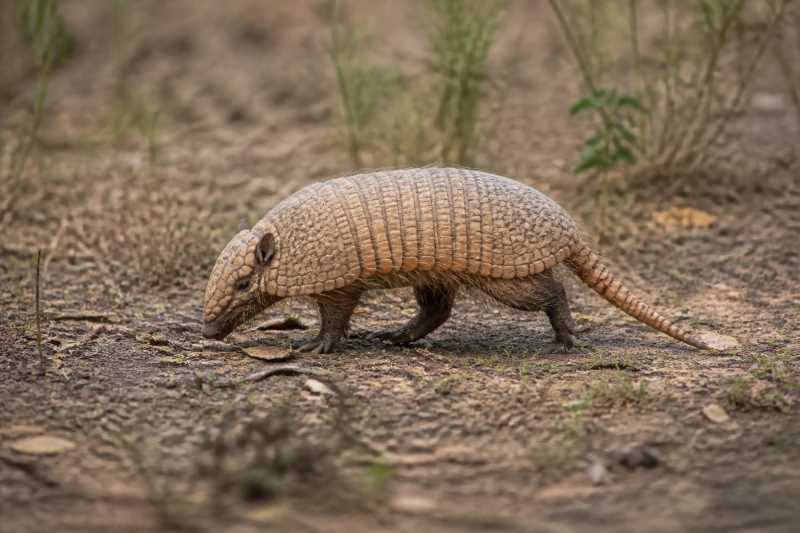
The Southern Three-banded Armadillo is relatively small compared to other armadillo species, with adults typically measuring between 22 to 27 centimeters in length and weighing around 1 to 1.5 kilograms. Its body is covered with a hard, bony shell composed of keratin, which includes three primary bands that provide flexibility. The shell serves as a formidable defense against predators, allowing the armadillo to roll completely into a ball, with its armor protecting its vulnerable underparts.
The coloration of Tolypeutes matacus varies from yellowish-brown to dark brown, allowing it to blend seamlessly into its natural habitat. Its head is small and conical, equipped with tiny eyes and ears that aid in detecting potential threats. Notably, its limbs are short but strong, with claws adapted for digging, although this species is less reliant on burrowing compared to other armadillos.
Range and Habitat
Native to the central regions of South America, the Southern Three-banded Armadillo inhabits the Gran Chaco, an extensive plain that spans parts of Bolivia, Paraguay, and Argentina. This region is characterized by its semi-arid climate, with distinct wet and dry seasons. The armadillo thrives in a variety of environments within this range, including grasslands, savannahs, and thorny forests.
Despite its adaptability, the armadillo’s range is increasingly threatened by human activities, such as agriculture and deforestation, which result in habitat loss. Conservation efforts are focused on preserving the natural landscapes that support not only the Southern Three-banded Armadillo but also a myriad of other species endemic to the region.
Behavior and Diet
The Southern Three-banded Armadillo is primarily nocturnal, although it may be active during the day in cooler weather. Its most distinctive behavior is its ability to roll into a secure, tight ball, which is a defensive adaptation that protects it from predators. This behavior is facilitated by the uniquely hinged shell that allows it to encase its entire body.
In terms of diet, the Southern Three-banded Armadillo is an omnivore, with a diet consisting of insects, larvae, fruits, and vegetation. It uses its keen sense of smell to locate food and its strong claws to dig into the ground or tear apart rotting logs where insects may be hiding. This diet plays a crucial ecological role by controlling insect populations and aiding in seed dispersion.
Identification Tips (Field Recognition Cues)
Identifying a Southern Three-banded Armadillo in the wild involves looking for several key characteristics:
- Shell Structure: Look for the distinctive three-banded shell that allows the armadillo to roll into a ball.
- Size and Shape: Note the small, rounded body with a yellowish to dark brown shell.
- Behavior: Observe its unique defensive behavior of curling into a ball when threatened.
- Habitat: Spot them in dry, open areas, particularly within the Gran Chaco region.
Conservation Status (With Threats and Protections)
The conservation status of the Southern Three-banded Armadillo is currently listed as "Near Threatened" by the International Union for Conservation of Nature (IUCN). The primary threats to its survival include habitat destruction due to agricultural expansion, deforestation, and human encroachment. Additionally, hunting for meat and the pet trade pose significant risks.
Conservation efforts are underway to protect this unique species, focusing on habitat preservation and legal protections to curb hunting and trade. International cooperation and local community engagement are crucial to these efforts, ensuring the armadillo’s continued presence in its native range.
Frequently Asked Questions
Why is this species unique?
The Southern Three-banded Armadillo is unique due to its ability to roll into a completely tight ball, a behavior not shared by other armadillo species. This adaptation offers exceptional protection from predators, making it a subject of interest for researchers studying defensive behaviors in mammals.
What is the primary diet of the Southern Three-banded Armadillo?
The armadillo is an omnivore, feeding on a varied diet that includes insects, larvae, fruits, and vegetation. This diet helps control insect populations and contributes to seed dispersal, highlighting its ecological importance.
How does habitat loss affect the Southern Three-banded Armadillo?
Habitat loss, primarily due to agricultural expansion and deforestation, significantly impacts the Southern Three-banded Armadillo by reducing its natural living spaces. Conservation efforts aim to mitigate these effects by preserving critical habitats and implementing sustainable land-use practices.
Are there any cultural significances associated with this armadillo?
In some indigenous cultures within its range, the Southern Three-banded Armadillo is considered a symbol of protection and resilience. Its unique defensive capabilities are often admired and featured in local folklore and stories.
What are some conservation measures in place for this species?
Conservation measures include habitat preservation, legal protections against hunting and trade, and educational programs to raise awareness about the species’ ecological importance. Collaboration between governments, NGOs, and local communities is essential in these efforts.
Related posts