Introduction
The Southern Talapoin Monkey, scientifically recognized as Miopithecus talapoin, is an intriguing primate species that has captured the interest of researchers and wildlife enthusiasts alike. Known for their small size and distinctive social behavior, these monkeys inhabit the dense forests and riverine environments of Central Africa. As the smallest species of Old World monkeys, they present a unique opportunity to observe primate adaptations to specific ecological niches. This article delves into the various aspects of the Southern Talapoin Monkey, from their physical characteristics to their conservation status, offering a comprehensive overview for anyone keen to learn more about these fascinating creatures.
Physical Description
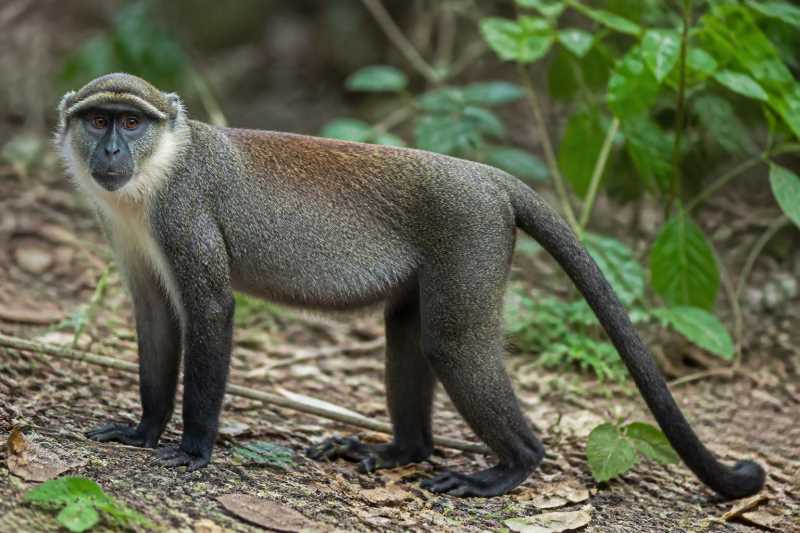
The Southern Talapoin Monkey is notably the smallest of all Old World monkeys. Adult individuals typically measure between 30 to 45 centimeters in body length, with a tail that extends up to 50 centimeters. Their diminutive size is complemented by a delicate build, with a body weight ranging from 0.8 to 1.6 kilograms. The fur of the Southern Talapoin is predominantly greenish-grey, providing excellent camouflage in their forest habitat. Their facial features are quite distinctive, with a pale, almost hairless face adorned by large expressive eyes and a short, flat nose. Their ears are small and rounded, contributing to their endearing appearance.
Range and Habitat
The Southern Talapoin Monkey is primarily found in the riverine and swampy forests of Central Africa, with a range that extends through countries such as Angola, Democratic Republic of the Congo, and Zambia. These primates are highly adapted to life in dense forest environments, often residing near water bodies. Their preference for riverine habitats is largely due to the abundance of resources such as food and a suitable climate that supports their survival. The lush undergrowth and foliage of these areas provide both sustenance and protection from predators.
Behavior and Diet
Southern Talapoin Monkeys are highly social creatures, living in large groups that can range from 60 to 100 individuals. These groups exhibit a complex social structure, with hierarchies and social bonds playing a crucial role in their daily interactions. Communication among group members is facilitated through a variety of vocalizations, body postures, and facial expressions.
Their diet primarily consists of fruits, seeds, and leaves, supplemented by insects and small vertebrates when available. This omnivorous diet reflects their adaptability and resourcefulness in exploiting diverse food sources within their habitat. Foraging is typically a group activity, with individuals dispersing in search of food and converging when a resource-rich area is found.
Identification Tips (Field Recognition Cues)
Identifying the Southern Talapoin Monkey in the wild can be a rewarding experience for wildlife enthusiasts. Here are some key tips for accurate field identification:
- Size and Shape: Look for their small size and delicate build, which sets them apart from other primates in the region.
- Coloration: Note their distinctive greenish-grey fur, which blends seamlessly with the forest environment.
- Facial Features: Their pale face, large eyes, and flat nose are characteristic identifiers.
- Behavior: Observe their social behavior and vocalizations, often a giveaway in identifying group dynamics.
Conservation Status (With Threats and Protections)
The International Union for Conservation of Nature (IUCN) currently classifies the Southern Talapoin Monkey as a species of Least Concern. However, this does not imply that they are free from threats. Habitat destruction due to logging, agriculture, and human settlement poses significant risks to their natural environments. Additionally, hunting and capture for the pet trade further threaten their populations.
Conservation efforts are crucial to safeguard their habitats and ensure sustainable population levels. Protected areas and wildlife reserves offer some refuge, although increased conservation measures and awareness are necessary to address the ongoing threats.
Frequently Asked Questions
1. What is the average lifespan of a Southern Talapoin Monkey?
Southern Talapoin Monkeys typically live between 15 to 20 years in the wild, with some individuals in captivity reaching up to 25 years.
2. Are Southern Talapoin Monkeys aggressive towards humans?
Generally, Southern Talapoin Monkeys are not aggressive towards humans. They are shy and tend to avoid contact, although they may exhibit defensive behavior if threatened.
3. How do Southern Talapoin Monkeys communicate?
Communication among Southern Talapoin Monkeys involves a range of vocalizations, facial expressions, and body gestures, facilitating social cohesion within groups.
4. What role do Southern Talapoin Monkeys play in their ecosystem?
As frugivores and insectivores, Southern Talapoin Monkeys play a crucial role in seed dispersal and controlling insect populations, contributing to ecosystem balance.
5. Can Southern Talapoin Monkeys be kept as pets?
While it is possible to keep Southern Talapoin Monkeys as pets in some regions, it is discouraged due to their complex social needs and the impact on their wild populations.
Related posts