Introduction
The Short-tailed Mongoose (Urva brachyurus) is a fascinating yet lesser-known mammal species found primarily in Southeast Asia. This enigmatic creature, belonging to the family Herpestidae, captivates wildlife enthusiasts and researchers alike with its elusive nature and unique adaptations. Despite its relative obscurity, the Short-tailed Mongoose plays a significant role in its ecosystem, contributing to the intricate balance of its natural habitat. This article delves into the various aspects of the Short-tailed Mongoose, offering comprehensive insights into its physical characteristics, habitat preferences, behavioral patterns, and the conservation challenges it faces.
Physical Description
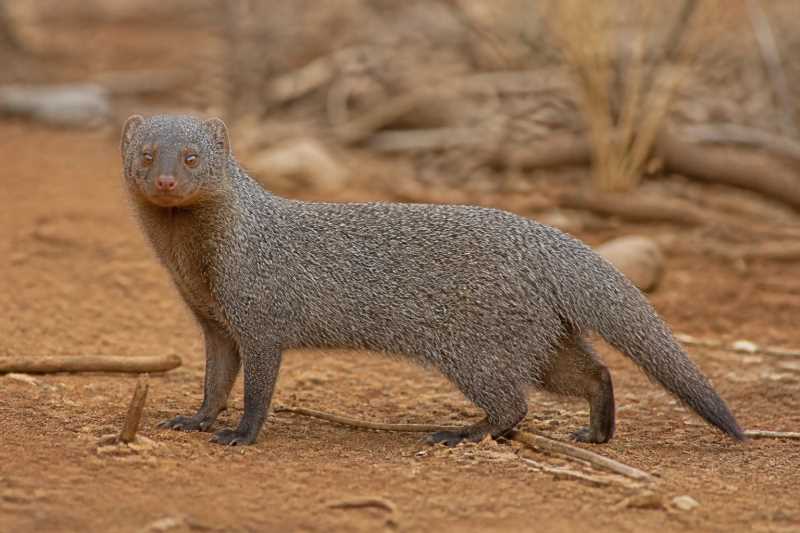
The Short-tailed Mongoose is aptly named for its notably shorter tail compared to other mongoose species. Adults typically measure between 40 to 50 centimeters in body length, with the tail adding an additional 25 to 30 centimeters. This gives the mongoose a more compact appearance. They possess a robust and muscular build, which aids in their agile movements through dense forest undergrowth.
Their fur is predominantly a deep reddish-brown, although some individuals exhibit variations ranging from dark chestnut to nearly black. This coloration provides excellent camouflage in their natural habitat. The fur texture is dense and somewhat coarse, offering protection against the elements and potential predators.
Distinct facial markings set the Short-tailed Mongoose apart from other species. A lighter, often cream-colored patch around the muzzle contrasts sharply against their darker fur, and their eyes are encircled by a faint, lighter ring, enhancing their sharp, alert appearance.
Range and Habitat
The Short-tailed Mongoose is primarily found in the tropical rainforests of Southeast Asia, with populations distributed across the Malay Peninsula, Borneo, Sumatra, and parts of Thailand. Their habitat preference leans heavily towards lowland and hill forests, where dense vegetation provides ample cover and hunting opportunities.
These mongooses are highly adaptable and can also be found in secondary forests and, occasionally, near agricultural areas. However, they are less frequently observed in heavily disturbed or deforested regions, indicating a preference for more pristine environments.
Their reliance on dense forest ecosystems makes them vulnerable to habitat destruction, a significant threat across their range due to logging, agricultural expansion, and urban development.
Behavior and Diet
Short-tailed Mongooses are solitary and primarily nocturnal, although they may occasionally be active during the early morning or late afternoon. They are highly territorial, with individuals marking their range using scent glands to communicate with potential rivals or mates.
Their diet is carnivorous, consisting mainly of small mammals, birds, reptiles, and insects. They are skilled hunters, using their keen sense of smell and hearing to locate prey hidden under leaves or within the forest floor’s nooks and crannies. Occasionally, they may consume fruit, particularly during times when prey is scarce.
These mongooses are known for their agility and speed, which, combined with their sharp claws and teeth, make them formidable predators despite their small size.
Identification Tips (Field Recognition Cues)
Identifying Short-tailed Mongooses in the wild can be challenging due to their elusive nature and preference for dense cover. However, several key characteristics can aid in their identification:
- Size and Build: Look for a compact body size with a noticeably shorter tail relative to other mongoose species.
- Coloration: Observe the deep reddish-brown fur, which may appear almost black in certain lighting conditions.
- Facial Markings: Note the lighter muzzle patch and faint eye rings, which are distinctive features.
- Behavior: Spotting them is more likely during dusk and dawn when they are most active.
Conservation Status (With Threats and Protections)
The Short-tailed Mongoose is currently classified as Near Threatened on the IUCN Red List. The primary threat to their survival is habitat loss due to deforestation for timber extraction, palm oil plantations, and agricultural conversion. These activities not only reduce available habitat but also fragment existing populations, making it difficult for individuals to find mates and maintain genetic diversity.
Conservation efforts are focused on habitat protection and restoration. Several protected areas across Southeast Asia provide sanctuary for the Short-tailed Mongoose and other wildlife. Environmental organizations are also working to raise awareness about the importance of preserving these ecosystems and advocating for sustainable land-use practices.
Frequently Asked Questions
What does a Short-tailed Mongoose eat?
The Short-tailed Mongoose primarily eats small mammals, birds, reptiles, and insects. They are opportunistic hunters and may occasionally consume fruits when prey is less available.
Where can you find Short-tailed Mongooses?
Short-tailed Mongooses are found in the tropical rainforests of Southeast Asia, particularly in the Malay Peninsula, Borneo, Sumatra, and parts of Thailand.
How can you identify a Short-tailed Mongoose?
Identifying a Short-tailed Mongoose involves noting its compact size, short tail, reddish-brown fur, and distinctive facial markings such as a lighter muzzle patch and eye rings.
Are Short-tailed Mongooses endangered?
While not currently endangered, the Short-tailed Mongoose is classified as Near Threatened due to habitat loss and fragmentation driven by deforestation and agricultural development.
How do Short-tailed Mongooses contribute to their ecosystem?
Short-tailed Mongooses play a crucial role as predators, helping to control populations of small mammals and insects, thus maintaining ecological balance within their habitat.
Related posts