Introduction
The Saharan White-toothed Shrew, scientifically known as Crocidura tarfayaensis, is a fascinating mammal species that captures the interest of researchers and wildlife enthusiasts alike. Inhabiting the expansive and inhospitable regions of the Sahara Desert, this small yet resilient creature plays a crucial role in the ecosystem. Despite its seemingly inconspicuous presence, the Saharan White-toothed Shrew offers insights into the adaptability and survival strategies of mammals in extreme environments.
Physical Description
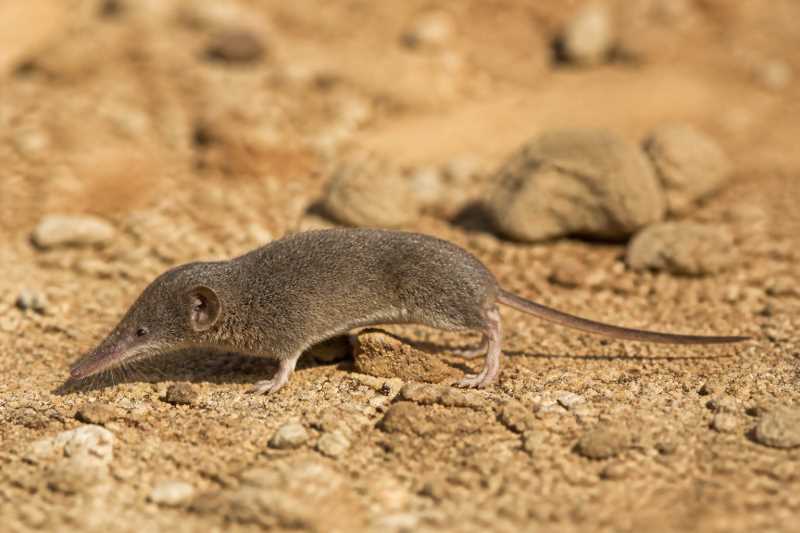
The Saharan White-toothed Shrew is a diminutive mammal, typically measuring between 5 to 7 centimeters in body length, with an additional tail length of approximately 3 to 4 centimeters. It weighs about 3 to 10 grams, making it one of the lighter members of the Soricidae family. This shrew is characterized by its soft, dense fur that provides insulation against the harsh desert climate. The fur color is generally a sandy or grayish-brown hue, which offers excellent camouflage against the desert landscape.
The shrew’s distinctive feature is its white teeth, a trait shared by other members of the genus Crocidura. Unlike rodents, shrews do not have continuously growing incisors; instead, their teeth are well-suited for their insectivorous diet. The pointed snout, small eyes, and rounded ears are typical of shrews, aiding in their sensory navigation and foraging activities.
Range and Habitat
Crocidura tarfayaensis is predominantly found in the northwestern regions of Africa, primarily within the Sahara Desert. Its range includes parts of Morocco, with sightings often reported near the Tarfaya region, which contributes to its scientific name. The habitat of the Saharan White-toothed Shrew is characterized by arid and semi-arid environments, including sandy dunes, rocky terrains, and sparse vegetation areas.
The shrew’s ability to thrive in such harsh conditions is a testament to its evolutionary adaptations. It seeks shelter in burrows or under rocks to escape the extreme temperatures and predators. The sparse vegetation provides limited food resources, necessitating the shrew’s proficiency in locating insects, its primary dietary component.
Behavior and Diet
The Saharan White-toothed Shrew is primarily nocturnal, a behavioral adaptation to avoid the scorching daytime temperatures of the desert. It emerges at dusk to forage for food, relying heavily on its keen sense of smell and touch. As an insectivore, the shrew’s diet consists mainly of insects, arachnids, and other small invertebrates.
This shrew is known for its high metabolic rate, which requires it to consume food equivalent to its body weight daily. It is a solitary creature, with interactions between individuals occurring mainly during the breeding season. The shrew’s reproductive cycle is closely tied to climatic conditions, with breeding often timed to coincide with the availability of food resources.
Identification Tips (Field Recognition Cues)
Identifying the Saharan White-toothed Shrew in the field can be challenging due to its small size and elusive nature. However, there are several cues that can aid in its recognition:
- Fur Coloration: Look for a sandy or grayish-brown coat that blends well with the desert environment.
- White Teeth: Although difficult to observe in the field, the shrew’s white teeth are a distinctive feature when examining specimens.
- Size and Shape: Note its small body size, pointed snout, and relatively short tail compared to other shrew species.
- Behavioral Patterns: Observe for nocturnal activity and rapid, darting movements typical of shrews.
Conservation Status (with threats and protections)
The conservation status of the Saharan White-toothed Shrew is currently not well-documented, largely due to its elusive nature and the challenging environment it inhabits. However, it is believed to be relatively stable, given its wide distribution across the Sahara Desert. The IUCN has not assessed this species separately, although its habitat is generally considered to be at risk due to desertification and habitat loss.
Primary threats to the Saharan White-toothed Shrew include climate change, which exacerbates desertification, and human activities such as land development and agriculture. Conservation efforts are needed to monitor populations and protect their habitats from further degradation. This includes implementing measures to combat desertification and promoting sustainable land-use practices.
Frequently Asked Questions
What adaptations allow the Saharan White-toothed Shrew to survive in the desert?
The Saharan White-toothed Shrew has several adaptations for desert survival, including a nocturnal lifestyle to avoid daytime heat, a diet that maximizes limited food resources, and burrowing behavior to escape predators and extreme temperatures.
Is the Saharan White-toothed Shrew endangered?
Currently, there is insufficient data to determine the precise conservation status of the Saharan White-toothed Shrew. However, its habitat is under threat from desertification and human activities, which could impact its populations.
How does the Saharan White-toothed Shrew contribute to its ecosystem?
As an insectivore, the shrew plays a vital role in controlling insect populations, which helps maintain ecological balance. Its presence is an indicator of the health of the desert ecosystem.
Can the Saharan White-toothed Shrew be found outside the Sahara Desert?
The Saharan White-toothed Shrew is primarily restricted to the Sahara Desert and its peripheral regions. Its distribution is closely tied to the environmental conditions of this specific habitat.
What is the breeding behavior of the Saharan White-toothed Shrew?
Breeding occurs mainly during periods of food abundance, with the shrew producing multiple litters per year. The gestation period is short, and the young are weaned quickly to ensure survival in a challenging environment.
Related posts