A Glimpse into the World of Painted Spurfowl (Galloperdix lunulata)
The Painted Spurfowl (Galloperdix lunulata) is a captivating bird species that belongs to the family Phasianidae, which also includes pheasants and partridges. This bird is a remarkable example of the rich biodiversity found in the Indian subcontinent, where it inhabits dry and semi-arid regions. Known for its vivid plumage and elusive behavior, the Painted Spurfowl has piqued the interest of ornithologists and bird enthusiasts alike.
Distribution and Habitat
The Painted Spurfowl is predominantly found in India, inhabiting areas across the central and southern parts of the country. They are typically seen in scrub forests, rocky terrains, and dry deciduous forests, where they blend seamlessly into their environment. These birds are well-adapted to their habitat, often found in regions with sparse vegetation that provides both camouflage and a rich supply of food resources.
Their presence is recorded in states such as Madhya Pradesh, Maharashtra, Andhra Pradesh, Karnataka, and Tamil Nadu. The species is non-migratory, which means they establish permanent territories and are often observed in the same locations throughout the year.
Physical Characteristics
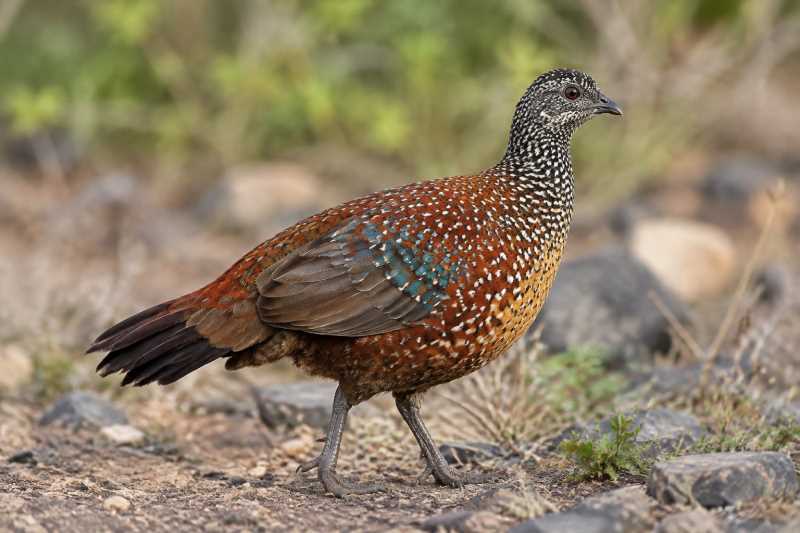
The Painted Spurfowl is renowned for its striking appearance. The males are particularly eye-catching with their vibrant plumage. They boast a combination of rich chestnut, black, and white markings that create an intricate pattern across their bodies. This pattern not only adds to their beauty but also serves as an effective camouflage against predators in their rocky habitat.
The females, although less colorful, possess a subtler beauty with their brown and sandy hues, which help them blend into their surroundings. Both sexes have a distinctive red facial skin, which adds to their unique appearance. The birds are medium-sized, with an average length of around 33-36 cm and a weight ranging from 270 to 370 grams.
Behavior and Diet
Painted Spurfowls are ground-dwelling birds that are often seen foraging in pairs or small family groups. They are known for their shy and elusive nature, often retreating into dense undergrowth at the slightest hint of danger. Their diet mainly consists of seeds, berries, insects, and small invertebrates, which they skillfully pick from the forest floor.
The species’ foraging behavior is a sight to behold as they scratch the ground with their strong legs to uncover food hidden beneath the leaves. This behavior is not only essential for their survival but also plays a crucial role in the ecosystem by aiding in seed dispersal and soil aeration.
Reproduction and Lifespan
The breeding season for Painted Spurfowl typically occurs between February and June. During this period, the males engage in elaborate displays to attract potential mates. These displays involve a combination of vocalizations and physical movements, such as puffing up their plumage and showcasing their spurs.
Once a pair is formed, the female lays a clutch of 3 to 5 eggs in a simple ground nest hidden among rocks or dense vegetation. The incubation period lasts about 18 to 21 days, with the female primarily responsible for incubating the eggs. After hatching, both parents are involved in caring for the chicks, which fledge after approximately two weeks.
The Painted Spurfowl can live up to 5 to 7 years in the wild, depending on environmental conditions and predation pressures. Their survival is closely tied to the availability of suitable habitat and food resources.
Conservation Status and Threats
Currently, the Painted Spurfowl is classified as a species of ‘Least Concern’ by the International Union for Conservation of Nature (IUCN). However, like many other wildlife species, they face threats from habitat destruction and fragmentation due to agricultural expansion, urbanization, and human encroachment.
Conservation efforts aimed at preserving dry and semi-arid habitats are crucial for the continued survival of the Painted Spurfowl. Protecting these ecosystems not only benefits the Spurfowl but also supports a diverse array of other wildlife species.
Conclusion
The Painted Spurfowl is a testament to the intricate beauty and complexity of India’s avian biodiversity. As an iconic species of the Indian subcontinent, it continues to captivate those who are fortunate enough to observe it in its natural habitat. Conservation efforts must be prioritized to ensure that this remarkable bird, along with its habitat, is preserved for future generations to admire and study.
Related posts