Introduction
The Indian Hedgehog (Paraechinus micropus) is a captivating small mammal native to the Indian subcontinent. Known for its distinctive spines, this nocturnal creature plays a unique role in its ecosystem. Despite its small size, the Indian Hedgehog is equipped with fascinating adaptations that make it a resilient and resourceful species. This article delves into the various aspects of the Indian Hedgehog, including its physical characteristics, natural habitat, behavior, and conservation status.
Physical Description
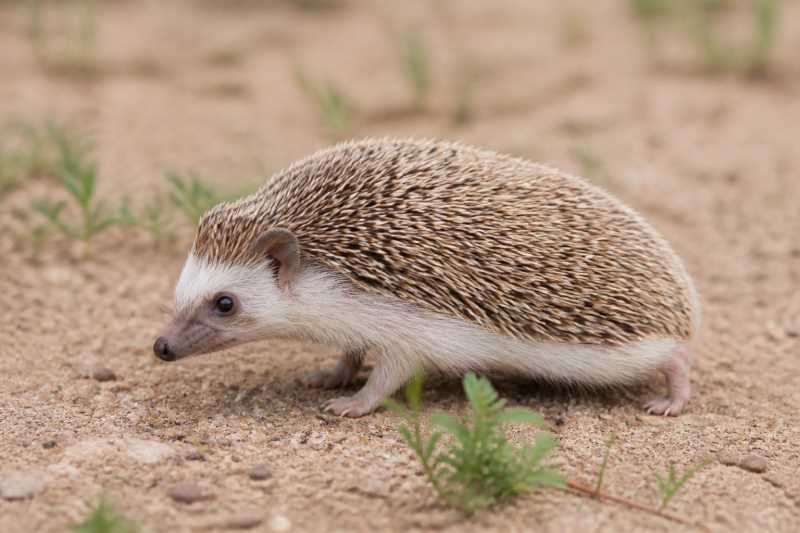
The Indian Hedgehog is a small mammal with a compact and rounded body covered in sharp spines. These spines, an evolutionary adaptation for defense, are modified hairs made of keratin, providing a formidable barrier against predators. The typical length of an adult Indian Hedgehog ranges from 14 to 28 centimeters, with a weight varying between 300 to 600 grams.
Its face is characterized by a pointed snout and small, round ears. The underbelly of the Indian Hedgehog is covered with soft, dense fur, contrasting starkly with the prickly back. The coloration of its spines can range from brown to gray, often with lighter tips, providing it with effective camouflage in its natural habitat.
Range and Habitat
The Indian Hedgehog is predominantly found in the arid and semi-arid regions of the Indian subcontinent. Its range extends across India, Pakistan, and parts of Iran. This species thrives in a variety of habitats, including scrublands, grasslands, and deserts, adapting well to the varying climatic conditions of these regions.
In its natural habitat, the Indian Hedgehog is known to occupy burrows that it digs using its strong forelimbs. These burrows offer protection from extreme weather and predators, serving as a safe haven during the day when the hedgehog is inactive.
Behavior and Diet
As a nocturnal creature, the Indian Hedgehog is most active during the night. It exhibits solitary behavior, coming together only during the mating season. The hedgehog is primarily insectivorous, feeding on a diet that includes beetles, ants, and other small invertebrates. It is also known to consume fruits and vegetables occasionally.
The Indian Hedgehog has a keen sense of smell, which it uses to locate food. Its foraging behavior involves sniffing the ground and digging with its snout. This species is also known for its ability to roll into a tight ball, using its spines as a defense mechanism against predators.
Identification Tips
When attempting to identify the Indian Hedgehog in the wild, consider the following field recognition cues:
- Size and Shape: Look for a small, rounded mammal with a body length of approximately 14 to 28 centimeters.
- Spines: The presence of sharp spines covering its back, with coloration ranging from brown to gray, is a distinctive feature.
- Behavior: Observe nocturnal activity and the characteristic rolling behavior when threatened.
- Habitat: Likely found in scrublands, grasslands, and deserts, often near burrow entrances.
Conservation Status
The Indian Hedgehog is currently listed as "Least Concern" on the IUCN Red List of Threatened Species. However, like many wildlife species, it faces several threats that could impact its population in the future. Habitat destruction due to urbanization and agricultural expansion poses a significant risk. Additionally, road mortality and predation by domestic animals contribute to its vulnerability.
Conservation efforts for the Indian Hedgehog include habitat preservation and public awareness campaigns to reduce human-induced threats. Legal protections in some regions also aim to safeguard this species from illegal capture and trade.
Frequently Asked Questions
1. What do Indian Hedgehogs eat in the wild?
Indian Hedgehogs are primarily insectivorous. Their diet consists mainly of insects such as beetles, ants, and other small invertebrates. They may also consume fruits and vegetables occasionally.
2. How do Indian Hedgehogs protect themselves from predators?
Indian Hedgehogs use their spines as a primary defense mechanism. When threatened, they roll into a tight ball, making it difficult for predators to attack their vulnerable underbelly.
3. Where can Indian Hedgehogs be found in the wild?
Indian Hedgehogs are native to the Indian subcontinent, including India, Pakistan, and parts of Iran. They inhabit arid and semi-arid regions, including scrublands, grasslands, and deserts.
4. Are Indian Hedgehogs endangered?
Currently, Indian Hedgehogs are listed as "Least Concern" on the IUCN Red List. However, they face threats from habitat destruction and road mortality, which necessitate conservation efforts.
5. What adaptations do Indian Hedgehogs have for survival?
Indian Hedgehogs have several adaptations, including sharp spines for defense, nocturnal habits to avoid predators, and a keen sense of smell to locate food.
Related posts