Introduction
The Red-legged Pademelon (Thylogale stigmatica) is a small to medium-sized marsupial belonging to the family Macropodidae. These fascinating creatures are native to Australia and Papua New Guinea and are known for their distinctively colored legs, which give them their name. As a part of the diverse and unique Australian fauna, Red-legged Pademelons play a critical role in their ecosystems. This article delves into various aspects of the Red-legged Pademelon, providing insights into their physical characteristics, habitat, behavior, diet, and conservation status.
Physical Description
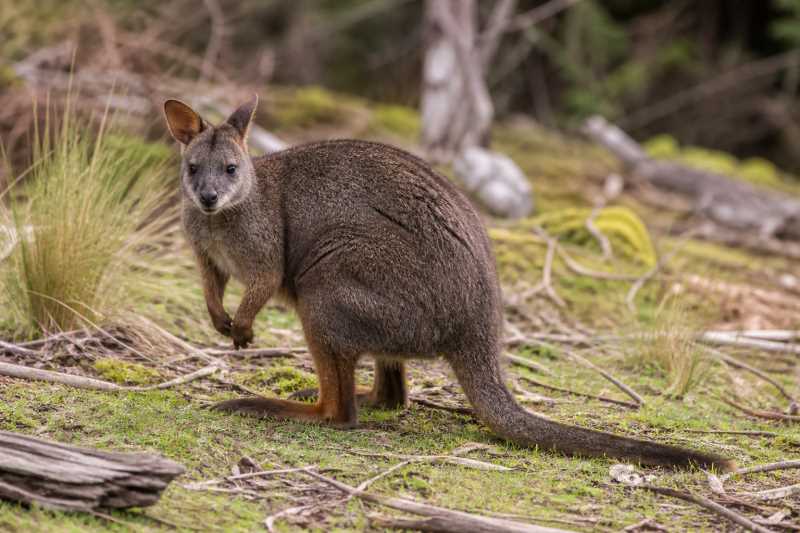
Red-legged Pademelons are small marsupials, with adult males typically weighing between 4 to 10 kilograms and females slightly lighter. They stand about 38 to 58 centimeters tall, with a tail length ranging from 30 to 40 centimeters. Their fur is primarily a soft brownish-grey on the back, with a lighter, often white or cream-colored underbelly. The most striking feature of the Red-legged Pademelon is its rusty red legs, which contrast with the rest of their body and are the inspiration for their common name.
Their face is characterized by a short snout and small, rounded ears. The eyes are relatively large, adapted for their crepuscular and nocturnal lifestyle. The tail is strong and muscular, aiding in balance and support while moving through their dense forest habitats.
Range and Habitat
The Red-legged Pademelon is found in the rainforests and dense woodlands of northeastern Australia, primarily in Queensland, and the island of New Guinea. They favor regions with thick understories that provide ample cover and food resources. Their range extends from the lowlands to mountainous areas, demonstrating their adaptability to different elevations and climates.
In Australia, these marsupials are often associated with the Wet Tropics, a region known for its diverse and rich biodiversity. The habitat they occupy is typically characterized by a high density of plant species, offering both protection from predators and a variety of food sources.
Behavior and Diet
Red-legged Pademelons are primarily solitary animals, except during the breeding season or when a mother is caring for her young. They are crepuscular, meaning they are most active during the twilight hours of dawn and dusk, which helps them avoid the heat of the day and many of their predators.
Their diet mainly consists of fallen leaves, fruits, and grasses, which they forage from the forest floor. They are also known to consume fungi and flowers, showing a diverse diet that helps them adapt to different food availability throughout the year.
During foraging, Red-legged Pademelons use their sharp vision and strong sense of smell to locate food. They play a crucial role in their ecosystem by aiding in seed dispersal, which contributes to the maintenance of their rainforest habitats.
Identification Tips (field recognition cues)
Identifying a Red-legged Pademelon in the wild can be done by looking for several key features:
- Leg Coloration: Look for the distinctive rusty red coloration on the legs, a primary identifying characteristic.
- Size and Shape: Note the small to medium size, with a robust and compact body.
- Facial Features: They have a short snout and rounded ears, with relatively large eyes.
- Behavior: Observe their crepuscular activity patterns, often foraging during dawn and dusk.
- Tail: A strong and muscular tail used for balance.
Conservation Status (with threats and protections)
The conservation status of the Red-legged Pademelon is currently listed as Least Concern by the IUCN. However, they face several threats that could impact their populations if not managed properly. The primary threats include habitat loss due to deforestation and land development, predation by introduced species such as feral dogs and cats, and competition for food resources.
Conservation efforts are focused on habitat preservation and restoration, controlling invasive species, and monitoring population trends. Protected areas, such as national parks within their range, provide vital refuges for these marsupials, safeguarding their natural habitat from further destruction.
Frequently Asked Questions
What do Red-legged Pademelons eat?
Red-legged Pademelons primarily eat fallen leaves, fruits, grasses, fungi, and flowers. Their diet varies with availability, playing a role in seed dispersal in their rainforest habitats.
Where are Red-legged Pademelons found?
They are native to northeastern Australia and New Guinea, inhabiting rainforests and dense woodlands, particularly within Queensland’s Wet Tropics.
Are Red-legged Pademelons endangered?
Currently, they are listed as Least Concern by the IUCN. However, they face threats such as habitat loss and predation, necessitating conservation efforts.
How can you identify a Red-legged Pademelon?
Identify them by their rusty red legs, small size, rounded ears, and crepuscular activity patterns. They have a strong, muscular tail used for balance.
What role do Red-legged Pademelons play in the ecosystem?
They contribute to seed dispersal through their foraging habits, which helps maintain the health and diversity of rainforest ecosystems.
Related posts