Brehm’s Tiger Parrot: A Jewel of the Montane Forests
The Brehm’s Tiger Parrot (Psittacella brehmii) is an intriguing species, endemic to the highland forests of New Guinea. This small, vibrant parrot, with its distinctive tiger-like stripes, not only captivates bird enthusiasts but also plays an integral role in its ecosystem. This article delves into the unique characteristics, habitat, behavior, and conservation status of this remarkable avian species.
Distinctive Characteristics
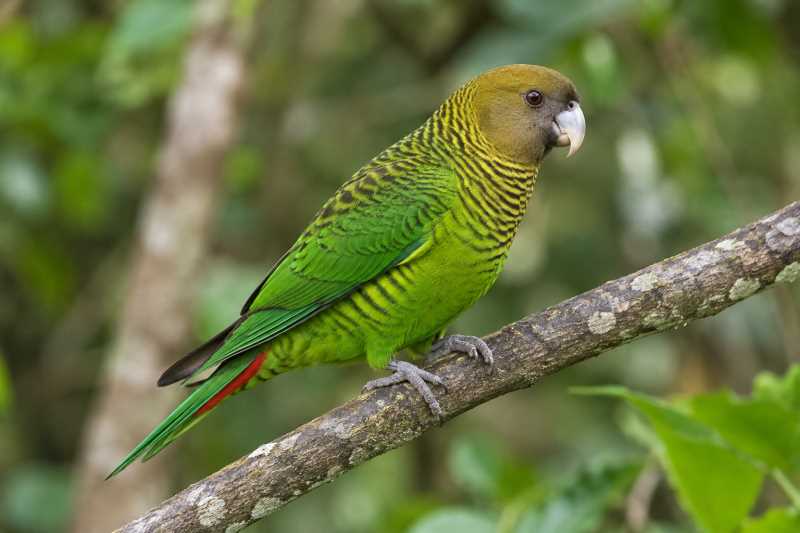
Brehm’s Tiger Parrot is a medium-sized parrot, measuring approximately 24 cm in length. It is easily recognizable by its striking plumage. The head and nape are a rich dark green, transitioning to a lighter green across the body, with the underparts displaying the characteristic black and yellow tiger stripes from which it derives its name. The beak is a pale blue, while the eyes are encircled with a distinct, bright yellow ring, enhancing its captivating appearance.
Sexual dimorphism is subtle in this species. Males typically have a more vivid coloration compared to females, which are slightly duller and tend to have less pronounced striping. Juveniles resemble females but with even less pronounced colors and markings.
Habitat and Distribution
Brehm’s Tiger Parrot is native to the montane forests of New Guinea, primarily residing at elevations between 1,500 and 2,800 meters. These parrots thrive in the cool, moist environments of these high-altitude forests, which are characterized by dense canopy cover and abundant epiphytes. The undergrowth in these regions is rich with ferns and shrubs, providing ample foraging opportunities.
Their range is largely concentrated in the central highlands of New Guinea, including the Owen Stanley Range and the Vogelkop Peninsula. Despite their relatively limited range, Brehm’s Tiger Parrots are generally considered to be locally common within suitable habitats.
Behavior and Diet
Brehm’s Tiger Parrots are highly social birds, often found in small flocks or family groups. Their vocalizations are a series of melodic whistles and chirps, which they use to communicate with each other in the dense forest canopy. These calls are vital for maintaining group cohesion in their often visually obstructed habitat.
The diet of Brehm’s Tiger Parrot is primarily frugivorous. They feed on a variety of fruits, seeds, nuts, and berries. Their strong, curved beaks are well-adapted for cracking open tough seeds and nuts, allowing them to access a wide range of food sources. Additionally, they are known to consume small insects and larvae, supplementing their diet with essential proteins.
Reproduction
Breeding habits of Brehm’s Tiger Parrot are not extensively documented, but like many parrots, they are believed to be monogamous, forming long-term pair bonds. Nesting typically occurs in tree cavities, which provide protection from predators and harsh weather conditions. The female is responsible for incubating the eggs, while the male provides food and protection. The chicks are altricial, meaning they are born blind and helpless, relying entirely on parental care for survival.
Conservation Status
Currently, Brehm’s Tiger Parrot is classified as Least Concern by the International Union for Conservation of Nature (IUCN). However, like many forest-dependent species, they face potential threats from habitat loss due to deforestation and land conversion for agriculture. Climate change also poses a significant risk, as changes in temperature and precipitation patterns could alter their montane forest habitats.
Conservation efforts are crucial to preserving these unique ecosystems and the species that inhabit them. Protecting large swaths of forest, implementing sustainable land management practices, and promoting awareness about the ecological importance of these regions are essential strategies for ensuring the long-term survival of Brehm’s Tiger Parrot.
Human Interaction and Cultural Significance
In New Guinea, parrots, including Brehm’s Tiger Parrot, hold cultural significance for many indigenous communities. They are often featured in local folklore and are considered symbols of beauty and grace. While they are not typically domesticated, their striking appearance does make them a target for wildlife enthusiasts and bird watchers visiting the region.
Conclusion
Brehm’s Tiger Parrot is a fascinating and vibrant species, playing a crucial role in the biodiversity of New Guinea’s montane forests. Understanding and preserving their habitat is essential for maintaining the ecological balance and ensuring these stunning parrots continue to thrive. As we strive to conserve our planet’s biodiversity, the story of Brehm’s Tiger Parrot serves as a reminder of the interconnectedness of all life forms and the importance of protecting our natural world.
Related posts