Horsfield’s Roundleaf Bat (Hipposideros larvatus): A Comprehensive Guide
Introduction
Horsfield’s Roundleaf Bat, scientifically known as Hipposideros larvatus, is a fascinating mammal belonging to the family Hipposideridae. These bats are known for their distinctive roundleaf nose, which plays a crucial role in their echolocation abilities. Found predominantly in Southeast Asia, they occupy a variety of habitats and are an integral part of the ecosystem. In this article, we will delve into the various facets of Horsfield’s Roundleaf Bat, including their physical characteristics, habitat preferences, dietary habits, and conservation status.
Physical Description
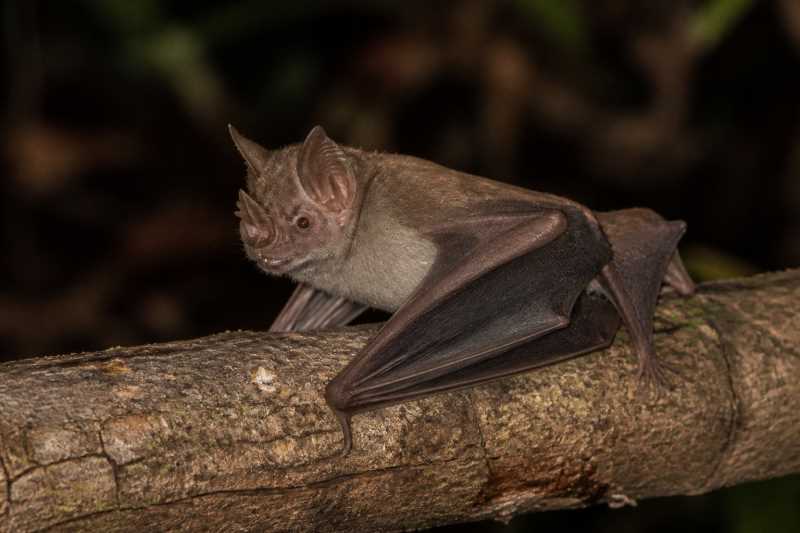
Horsfield’s Roundleaf Bat is a medium-sized bat, with a body length ranging from 60 to 90 millimeters and a wingspan of approximately 300 to 400 millimeters. One of the most striking features of this bat is its noseleaf, which is shaped like a horseshoe. This unique structure aids in echolocation, helping the bat to navigate and hunt in the dark. The fur of the bat is generally a brownish-gray color, which provides effective camouflage in their natural habitats.
The ears of Hipposideros larvatus are large and pointed, enhancing their auditory capabilities. Their eyes are relatively small, which is typical for bats that rely heavily on echolocation. The tail is short and enclosed partially by the tail membrane, which assists in agile flight.
Range and Habitat
Horsfield’s Roundleaf Bat is predominantly found in Southeast Asia, with its range extending across countries such as Thailand, Malaysia, Indonesia, and Vietnam. They thrive in a variety of habitats, including tropical rainforests, limestone caves, and even agricultural areas. These bats are highly adaptable and can often be found roosting in caves, old buildings, and tree hollows.
The preference for limestone caves is particularly notable, as these provide the bats with a stable environment that is ideal for roosting and breeding. The presence of water bodies near these roosting sites is also a common feature, as it supports a rich diversity of insect prey.
Behavior and Diet
Horsfield’s Roundleaf Bats are nocturnal creatures, emerging from their roosts at dusk to forage for food. Their diet primarily consists of insects, including moths, beetles, and flies. They use echolocation to locate prey, emitting high-frequency sounds that bounce off objects and return as echoes.
Social behavior is an essential aspect of their ecology. These bats often form colonies that can range from a few individuals to several hundred. Within these colonies, they exhibit complex social structures and communication through vocalizations and physical gestures.
Breeding typically occurs once a year, with females giving birth to a single offspring after a gestation period of around six months. The young bats, known as pups, are cared for by the mother until they are capable of independent flight and foraging.
Identification Tips
Recognizing Horsfield’s Roundleaf Bat in the field can be challenging, but certain features can aid in identification:
- Noseleaf Shape: The horseshoe-shaped noseleaf is a distinctive characteristic.
- Size and Color: Medium-sized with brownish-gray fur.
- Echolocation Calls: Use of frequency-modulated echolocation calls can be detected with specialized equipment.
- Roosting Habits: Often found in limestone caves and abandoned structures.
Conservation Status
The International Union for Conservation of Nature (IUCN) lists Horsfield’s Roundleaf Bat as a species of Least Concern. However, they face several threats, including habitat destruction due to deforestation and human encroachment. The disturbance of roosting sites in caves and old buildings also poses a significant threat.
Conservation efforts are focused on protecting natural habitats and roosting sites. Environmental education and awareness programs are also crucial in promoting the conservation of these bats. Legal protections in some regions help safeguard their habitats from further destruction.
Frequently Asked Questions
What is the natural habitat of Horsfield’s Roundleaf Bat?
Horsfield’s Roundleaf Bat is primarily found in tropical rainforests, limestone caves, and agricultural areas across Southeast Asia.
How does Horsfield’s Roundleaf Bat use echolocation?
These bats emit high-frequency sounds that bounce off objects and return as echoes, allowing them to navigate and locate prey in the dark.
What are the main threats to Horsfield’s Roundleaf Bat?
The main threats include habitat destruction, disturbance of roosting sites, and human encroachment.
How can we help in the conservation of Horsfield’s Roundleaf Bat?
Supporting habitat protection initiatives, reducing human disturbance at roosting sites, and participating in awareness programs can aid in conservation efforts.
Are Horsfield’s Roundleaf Bats solitary or social animals?
They are social animals that often form colonies ranging from a few individuals to several hundred.
Related posts