Introduction
The New Guinea Free-tailed Bat, scientifically known as Austronomus kuboriensis, is a captivating species of bat native to the diverse and ecologically rich region of New Guinea. As part of the Molossidae family, also known as free-tailed bats, these mammals exhibit unique characteristics that make them a subject of interest for researchers and conservationists alike. Despite their ecological importance, the New Guinea Free-tailed Bat remains relatively under-researched, making it crucial to raise awareness and understanding about this intriguing species.
New Guinea, a region renowned for its biodiversity, provides a complex tapestry of habitats that support a wide variety of flora and fauna. Within this setting, the New Guinea Free-tailed Bat plays a vital role in maintaining ecological balance, primarily through its insectivorous diet, which helps control insect populations.
This article delves into the physical characteristics, habitat, behavior, diet, and conservation status of the New Guinea Free-tailed Bat, providing a comprehensive overview for enthusiasts, researchers, and conservationists.
Physical Description
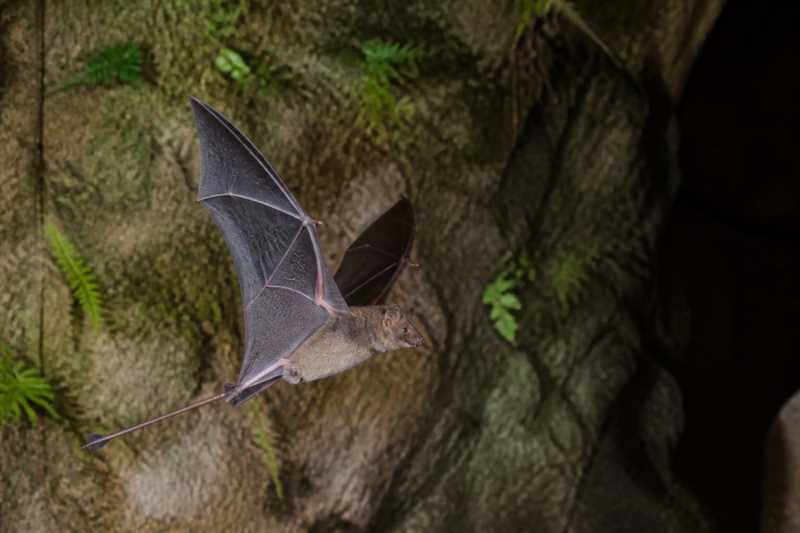
The New Guinea Free-tailed Bat is distinguished by several physical features typical of the Molossidae family, yet it possesses unique attributes that set it apart. This medium-sized bat has a robust body and a distinctive tail that extends beyond the edge of the uropatagium — the membrane that stretches between the bat’s hind legs.
Size and Build: Adult New Guinea Free-tailed Bats typically have a body length ranging from 10 to 12 centimeters, with a wingspan of approximately 30 to 35 centimeters. They weigh between 20 to 40 grams, a size that allows for agile flight and efficient hunting.
Fur and Coloration: Their fur is usually a dark brown to reddish-brown, providing effective camouflage against the bark of trees and the dark skies of their nocturnal habitat. The fur is short and dense, offering protection and insulation.
Facial Features: The face of the New Guinea Free-tailed Bat is characterized by a broad muzzle and large ears that aid in echolocation. Their eyes are small, typical of nocturnal mammals that rely more heavily on hearing and echolocation than on vision.
Wings and Tail: The wings are long and narrow, adapted for fast and sustained flight, which is essential for their insectivorous feeding habits. The tail, as implied by their name, is free beyond the tail membrane, a characteristic feature of free-tailed bats.
Range and Habitat
The New Guinea Free-tailed Bat is endemic to New Guinea, inhabiting both the island of Papua New Guinea and the Indonesian part of the island. They are found in a variety of habitats ranging from lowland rainforests to montane forests, often at elevations from sea level up to 1,500 meters.
Preferred Habitats: These bats favor forested areas where they can roost in tree hollows, under bark, or in caves. They are also found near water bodies, which attract a plethora of insect prey. The diversity of the New Guinea habitat supports a rich food supply, making it an ideal environment for these bats.
Distribution: While their precise distribution is not fully mapped due to limited research, they are believed to be widespread across the island, adapting to various ecological niches. This adaptability is crucial for their survival, given the dynamic environmental changes and human activities impacting their habitats.
Behavior and Diet
The New Guinea Free-tailed Bat is primarily nocturnal, emerging at dusk to forage for food. Their behavior and diet play a significant role in the ecosystem, particularly in controlling insect populations.
Foraging Habits: These bats are insectivorous, feeding predominantly on a variety of nocturnal insects such as moths, beetles, and flies. Their flight patterns are adapted for high-speed pursuits, allowing them to cover large areas in search of prey.
Echolocation: Like many bats, the New Guinea Free-tailed Bat uses echolocation to navigate and hunt. They emit ultrasonic calls that bounce off objects, helping them detect and capture insects even in complete darkness.
Social Structure: They are known to roost in small colonies, which offers protection from predators and facilitates social interactions. Communication among these bats is primarily through vocalizations and pheromones.
Identification Tips (field recognition cues)
Identifying the New Guinea Free-tailed Bat in the field requires attention to specific features and behaviors:
- Tail Structure: Look for the distinctive tail that protrudes beyond the tail membrane, a key feature of free-tailed bats.
- Flight Pattern: Observe the fast and agile flight, characteristic of bats hunting insects.
- Echolocation Calls: Use bat detectors to pick up high-frequency calls typical of insectivorous bats.
- Roosting Sites: Check tree hollows and caves, especially in forested areas, which are common roosting spots.
Conservation Status (with threats and protections)
The conservation status of the New Guinea Free-tailed Bat is currently listed as "Data Deficient" by the International Union for Conservation of Nature (IUCN). This classification indicates that there is insufficient information to make a precise assessment of its population trends and threats.
Threats:
- Habitat Destruction: Deforestation for logging, agriculture, and urbanization poses a significant threat to their habitats.
- Climate Change: Alterations in climate patterns can affect food availability and habitat conditions.
- Human Disturbance: Increased human activity near roosting sites can lead to habitat degradation and stress.
Protections: Efforts to protect the New Guinea Free-tailed Bat involve:
- Habitat Conservation: Preserving forest areas and implementing sustainable land-use practices.
- Research and Monitoring: Conducting studies to better understand their ecology and population dynamics.
- Public Awareness: Educating communities about the ecological role of bats and the importance of conservation.
Frequently Asked Questions
1. What is the typical lifespan of a New Guinea Free-tailed Bat? New Guinea Free-tailed Bats can live up to 10 years in the wild, although this can vary based on environmental conditions and threats.
2. How does the New Guinea Free-tailed Bat contribute to its ecosystem? These bats play a crucial role in controlling insect populations, thereby helping maintain ecological balance and reducing the spread of insect-borne diseases.
3. How can I help in the conservation of New Guinea Free-tailed Bats? You can contribute by supporting conservation organizations, promoting sustainable practices, and spreading awareness about the importance of bats in ecosystems.
4. Are New Guinea Free-tailed Bats dangerous to humans? No, these bats are not dangerous to humans. They are insectivorous and do not pose any direct threat. However, as with all wildlife, it is best to observe them from a distance.
5. What adaptations allow the New Guinea Free-tailed Bat to thrive in its environment? Their fast flight, echolocation abilities, and adaptability to various habitats enable them to efficiently hunt and survive in diverse ecological conditions.
Related posts