Miller’s Saki (Pithecia milleri): A Comprehensive Guide
Introduction
Miller’s Saki, scientifically known as Pithecia milleri, is a fascinating New World monkey species that thrives in the lush rainforests of South America. Part of the Pitheciidae family, these primates are known for their distinct appearance, intriguing behaviors, and adaptability to the dense forest habitats they call home. Despite their captivating nature, much about these elusive creatures remains a mystery, primarily due to their remote habitat and limited research. This article aims to shed light on various aspects of Miller’s Saki, from their physical attributes to their conservation status, offering valuable insights for wildlife enthusiasts and researchers alike.
Physical Description
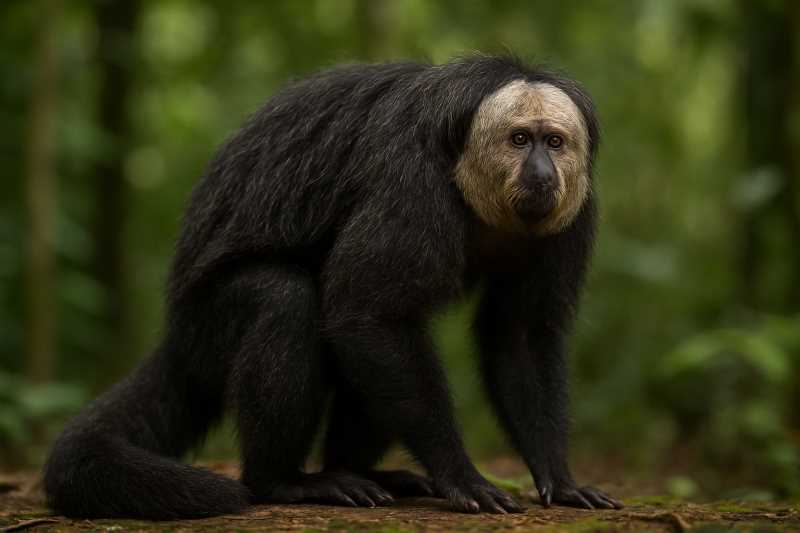
Miller’s Saki is characterized by its medium-sized body, with males typically larger than females, a common trait among many primate species. Adults have a body length ranging from 30 to 50 centimeters, coupled with a bushy tail that can extend up to 40 centimeters. Their weight varies between 1.5 to 2.5 kilograms, making them relatively lightweight and agile.
One of the most striking features of Miller’s Saki is its dense, shaggy fur, which ranges in color from light gray to dark brown, providing excellent camouflage in the forest canopy. Their heads are adorned with a thick mane of hair that frames their face. The face itself is bare, with a pale complexion and expressive eyes that offer a somewhat somber expression. This distinct facial appearance, along with their unique fur texture, makes them easily distinguishable from other primates within their habitat.
Range and Habitat
Miller’s Saki is predominantly found in the Amazonian lowland forests of Colombia, Ecuador, and Peru. These regions are characterized by their dense, biodiverse ecosystems, which provide ample resources and shelter for the sakis. They prefer the upper and middle levels of the forest canopy, where they can forage for food and evade ground-dwelling predators.
The Amazonian habitat is rich with towering trees, thick underbrush, and a myriad of plant and animal species. This environment not only supports the dietary needs of Miller’s Saki but also offers countless opportunities for these primates to engage in their arboreal lifestyle. Their presence in these areas highlights the importance of preserving these critical ecosystems from deforestation and other forms of habitat destruction.
Behavior and Diet
Miller’s Saki is primarily diurnal, meaning they are most active during the day. They are arboreal and spend most of their time in trees, adeptly leaping from branch to branch in search of food. These primates are generally shy and elusive, often avoiding human contact.
Their diet is omnivorous and includes a variety of fruits, seeds, leaves, and occasionally small insects. Fruits form a significant portion of their diet, and their role as seed dispersers is crucial for the ecological health of their habitat. By consuming fruits and excreting the seeds elsewhere, they contribute to the regeneration of plant life within the forest.
Socially, Miller’s Saki lives in small family groups, typically consisting of a mating pair and their offspring. These groups are known for their strong social bonds and cooperative behaviors, such as grooming and shared parenting responsibilities.
Identification Tips
Field recognition of Miller’s Saki can be challenging due to their elusive nature and preference for high canopy levels. However, several cues can aid in their identification:
- Fur Texture and Color: Look for their shaggy, thick fur, which is distinctive among primates. The coloration varies, but the mane-like hair on their head is a key characteristic.
- Facial Features: Their bare, pale face with pronounced eyes is unique and easily discernible.
- Size and Proportions: Note the medium body size with a relatively long tail compared to the body length.
- Behavior: Observe their arboreal locomotion and preference for the upper canopy, as well as their feeding habits.
Conservation Status
As of the latest assessments, Miller’s Saki is classified as "Data Deficient" by the International Union for Conservation of Nature (IUCN). This classification indicates a lack of sufficient data to make a direct evaluation of their population trends and threats.
However, like many Amazonian species, Miller’s Saki faces significant threats from habitat destruction due to logging, agriculture, and mining activities. These activities lead to habitat fragmentation, which severely impacts their ability to find food and mate, thus threatening their long-term survival.
Conservation efforts for Miller’s Saki primarily focus on habitat protection and the establishment of protected areas within their range. Environmental organizations are also advocating for sustainable land-use practices to mitigate habitat loss. Continued research and monitoring are essential to better understand their population dynamics and inform conservation strategies.
Frequently Asked Questions
1. What is the primary diet of Miller’s Saki?
Miller’s Saki primarily feeds on fruits, seeds, and leaves, supplemented by small insects. They play an essential role as seed dispersers in their ecosystem.
2. Where can Miller’s Saki be found?
Miller’s Saki inhabits the Amazonian lowland forests of Colombia, Ecuador, and Peru. They prefer the middle and upper canopy levels of these dense forests.
3. What are the main threats to Miller’s Saki?
The primary threats to Miller’s Saki include habitat destruction due to deforestation, agriculture, and mining. These activities lead to habitat fragmentation, posing a risk to their survival.
4. How can Miller’s Saki be identified in the wild?
Look for their shaggy fur, distinctive pale face, and medium body size. They are typically found in the upper canopy of dense forests.
5. What conservation efforts are in place for Miller’s Saki?
Efforts include habitat protection, establishing protected areas, and promoting sustainable land-use practices to reduce habitat loss and fragmentation.
Related posts