The White-gorgeted Flycatcher: A Gem of the Asian Forests
Introduction
The White-gorgeted Flycatcher (Anthipes monileger) is a small yet captivating bird species native to the dense forests of South and Southeast Asia. Known for its striking appearance and melodious song, this bird has captured the interest of ornithologists and birdwatchers alike. This article delves into the fascinating world of the White-gorgeted Flycatcher, exploring its habitat, behavior, and conservation status.
Taxonomy and Nomenclature
Belonging to the family Muscicapidae, the White-gorgeted Flycatcher was once placed under the genus Ficedula. However, recent taxonomic revisions have relocated it to the genus Anthipes. The species name “monileger” is derived from Latin, meaning “necklace-wearer,” a nod to the distinctive white patch on its throat that resembles a necklace.
Physical Description
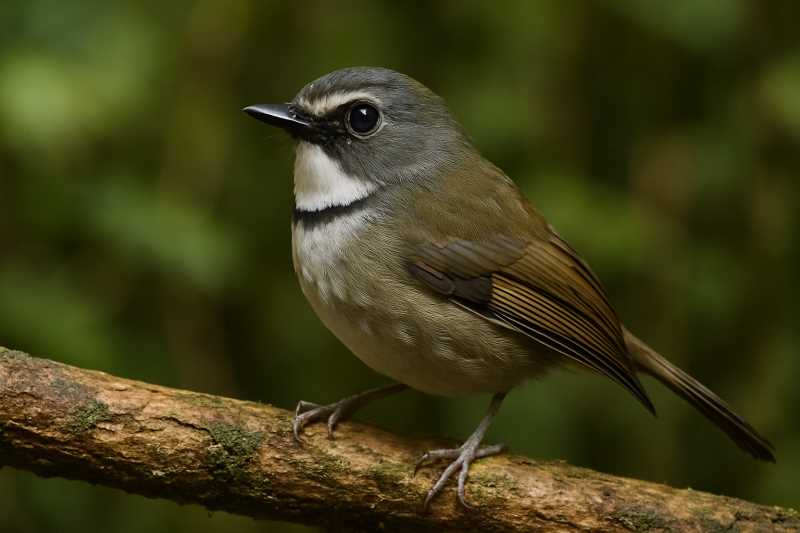
The White-gorgeted Flycatcher is a small bird, measuring approximately 12 to 14 centimeters in length. Its plumage is primarily olive-brown, providing excellent camouflage in its forest habitat. The most striking feature is the white patch on its throat, which contrasts sharply with its darker face and upper breast. This “gorget” is more pronounced in males, making it a key feature in sexual dimorphism and mate attraction.
Habitat and Distribution
This species inhabits the subtropical and tropical moist montane forests across a range of countries including India, Nepal, Bhutan, Myanmar, Thailand, Laos, and Vietnam. The White-gorgeted Flycatcher prefers altitudes between 1,000 to 3,000 meters, thriving in dense undergrowth and bamboo thickets where it can forage for insects and other small invertebrates.
Behavior and Diet
The White-gorgeted Flycatcher is an insectivorous bird, primarily feeding on a diet of insects and small arthropods. It is known for its agile hunting techniques, often engaging in “flycatching,” where it darts from a perch to snatch prey mid-air. This species is also known to glean insects from foliage and bark.
Socially, the White-gorgeted Flycatcher is somewhat solitary, often seen alone or in pairs. During the breeding season, it becomes more territorial, with males using their song to establish dominance and attract mates. The song is a melodious series of whistles and trills, which can vary slightly between individuals and regions.
Breeding and Reproduction
The breeding season for the White-gorgeted Flycatcher typically occurs from April to July. During this time, males engage in elaborate displays to woo potential mates, including puffing out their gorget to display its full splendor. The female is responsible for building the nest, often choosing a concealed location in dense vegetation to protect against predators.
Nests are cup-shaped, constructed from moss, leaves, and twigs. A typical clutch consists of two to four eggs, which are incubated by the female for about 14 to 16 days. Both parents participate in feeding the chicks once they hatch, and the fledglings leave the nest approximately two weeks after hatching.
Conservation Status
The White-gorgeted Flycatcher is currently listed as a species of Least Concern by the International Union for Conservation of Nature (IUCN). However, its habitat is under pressure from deforestation and human encroachment, which could pose future threats. Conservation efforts are crucial in preserving the natural habitats that support not only the White-gorgeted Flycatcher but also the diverse ecosystems of which it is a part.
Importance in Ecosystem
As an insectivore, the White-gorgeted Flycatcher plays a vital role in controlling insect populations, contributing to the ecological balance within its habitat. Its presence indicates a healthy, biodiverse forest ecosystem, making it an important species for conservationists to monitor.
Conclusion
The White-gorgeted Flycatcher is a remarkable example of avian beauty and ecological significance. Its distinctive appearance and melodic song add to the rich tapestry of life in the Asian forests. While currently not endangered, ongoing conservation efforts are essential to ensure that this species continues to thrive in its natural habitat. By understanding and appreciating the White-gorgeted Flycatcher, we can better advocate for the preservation of the world’s biodiversity.
References
1. BirdLife International. (2021). *Anthipes monileger*. The IUCN Red List of Threatened Species 2021.
2. Del Hoyo, J., Elliott, A., & Christie, D. (Eds.). (2006). *Handbook of the Birds of the World.* Vol. 11. Lynx Edicions.
3. Rasmussen, P. C., & Anderton, J. C. (2012). *Birds of South Asia: The Ripley Guide.* Smithsonian Institution and Lynx Edicions.
Related posts