Lowland Streaked Tenrec: A Comprehensive Guide
Introduction
The Lowland Streaked Tenrec (Hemicentetes semispinosus) is a remarkable and unique mammal native to Madagascar. Known for its distinct appearance and fascinating behaviors, this tenrec species is a subject of interest among researchers and wildlife enthusiasts alike. As an integral part of Madagascar’s rich biodiversity, the Lowland Streaked Tenrec plays a crucial role in its ecosystem, offering insights into evolutionary biology and species adaptation.
Physical Description
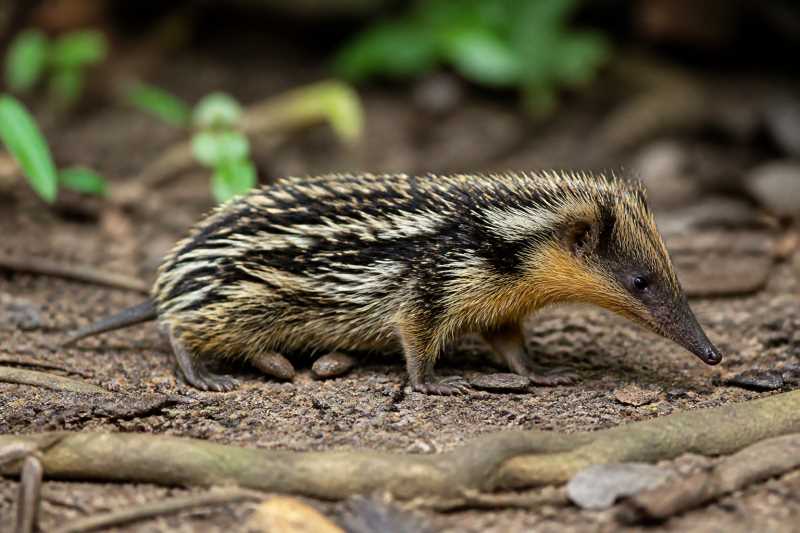
The Lowland Streaked Tenrec is easily recognizable due to its striking physical features. It is a small mammal, typically measuring between 14 to 17 centimeters in length, including its tail, and weighing approximately 200 grams. Its body is covered with a combination of soft fur and spines, which serve as a form of defense against predators.
The most distinguishing characteristic of the Lowland Streaked Tenrec is the vivid yellow and black streaks that run along its body. These streaks are not only visually striking but also serve as a warning signal to potential predators. The spines on its back can be erected, and some are detachable, a defense mechanism unique to this species.
The tenrec possesses a long, pointed snout and small eyes, adaptations that aid in its burrowing lifestyle. Its limbs are short, with clawed toes that facilitate digging and foraging in the leaf litter of its habitat.
Range and Habitat
The Lowland Streaked Tenrec is endemic to Madagascar, predominantly found in the eastern rainforests of the island. Its range extends from lowland areas to mid-altitude regions, typically up to 1,200 meters above sea level. The tenrec thrives in humid tropical forests, where it can access a diverse array of invertebrates to feed on.
These mammals are often found near water bodies, such as streams and marshes, which provide ample foraging opportunities. The dense vegetation and complex forest floor structure offer ideal conditions for the tenrec to navigate, burrow, and hide from predators.
Behavior and Diet
The Lowland Streaked Tenrec exhibits fascinating behavioral traits. It is primarily nocturnal, spending the daylight hours hidden within burrows or under dense foliage. At night, it becomes active, foraging for food and engaging in social interactions.
This species is known for its unique stridulation behavior, where it produces sound by rubbing specialized quills on its back together. This sound is used for communication among family members, especially between mothers and their offspring.
The diet of the Lowland Streaked Tenrec consists mainly of invertebrates, including earthworms, insects, and other small arthropods. It uses its keen sense of smell and tactile snout to locate prey within the leaf litter and soil. Occasionally, it may also consume small vertebrates and plant material.
Identification Tips
Recognizing the Lowland Streaked Tenrec in the field involves observing several key characteristics:
- Coloration: Look for the distinctive black and yellow streaks along the body.
- Size and Shape: Note the small size, elongated snout, and stocky build.
- Spines: The presence of erectable spines is a crucial identification feature.
- Habitat: Typically found in lowland rainforests near water bodies.
- Activity: Active during the night, often involved in vocal communication and foraging.
Conservation Status
The conservation status of the Lowland Streaked Tenrec is currently listed as Least Concern by the International Union for Conservation of Nature (IUCN). However, like many species endemic to Madagascar, it faces several threats that could impact its population in the future.
Threats
- Habitat Loss: Deforestation for agriculture, logging, and development poses a significant threat to the tenrec’s habitat.
- Climate Change: Altered weather patterns and increased frequency of cyclones can disrupt their habitat and food sources.
- Predation: Introduced species, such as domestic dogs and cats, pose a predation risk.
Protections
Efforts to protect the Lowland Streaked Tenrec include:
- Protected Areas: Many of their habitats fall within national parks and reserves, offering some level of protection against deforestation.
- Conservation Programs: Initiatives aimed at reforestation and habitat restoration aid in maintaining suitable environments for the tenrec.
- Public Awareness: Educating local communities about the ecological importance of tenrecs and promoting sustainable land use practices.
Frequently Asked Questions
What is the primary habitat of the Lowland Streaked Tenrec?
The Lowland Streaked Tenrec primarily inhabits the humid tropical rainforests of eastern Madagascar. These environments provide the necessary cover and food resources for the species to thrive.
How does the Lowland Streaked Tenrec communicate with others?
The tenrec uses a unique form of communication known as stridulation, which involves rubbing specialized quills together to produce sound. This is particularly important for interaction between mothers and their young.
What are the main threats to the Lowland Streaked Tenrec?
The primary threats include habitat loss due to deforestation, climate change effects, and predation by introduced species such as domestic dogs and cats.
How can one identify a Lowland Streaked Tenrec in the wild?
Key identification features include its small size, black and yellow streaks, erectable spines, and preference for lowland rainforest habitats.
Are Lowland Streaked Tenrecs endangered?
Currently, the Lowland Streaked Tenrec is not considered endangered and is listed as Least Concern by the IUCN. However, ongoing habitat destruction could pose future risks.
Related posts