Introduction
The Kashmir Shrew, scientifically known as Sorex planiceps, is a small mammal belonging to the family Soricidae. This elusive creature is endemic to the Kashmir region, which spans parts of India and Pakistan. Despite its modest size, the Kashmir Shrew plays a significant role in its ecosystem, serving as both predator and prey. Understanding this species is crucial for biodiversity conservation in the region.
Shrews, in general, are known for their high metabolism and insectivorous diets. The Kashmir Shrew is no exception, and its presence is a good indicator of a healthy environment. However, like many species with limited ranges, the Kashmir Shrew faces various threats that could impact its survival.
Physical Description
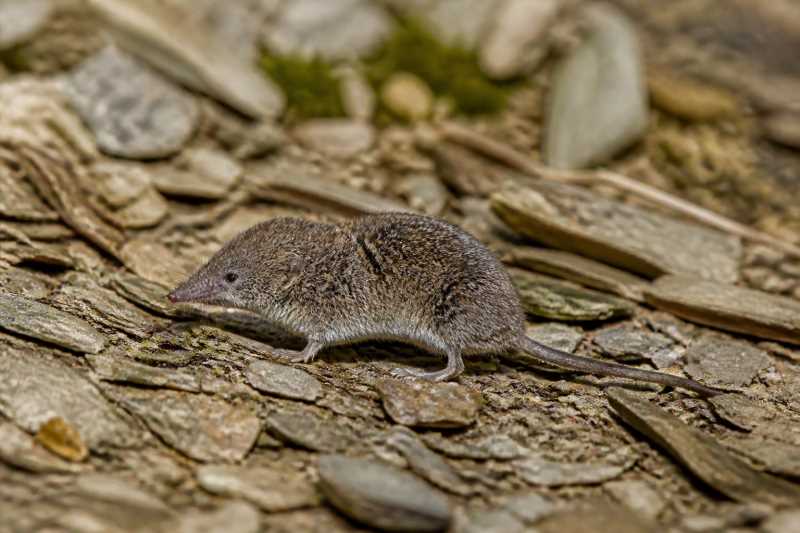
The Kashmir Shrew is a small mammal, typically measuring between 5 to 7 centimeters in body length, with a tail length of approximately 3 to 4 centimeters. Its weight ranges from 5 to 8 grams, making it one of the smaller members of the shrew family.
Its fur is dense and soft, providing insulation against the cold temperatures of its high-altitude habitat. The coloration is generally a dark gray or brown on the dorsal side, with a slightly lighter shade on the ventral side. This muted color palette offers camouflage against the forest floor and rocky terrains.
A distinguishing feature of the Kashmir Shrew is its pointed snout, which is adept at probing into crevices to find food. It has small eyes and ears that are often concealed by its fur, an adaptation that reduces heat loss. The shrew’s limbs are short, but its feet are well-adapted for gripping and climbing.
Range and Habitat
The Kashmir Shrew is primarily found in the Kashmir Valley and some parts of the surrounding mountainous regions. Its range is confined to high-altitude areas, typically between 2,000 to 3,000 meters above sea level. This altitude range provides the cool and moist conditions that the shrew prefers.
Habitats of the Kashmir Shrew include alpine meadows, coniferous forests, and shrublands. It thrives in areas with abundant leaf litter, fallen logs, and rocky crevices, providing both food resources and protection from predators. Seasonal changes in the region, such as heavy snowfall in winter, influence the shrew’s behavior and habitat use.
Behavior and Diet
The Kashmir Shrew is primarily nocturnal, conducting most of its activities under the cover of darkness. This behavior helps it avoid predators and reduces competition with other diurnal species. It is a solitary creature, with individuals generally only coming together for mating.
The diet of the Kashmir Shrew is predominantly insectivorous, consisting of insects, larvae, and other small invertebrates. Occasionally, it may consume plant material and seeds, especially when insect prey is scarce. The shrew’s high metabolism requires it to eat frequently, often consuming its body weight in food each day.
Shrews do not hibernate, which means they remain active throughout the year, even during the harsh winter months. They rely on their keen sense of smell and touch to locate prey under the snow.
Identification Tips (Field Recognition Cues)
Identifying the Kashmir Shrew in the field can be challenging due to its elusive nature and the similarity it shares with other shrew species. However, there are some tips that can aid in its identification:
- Size and Proportion: Look for a small mammal with a body length of 5-7 cm and a tail length of 3-4 cm.
- Fur Color: The dark gray or brown fur on the dorsal side, with lighter ventral fur, can help distinguish it from other species.
- Snout and Ears: Note the pointed snout and small, fur-covered ears, which are less prominent compared to other shrews.
- Habitat: Finding one in high-altitude areas with dense leaf litter and rocky terrains is a good indicator.
- Activity Time: Observations are more likely at night or during twilight hours.
Conservation Status (With Threats and Protections)
The conservation status of the Kashmir Shrew is currently categorized as Data Deficient by the International Union for Conservation of Nature (IUCN). This classification is primarily due to limited research and data on the species’ population trends and distribution.
Threats:
- Habitat Loss: Deforestation, agricultural expansion, and human encroachment are significant threats to its habitat.
- Climate Change: Alterations in temperature and precipitation patterns can affect the availability of food and suitable habitat.
- Predation: Natural predators include birds of prey and larger mammals.
Protections:
- Protected Areas: Some of its habitats fall within protected areas, which offer some level of conservation.
- Research Initiatives: Ongoing research efforts aim to better understand the species’ ecology and distribution, which could inform future conservation strategies.
Conservation efforts must focus on habitat preservation and mitigating the impacts of climate change to ensure the survival of the Kashmir Shrew.
Frequently Asked Questions
1. What is the Kashmir Shrew’s typical diet?
The Kashmir Shrew primarily feeds on insects, larvae, and other small invertebrates. It may also consume plant material and seeds, especially when insect prey is scarce.
2. Where can the Kashmir Shrew be found?
The Kashmir Shrew is found in the Kashmir Valley and surrounding mountainous regions, typically at altitudes between 2,000 to 3,000 meters above sea level.
3. How can I identify a Kashmir Shrew in the wild?
Look for a small mammal with a body length of 5-7 cm, dark gray or brown fur, a pointed snout, and small, fur-covered ears. It is more likely to be observed at night in high-altitude areas.
4. What are the main threats to the Kashmir Shrew?
The main threats include habitat loss due to deforestation and human encroachment, climate change, and natural predators such as birds of prey.
5. Is the Kashmir Shrew endangered?
The Kashmir Shrew is currently classified as Data Deficient by the IUCN, indicating a need for more research to determine its conservation status accurately.
Related posts