Introduction
Meyer’s Giant Rat, scientifically known as Lenomys meyeri, is a fascinating rodent species native to the lush, biodiverse regions of Indonesia. Despite its intriguing characteristics and ecological importance, this species remains relatively unknown to the general public. Named after the German naturalist Adolf Bernhard Meyer, who made significant contributions to natural history, Meyer’s Giant Rat plays a crucial role in the ecosystems it inhabits. This article delves into the various aspects of this unique mammal, from its physical description and habitat to its behavior and conservation status.
Physical Description
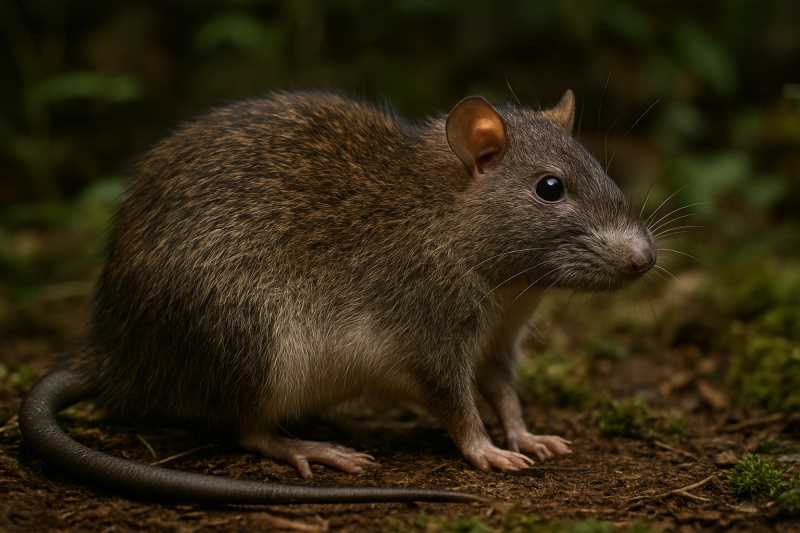
Meyer’s Giant Rat is notable for its large size compared to other rat species. Adults typically measure around 30 to 40 centimeters in body length, with an equally long tail that aids in balance and navigation through their arboreal habitats. Their robust build, covered in dense, coarse fur, is primarily grayish-brown, providing effective camouflage against the forest floor and tree bark. The underparts are lighter, often white or pale gray, which may help in reflecting heat or for signaling during social interactions.
Distinctive facial features include large, expressive eyes adapted for their nocturnal lifestyle and long, sensitive whiskers that enhance their ability to navigate in low-light conditions. The ears are relatively large and rounded, providing excellent hearing capabilities essential for detecting predators and communicating with other rats.
Range and Habitat
Meyer’s Giant Rat is endemic to the island of Sulawesi in Indonesia, where it occupies a range of forested habitats. These include primary and secondary tropical rainforests, which are rich in biodiversity and provide ample resources for their survival. The species is primarily arboreal, spending much of its time in the trees where it finds food and shelter.
The dense canopy and understory vegetation offer protection from predators and harsh weather conditions, while the forest floor provides opportunities for foraging. The presence of Meyer’s Giant Rat in such ecosystems indicates a healthy forest environment, as they rely on a complex web of interactions with other species and their surroundings.
Behavior and Diet
Meyer’s Giant Rat is primarily nocturnal, emerging at night to forage and engage in social activities. This behavior reduces competition for food and decreases the risk of predation from diurnal predators. They are known to be solitary animals, although they may occasionally be seen in pairs or small groups, especially during the breeding season.
Their diet is omnivorous, consisting of a wide variety of fruits, seeds, insects, and small invertebrates. This diverse diet not only supports their nutritional needs but also plays a role in seed dispersal, contributing to the regeneration of their forest habitats. Their strong incisors enable them to crack open hard shells and exoskeletons, allowing them to access a wide range of food sources.
Identification Tips (Field Recognition Cues)
Identifying Meyer’s Giant Rat in the field requires attention to several key characteristics:
- Size and Build: Look for a large, robust rodent with a body length of 30 to 40 centimeters, not including the tail.
- Fur Color: Note the grayish-brown fur on the back and lighter underparts, which can help distinguish them from other species.
- Tail: A long, thick tail, often equal in length to the body, which is used for balance.
- Behavior: Observe their nocturnal activity and arboreal habits, often found in trees or dense vegetation.
Conservation Status (With Threats and Protections)
Currently, Meyer’s Giant Rat is not listed as endangered, but it faces several threats that could impact its population in the future. The primary threat is habitat loss due to deforestation for agriculture, logging, and infrastructure development. Such activities fragment their habitat, reduce their food sources, and increase their vulnerability to predators and human encroachment.
Conservation efforts are essential to ensure the survival of this species. Protecting their natural habitats through the establishment of protected areas and sustainable land-use practices is crucial. Additionally, further research into their ecology and behavior can inform conservation strategies and raise awareness about the importance of preserving Indonesia’s unique biodiversity.
Frequently Asked Questions
What are the main threats to Meyer’s Giant Rat?
Meyer’s Giant Rat faces threats primarily from habitat loss due to deforestation and human expansion. These activities reduce their living space and food resources, making conservation efforts vital.
How can we help protect Meyer’s Giant Rat?
Supporting conservation programs that focus on habitat preservation and sustainable land-use practices can significantly help protect Meyer’s Giant Rat. Raising awareness about their ecological role is also important.
What is the diet of Meyer’s Giant Rat?
Meyer’s Giant Rat has an omnivorous diet, feeding on fruits, seeds, insects, and small invertebrates, which supports their nutritional needs and aids in forest regeneration through seed dispersal.
Related posts