Introduction
The Long-nosed Mongoose (Xenogale naso) is a fascinating and relatively understudied member of the Herpestidae family, known for its distinctive elongated snout. This carnivorous mammal is a robust and adaptable species, primarily found in the forested regions of Central and West Africa. The Long-nosed Mongoose plays a crucial role in its ecosystem, contributing to the control of insect and small vertebrate populations. Despite its ecological significance, much about this species remains a mystery due to its elusive nature and the dense habitats it occupies.
Physical Description
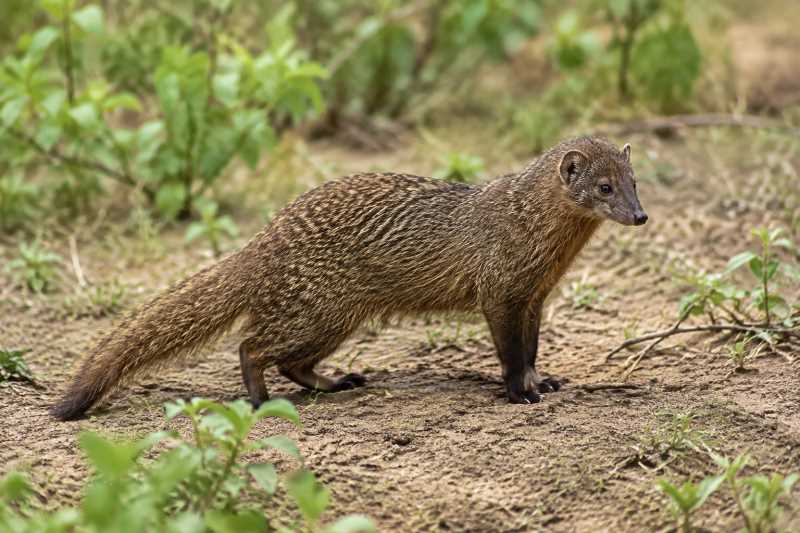
The Long-nosed Mongoose is characterized by its slender build and elongated snout, which is highly adapted for foraging. Adults typically weigh between 2 to 4 kilograms and measure up to 60 centimeters in body length, with a tail that can add an additional 30 to 45 centimeters. The species has a dense, coarse coat that varies in color from dark brown to reddish-brown, often with a paler underbelly. Its limbs are relatively short but strong, supporting its agile movements through dense foliage. The face of the Long-nosed Mongoose is marked by small, rounded ears and bright, inquisitive eyes, giving it a keen sense of its environment.
Range and Habitat
The Long-nosed Mongoose inhabits the tropical and subtropical forests of Central and West Africa, with a range that includes countries such as Gabon, Cameroon, and the Democratic Republic of Congo. This species prefers dense forest habitats with abundant ground cover, often near rivers or streams, which provide ample foraging opportunities. The Long-nosed Mongoose is also known to inhabit secondary forests and occasionally ventures into agricultural lands, displaying a remarkable adaptability to human-altered landscapes.
Behavior and Diet
Primarily solitary and crepuscular, the Long-nosed Mongoose is most active during dawn and dusk. Its elongated snout is an essential tool for locating food, as it probes the leaf litter and soil for invertebrates and small vertebrates. Its diet consists mainly of insects, spiders, amphibians, and small mammals, though it is opportunistic and will consume fruit and carrion when available. The species is known for its dexterous front paws, which aid in capturing and manipulating prey.
Social interactions are limited, although individuals may occasionally be seen foraging in loose groups, particularly in areas with abundant food resources. Communication is primarily through vocalizations and scent marking, with a repertoire that includes growls, hisses, and a variety of calls used in different contexts.
Identification Tips (field recognition cues)
Identifying the Long-nosed Mongoose in the wild can be challenging due to its elusive nature and the dense habitats it frequents. However, certain field recognition cues can aid observers:
- Elongated Snout: The most distinctive feature, aiding in distinguishing it from other mongoose species.
- Coloration: Look for the dark to reddish-brown coat with a lighter underbelly.
- Tail Length: A long bushy tail, often held aloft, is a key identifier.
- Behavior: Observe solitary foraging behavior, often near water sources.
- Tracks and Signs: Small, five-toed tracks and scat may indicate presence.
Conservation Status
The Long-nosed Mongoose is currently listed as Least Concern on the IUCN Red List, but it faces several threats that could impact its population in the future. Habitat destruction due to logging, agriculture, and urban expansion poses the most significant threat, leading to fragmentation and degradation of its forest habitat. Additionally, hunting for bushmeat, although less common, remains a localized threat.
Conservation efforts focus on habitat protection and monitoring population trends. Several protected areas within its range, such as national parks and wildlife reserves, provide a refuge for this species. Further research is needed to better understand its ecology and population dynamics to inform more targeted conservation strategies.
Frequently Asked Questions
1. What is the primary diet of the Long-nosed Mongoose?
The Long-nosed Mongoose primarily feeds on insects, spiders, small mammals, and amphibians. It is an opportunistic feeder and may also consume fruits and carrion when available.
2. Where can the Long-nosed Mongoose be found?
This species is native to the tropical and subtropical forests of Central and West Africa, including Gabon, Cameroon, and the Democratic Republic of Congo.
3. How does the Long-nosed Mongoose adapt to its environment?
The Long-nosed Mongoose has an elongated snout for foraging, a dense coat for protection, and behaviors adaptable to both dense forests and human-altered landscapes.
4. Are Long-nosed Mongooses social animals?
Generally, they are solitary, but they may forage in loose groups if food is abundant. Their interactions are mostly limited to vocalizations and scent markings.
5. What are the conservation efforts in place for the Long-nosed Mongoose?
Efforts include habitat protection within national parks and wildlife reserves, as well as ongoing research to monitor populations and understand ecological roles.
Related posts