Livingstone’s Flying Fox (Pteropus livingstonii): A Comprehensive Guide
Introduction
Livingstone’s Flying Fox, scientifically known as Pteropus livingstonii, is a remarkable megabat species endemic to the Comoros Islands in the Indian Ocean. This bat is a member of the Pteropodidae family, commonly referred to as flying foxes due to their fox-like facial features. As one of the largest bat species in the world, Livingstone’s Flying Fox plays a crucial role in its ecosystem, primarily through its seed dispersal and pollination activities.
However, this magnificent creature faces numerous threats, primarily due to habitat destruction and hunting, which have placed it on the brink of extinction. This article delves into the fascinating world of Livingstone’s Flying Fox, exploring its physical characteristics, behavior, and the conservation efforts aimed at preserving this unique species.
Physical Description
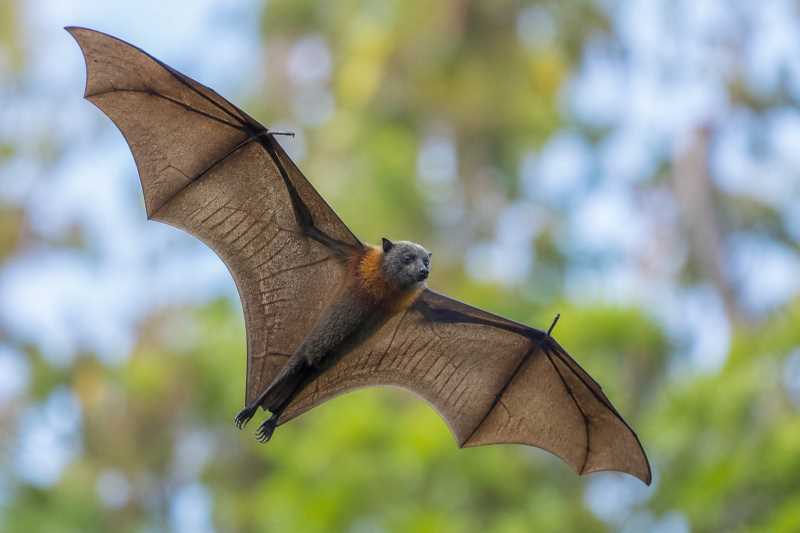
Livingstone’s Flying Fox is a large megabat, with an impressive wingspan ranging from 1.4 to 1.8 meters (approximately 4.6 to 5.9 feet), making it one of the largest bats in the world. Adults typically weigh between 500 to 900 grams (1.1 to 2 pounds). The species exhibits sexual dimorphism, with males generally larger than females.
Their fur is predominantly black, with some individuals exhibiting a slightly brownish hue. The fur is dense and plush, providing insulation and protection. The bat’s eyes are large and brown, adapted for low-light conditions, while its ears are small and rounded, contrasting with the elongated snouts that give them their fox-like appearance.
Range and Habitat
Livingstone’s Flying Fox is native to the Comoros Islands, specifically found on two islands: Anjouan and Mohéli. These islands provide the tropical rainforest habitat crucial for the species’ survival. The bats roost in tall trees, often choosing locations in remote and undisturbed forested areas.
The elevation range for these bats is typically between 200 to 1,200 meters above sea level. They prefer primary forests but are occasionally found in secondary forests and other wooded areas. The degradation of their natural habitat due to agricultural expansion and logging poses significant challenges to their survival.
Behavior and Diet
Livingstone’s Flying Foxes are primarily nocturnal, with their activity peaking during the early evening and just before dawn. They are social creatures, often roosting in colonies that can range from a few individuals to several hundred.
Their diet consists mainly of fruits, nectar, and flowers. They are crucial pollinators and seed dispersers for many plant species in their habitat. The bats travel significant distances, sometimes over 30 kilometers, in search of food, demonstrating their importance in maintaining the ecological balance of their environment.
During feeding, these bats exhibit unique behaviors such as hanging upside-down to access fruit more easily. They use their keen sense of smell and excellent vision to locate food sources.
Identification Tips
Field recognition of Livingstone’s Flying Fox involves several key features:
- Size: Look for a large bat with a wingspan of up to 1.8 meters.
- Coloration: Note the predominantly black fur, with potential brownish tinges.
- Roosting Habits: Observe large colonies in tall trees within rainforest habitats.
- Facial Features: Identify the fox-like face with large eyes and a long snout.
These features, along with their distinct social and feeding behaviors, aid in the identification of Livingstone’s Flying Fox in the wild.
Conservation Status
The International Union for Conservation of Nature (IUCN) lists Livingstone’s Flying Fox as "Endangered" due to its restricted range and declining population. The primary threats include habitat destruction from deforestation, agricultural expansion, and hunting.
Conservation efforts are underway to protect this species. These include habitat restoration projects, legal protection measures, and community-based conservation programs aimed at raising awareness and reducing hunting pressures. Organizations such as the Durrell Wildlife Conservation Trust are actively involved in these efforts, working with local communities to develop sustainable practices that benefit both the bats and the people living in the Comoros Islands.
Frequently Asked Questions
What is the lifespan of Livingstone’s Flying Fox?
Livingstone’s Flying Foxes can live up to 15-20 years in the wild, although this can vary based on environmental conditions and threats.
How do Livingstone’s Flying Foxes contribute to their ecosystem?
These bats are vital pollinators and seed dispersers. By feeding on fruits and flowers, they facilitate the growth of various plant species, maintaining biodiversity and forest health.
Are there any conservation success stories for Livingstone’s Flying Fox?
Yes, there have been successful conservation initiatives, such as the establishment of protected areas and community education programs, which have helped stabilize some populations.
Can Livingstone’s Flying Fox be found outside the Comoros Islands?
No, they are endemic to the Comoros Islands, specifically Anjouan and Mohéli, and are not naturally found elsewhere.
What efforts are being made to protect Livingstone’s Flying Fox?
Efforts include habitat restoration, legal protection, and community engagement to reduce hunting and promote sustainable land-use practices.
Related posts