Introduction
Groves’s Titi (Plecturocebus grovesi) is a captivating primate species that has captured the attention of both researchers and wildlife enthusiasts. Known for its distinctive physical characteristics and intriguing behaviors, this mammal is a member of the titi monkey family, which is found across various parts of South America. Named in honor of the renowned primatologist Colin Groves, Groves’s Titi represents an essential component of the ecosystems it inhabits. This article explores the physical description, range and habitat, behavior and diet, and conservation status of Groves’s Titi, providing a comprehensive overview for anyone interested in learning more about this fascinating species.
Physical Description
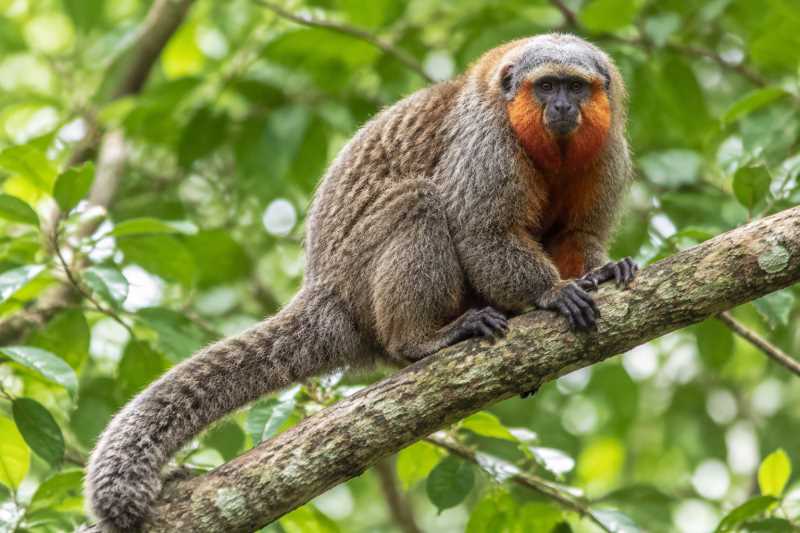
Groves’s Titi is a small to medium-sized primate, characterized by its dense and soft fur, which provides insulation against the cooler temperatures of its habitat. The fur coloration is predominantly a mix of gray and brown, with a lighter underbelly, which helps it blend seamlessly into the forest environment. One of the most distinguishing features of Groves’s Titi is its long, bushy tail, which is not prehensile but plays a crucial role in maintaining balance as the primate moves through the trees.
The face of Groves’s Titi is adorned with expressive eyes and a small, flat nose. Its ears are relatively small and often hidden within the fur, contributing to its endearing appearance. Adult males and females are similar in size, with an average body length of 30 to 40 centimeters and a tail length that can reach up to 50 centimeters. The average weight of an adult Groves’s Titi ranges from 800 grams to 1.2 kilograms.
Range and Habitat
Groves’s Titi is native to the Amazon Basin, with its range primarily concentrated in regions of Peru and Brazil. This species thrives in tropical rainforests, where it inhabits dense, primary forests as well as secondary growth areas. The presence of a continuous canopy is crucial for Groves’s Titi, as it relies heavily on arboreal locomotion, moving through the forest canopy to forage and evade predators.
These primates prefer areas with abundant food sources and are often found near rivers and streams, which provide both hydration and a diverse array of plant species to feed on. The specific range of Groves’s Titi can vary, with certain populations adapting to different types of forest ecosystems, such as terra firme and varzea forests.
Behavior and Diet
Groves’s Titi is a diurnal creature, meaning it is most active during the day. These primates are highly social and are typically found in small family groups consisting of a bonded pair and their offspring. The family structure of Groves’s Titi is characterized by strong pair bonds, with both parents actively involved in the care of their young.
The diet of Groves’s Titi primarily consists of fruits, which make up a significant portion of their nutritional intake. They also consume leaves, flowers, and insects, which provide essential proteins and nutrients. Foraging is a group activity, and these primates exhibit cooperative behaviors to locate and share food resources. Vocal communications play a crucial role in their social structure, with a variety of calls used to maintain group cohesion and alert members to potential dangers.
Identification Tips (Field Recognition Cues)
Identifying Groves’s Titi in the wild can be an exciting challenge for wildlife enthusiasts. Here are some field recognition cues to help you spot this elusive primate:
- Fur Coloration: Look for a small primate with a mix of gray and brown fur, and a lighter underbelly. The coloration allows Groves’s Titi to blend into its forest surroundings.
- Tail Characteristics: Observe the long, bushy tail, which is a key feature that aids in balance but is not used for grasping.
- Social Behavior: Notice the small family groups, often seen moving together through the trees. The group’s social dynamics and vocalizations can be a tell-tale sign of Groves’s Titi.
- Habitat: Focus on areas with dense tree cover and near water sources, as Groves’s Titi prefers these environments for foraging and shelter.
Conservation Status (With Threats and Protections)
The conservation status of Groves’s Titi is currently assessed as "Near Threatened" by the International Union for Conservation of Nature (IUCN). This classification highlights the pressures on their populations due to habitat loss and fragmentation. The expansion of agriculture, logging, and infrastructure development in the Amazon Basin poses significant threats to their natural habitats.
Conservation efforts are underway to mitigate these threats. Protected areas and national parks within their range offer some level of habitat preservation. Additionally, initiatives to promote sustainable land-use practices and reforestation projects aim to restore degraded habitats and create corridors for wildlife movement. Community-based conservation programs also play a vital role in raising awareness and involving local populations in protecting Groves’s Titi and its environment.
Frequently Asked Questions
What is the typical lifespan of Groves’s Titi?
Groves’s Titi typically lives for 12 to 20 years in the wild. Their lifespan can be influenced by factors such as predation, habitat quality, and availability of food resources.
How does Groves’s Titi communicate?
Groves’s Titi uses a range of vocalizations to communicate with its group members. These calls serve various purposes, including maintaining group cohesion, warning of predators, and coordinating movements through the forest.
Are Groves’s Titi monkeys endangered?
While Groves’s Titi is not currently classified as endangered, it is listed as "Near Threatened." This status indicates that the species faces potential risks that could lead to a more critical conservation status if not addressed.
What is the main diet of Groves’s Titi?
The main diet of Groves’s Titi consists of fruits, but they also consume leaves, flowers, and insects. Their diet is diverse and changes with seasonal availability of food sources.
How do Groves’s Titi protect themselves from predators?
Groves’s Titi relies on its arboreal lifestyle, staying high in the forest canopy to avoid ground-based predators. They also use vocal alarms to alert group members of potential dangers, allowing them to take evasive action.
Related posts