Prince Bernhard’s Titi (Plecturocebus bernhardi)
Introduction
Prince Bernhard’s Titi, scientifically known as Plecturocebus bernhardi, is a captivating species of titi monkey found in the dense forests of South America. This remarkable primate was named in honor of Prince Bernhard of the Netherlands, who was known for his significant contributions to wildlife conservation. Discovered relatively recently, in 2002, this titi monkey is a testament to the rich biodiversity still being uncovered in the Amazon rainforest.
Titi monkeys, belonging to the family Pitheciidae, are New World monkeys known for their complex vocalizations and social behaviors. Prince Bernhard’s Titi is no exception, displaying intriguing behaviors that fascinate researchers and animal enthusiasts alike. As we delve into the unique characteristics of this species, we gain insights into the vital roles these primates play in their ecosystem.
Physical Description
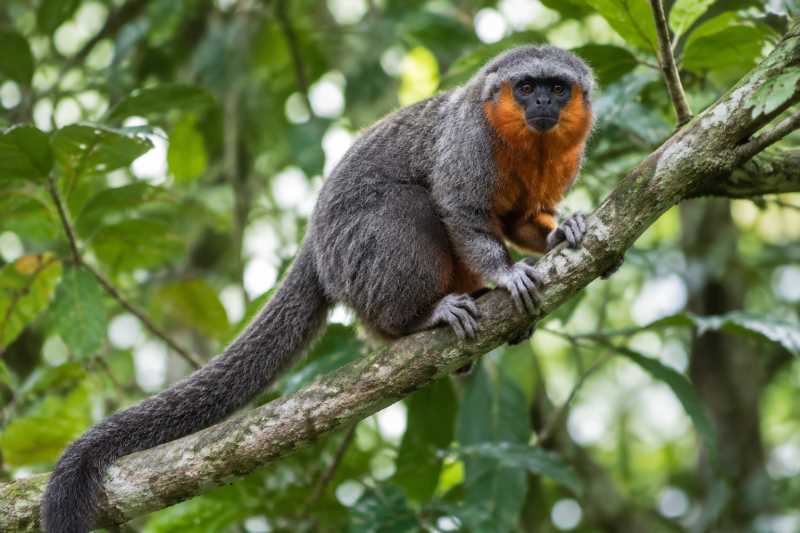
Prince Bernhard’s Titi is a small to medium-sized primate with a distinctive appearance. Adults typically weigh between 1 and 1.5 kilograms (2.2 to 3.3 pounds) and measure about 30 to 40 centimeters (12 to 16 inches) in body length, excluding the tail. Their tails are often longer than their bodies, adding another 40 to 50 centimeters (16 to 20 inches) in length, and are non-prehensile.
The fur of Plecturocebus bernhardi is soft and dense, featuring a striking coloration that aids in camouflage within its forest habitat. The dorsal side is predominantly a rich reddish-brown, while the ventral side is lighter, often a creamy or pale gray. The face is framed by a bushy mane of fur, giving these monkeys an almost lion-like appearance. Their expressive eyes are surrounded by a bare, dark skin patch that contrasts with the surrounding fur.
One of the most distinguishing features of Prince Bernhard’s Titi is its vocal sac, which is used to produce complex vocalizations. This sac is located in the throat area and is more prominent when the monkey is calling.
Range and Habitat
Prince Bernhard’s Titi inhabits the lush, tropical rainforests of South America, specifically in the southwestern Amazon Basin. Its range is primarily in Brazil, particularly in the states of Rondônia and Mato Grosso. These regions are characterized by humid, tropical climates with high levels of rainfall and a diverse array of flora and fauna.
This titi monkey thrives in primary and secondary forests, often at elevations ranging from lowland areas to mid-altitude regions. The dense canopy provides ample cover and resources, allowing these primates to forage and move safely. They are arboreal by nature, spending most of their lives in the trees, where they can find food and avoid ground-based predators.
The habitat of Prince Bernhard’s Titi is incredibly biodiverse, supporting numerous other species of mammals, birds, reptiles, and insects. This biodiversity is crucial for maintaining the ecological balance and ensuring the survival of species like the titi monkey.
Behavior and Diet
Prince Bernhard’s Titi is a diurnal and social species, known for its strong family bonds and vocal communication. These monkeys live in small family groups, typically consisting of a monogamous pair and their offspring. Group size can range from three to seven individuals.
Communication within the group is vital, with members using a combination of vocalizations, body language, and grooming to maintain social bonds. Their vocal repertoire is complex, including a range of calls used for territory defense, mate attraction, and alerting the group to potential threats.
The diet of Plecturocebus bernhardi is predominantly frugivorous, with fruits making up the majority of their intake. However, they are also known to consume leaves, flowers, and occasionally insects. This varied diet helps them meet their nutritional needs and adapt to the seasonal availability of food.
Identification Tips (Field Recognition Cues)
Identifying Prince Bernhard’s Titi in the wild requires a keen eye and awareness of their unique features. Here are some key identification tips:
- Coloration: Look for the distinctive reddish-brown fur on the back and the lighter, creamy gray underside. The bushy mane around the face is also a prominent feature.
- Vocalizations: Listen for their characteristic calls, which are often heard before the monkeys are seen. The calls can be quite loud and are used to communicate with other group members or warn of intruders.
- Tail Length: Note the long, bushy tail that is often longer than the body itself. While not prehensile, it is used for balance as they navigate the treetops.
- Social Behavior: Observe group dynamics. These monkeys are typically seen in family groups, moving together through the canopy.
- Habitat: Search in primary and secondary rainforests within their known range, especially in areas with dense canopy cover.
Conservation Status (With Threats and Protections)
The conservation status of Prince Bernhard’s Titi is currently classified as "Data Deficient" by the International Union for Conservation of Nature (IUCN), primarily due to the lack of comprehensive data on their population and distribution. However, like many species in the Amazon, they are threatened by habitat destruction and fragmentation.
Threats
- Deforestation: The primary threat to their survival is habitat loss due to deforestation for agriculture, logging, and infrastructure development. This reduces their living space and food resources.
- Mining and Land Conversion: The expansion of mining activities and conversion of forest land for cattle ranching further exacerbates habitat destruction.
- Climate Change: Changes in climate patterns can alter their habitat, affecting food availability and increasing the risk of forest fires.
Protections
- Protected Areas: Some of their habitat falls within protected areas, offering a measure of security against deforestation and land conversion.
- Conservation Programs: Initiatives aimed at preserving the Amazon rainforest indirectly benefit the conservation of Prince Bernhard’s Titi by protecting their natural habitat.
- Research and Monitoring: Ongoing research and monitoring efforts are crucial in understanding the species’ ecology and informing conservation strategies.
Frequently Asked Questions
How do Prince Bernhard’s Titi monkeys communicate?
Prince Bernhard’s Titi monkeys use a combination of vocalizations, body language, and grooming to communicate. Their vocal repertoire is complex, with calls used for territory defense, mate attraction, and alerting the group to potential threats.
Where can I find Prince Bernhard’s Titi in the wild?
These monkeys are found in the southwestern Amazon Basin, primarily in the Brazilian states of Rondônia and Mato Grosso. They inhabit primary and secondary rainforests, often at low to mid-elevations.
What do Prince Bernhard’s Titi monkeys eat?
Their diet is mainly frugivorous, consisting primarily of fruits. They also consume leaves, flowers, and occasionally insects, which helps them meet their nutritional needs and adapt to seasonal food availability.
What are the main threats to Prince Bernhard’s Titi?
The main threats include habitat loss due to deforestation, land conversion for agriculture and mining, and the impacts of climate change, which can alter their environment and food resources.
Are Prince Bernhard’s Titi monkeys endangered?
Currently, they are classified as "Data Deficient" due to a lack of comprehensive data on their population and distribution. However, they face significant threats from habitat destruction and environmental changes.
Related posts