Introduction
The Gray-bellied Dunnart (Sminthopsis fuliginosa) is a small, nocturnal marsupial belonging to the family Dasyuridae. This elusive species is native to Australia and is one of the many dunnart species that inhabit the continent. Despite its relatively obscure status outside the scientific community, the Gray-bellied Dunnart plays a vital role in its ecosystem. This article delves into the various aspects of this intriguing mammal, including its physical characteristics, habitat preferences, behavior, diet, and conservation status.
The Gray-bellied Dunnart is often overshadowed by more prominent Australian marsupials like kangaroos and koalas. However, understanding and preserving this species is crucial for maintaining biodiversity within its native habitats. With increasing environmental pressures, knowledge about such species becomes essential for conservation efforts.
Physical Description
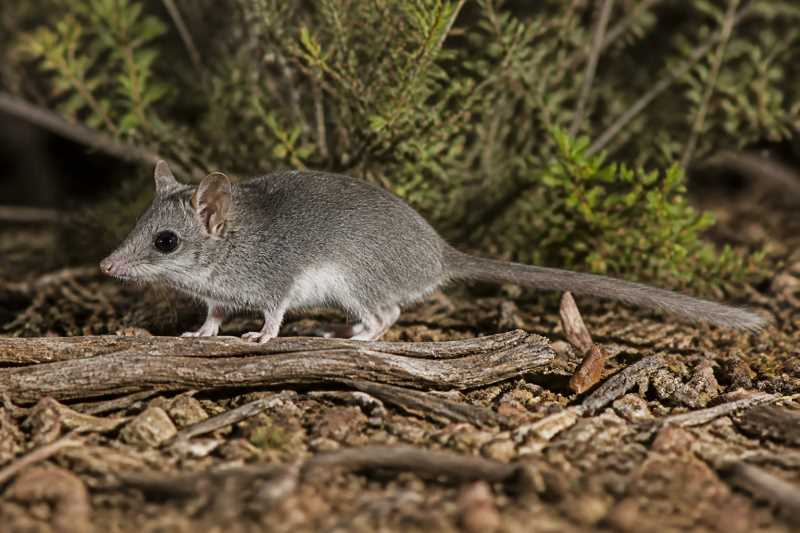
The Gray-bellied Dunnart is a small marsupial, measuring approximately 70 to 100 millimeters in body length, with a tail that ranges from 70 to 105 millimeters. Weighing between 15 and 25 grams, this diminutive creature is characterized by its slender build and distinct coloration.
The fur of the Gray-bellied Dunnart is primarily ash-gray on the back with a noticeably lighter gray or whitish underside, giving it the common name "Gray-bellied." The fur is soft and dense, providing insulation against temperature fluctuations. The head features a pointed snout, large rounded ears, and beady black eyes, adapted for its nocturnal lifestyle. The tail, often as long as the body, is prehensile, aiding in balance and agility when navigating complex terrains.
Range and Habitat
The Gray-bellied Dunnart is endemic to Australia, with its geographical distribution primarily confined to the southwestern regions of the continent. It inhabits a variety of environments, ranging from arid and semi-arid zones to open forests and heathlands.
These marsupials prefer areas with dense ground cover, which provides protection from predators and extreme weather conditions. They are often found in habitats with a mix of shrubs, grasses, and open spaces that facilitate foraging. The presence of leaf litter and fallen logs is crucial as they offer shelter and nesting sites.
Behavior and Diet
Gray-bellied Dunnarts are nocturnal and solitary animals, spending the daylight hours in concealed nests constructed from leaves and grass. Their activity peaks during the night, when they forage for food and engage in social interactions.
The diet of the Gray-bellied Dunnart is primarily insectivorous, consisting of insects, spiders, and other small invertebrates. They have an acute sense of hearing and smell, aiding in the detection of prey. Occasionally, they may consume small vertebrates or fruits, but such instances are rare.
During periods of food scarcity, these marsupials exhibit torpor, a state of reduced metabolic rate that conserves energy. This adaptation is vital for survival in environments where food availability is unpredictable.
Identification Tips (Field Recognition Cues)
Identifying the Gray-bellied Dunnart in the wild can be challenging due to its small size and nocturnal habits. However, certain distinguishing features can aid in recognition:
- Coloration: Look for the characteristic gray upper body and lighter gray or white underside.
- Size: Note the small size, with body and tail lengths each ranging from 70 to 105 millimeters.
- Tail: Observe the long, slender, prehensile tail often used for balance.
- Ears and Eyes: Large, rounded ears and prominent eyes are indicative of nocturnal adaptations.
- Behavior: They are usually observed at night, often near ground cover or in areas with abundant invertebrates.
Conservation Status (With Threats and Protections)
The Gray-bellied Dunnart is currently listed as "Least Concern" on the IUCN Red List. However, like many native Australian species, it faces threats primarily from habitat loss, climate change, and predation by introduced species such as cats and foxes.
Habitat destruction due to agricultural expansion and urban development poses significant risks to their populations. Climate change further exacerbates these threats by altering habitat conditions and food availability.
Conservation efforts are underway to mitigate these impacts, including habitat restoration and predator control initiatives. Protected areas and national parks play a crucial role in preserving the natural habitats of the Gray-bellied Dunnart.
Frequently Asked Questions
1. What are the main predators of the Gray-bellied Dunnart?
The primary predators of the Gray-bellied Dunnart include introduced species such as domestic cats and foxes. Native predators may consist of larger marsupials and birds of prey.
2. How does the Gray-bellied Dunnart adapt to its environment?
The Gray-bellied Dunnart adapts to its environment through nocturnal behavior, torpor during food shortages, and a diet primarily composed of insects, which are abundant in its habitat.
3. Can Gray-bellied Dunnarts be kept as pets?
While some marsupials can be kept as pets under specific conditions, it is generally not recommended for Gray-bellied Dunnarts. They have specialized dietary and habitat needs that are difficult to replicate in captivity.
4. What is the breeding season for the Gray-bellied Dunnart?
Breeding typically occurs in the spring and summer months when food availability is at its peak. Females give birth to multiple offspring, which are reared in a pouch.
5. Are there any conservation programs dedicated to the Gray-bellied Dunnart?
Yes, various conservation programs focus on habitat preservation and predator management to protect the Gray-bellied Dunnart and other native species. These programs are crucial for maintaining ecological balance in their natural habitats.
Related posts