Introduction
The Capped Langur (Trachypithecus pileatus) is an intriguing primate species native to the forests of South and Southeast Asia. Known for its distinctive cap-like fur pattern and impressive agility, this arboreal mammal plays an important role in the biodiversity of its habitats. This article delves into the various aspects of the Capped Langur, including its physical characteristics, habitat preferences, behaviors, and conservation status.
Physical Description
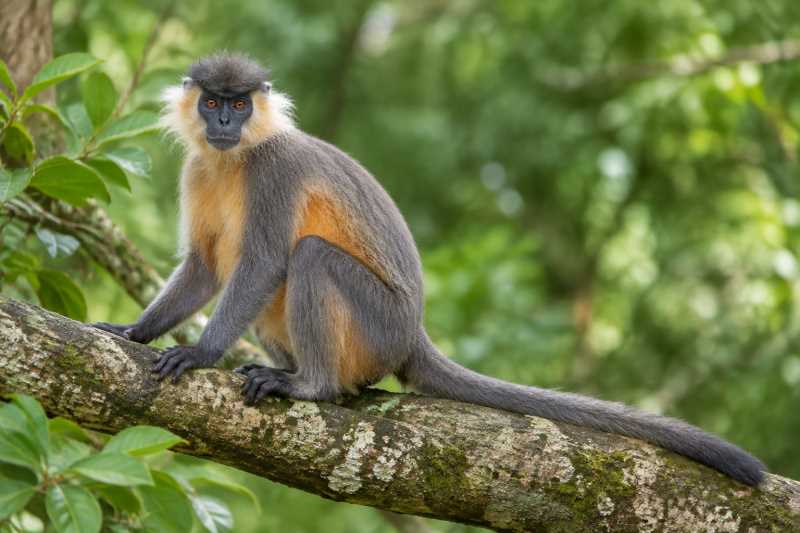
The Capped Langur is a medium-sized primate, with a body length ranging from 50 to 70 centimeters, excluding its long tail which can add another 70 to 100 centimeters. It typically weighs between 8 to 15 kilograms. One of the most distinguishing features of the Capped Langur is its unique “cap” of dark fur on the crown of its head, contrasting with the lighter fur on the rest of its body. This fur pattern not only gives the species its name but also aids in camouflage among the dappled sunlight of the forest canopy.
The fur of the Capped Langur is generally a rich, golden-orange or reddish-brown, with variations depending on the specific subspecies and geographical location. The face is surrounded by a lighter, ruff-like fringe of fur, which adds to the distinctive appearance of this langur.
Range and Habitat
Capped Langurs are primarily found in the subtropical and tropical forests of Bangladesh, Bhutan, India, and parts of Myanmar. They thrive in diverse forest types, including moist deciduous, semi-evergreen, and evergreen forests. These environments provide the necessary food resources and canopy cover that are crucial for their survival.
Within these regions, Capped Langurs are highly arboreal, spending most of their time in the upper canopy. This preference for living high in the trees helps them avoid ground-based predators and provides access to the leaves, fruits, and flowers that make up their diet.
Behavior and Diet
Capped Langurs are social animals, typically forming groups of 6 to 15 individuals. These groups are often composed of a single dominant male, multiple females, and their offspring. Social interactions within the group are complex and involve grooming, vocal communications, and coordinated movements through the trees.
Their diet consists primarily of leaves, supplemented by fruits, flowers, and seeds. As folivores, Capped Langurs have specialized stomachs that allow them to digest cellulose efficiently. This dietary specialization is vital for their survival in the dense forests where they reside.
Identification Tips (Field Recognition Cues)
Recognizing a Capped Langur in the wild can be challenging due to their elusive nature and the dense foliage of their habitat. However, there are a few key identification tips that can be helpful:
- Unique Cap: Look for the distinctive dark fur cap on the crown of their head, which contrasts sharply with their lighter body fur.
- Long Tail: The Capped Langur’s tail is notably long and used for balance as they navigate the treetops.
- Vocalizations: Listen for their vocalizations, which include a variety of calls used for communication within the group.
- Behavior: Observe their social behavior and group dynamics, often visible as they move through the forest canopy.
Conservation Status (With Threats and Protections)
The Capped Langur is currently classified as "Vulnerable" on the IUCN Red List. This status is primarily due to habitat loss and fragmentation caused by deforestation, agricultural expansion, and urban development. Additionally, hunting and the illegal pet trade pose significant threats to their populations.
Conservation efforts are underway to protect their natural habitats and curb illegal activities. Protected areas and wildlife sanctuaries in their range countries are crucial for their survival. International cooperation and local community engagement are also essential to ensure the long-term conservation of the Capped Langur.
Frequently Asked Questions
Why is this species unique?
The Capped Langur is unique due to its distinct fur pattern, social structure, and dietary specialization. Its ability to thrive in the upper canopy of dense forests sets it apart from many other primate species.
What threats does the Capped Langur face?
Habitat destruction, hunting, and the illegal pet trade are the primary threats to the Capped Langur. These threats have led to a decline in their population, prompting conservation efforts.
How can we help conserve the Capped Langur?
Supporting conservation organizations, promoting sustainable forestry practices, and raising awareness about the Capped Langur’s plight can help protect this species. Engaging local communities in conservation efforts is also crucial.
What do Capped Langurs eat in the wild?
In the wild, Capped Langurs primarily eat leaves, with fruits, flowers, and seeds supplementing their diet. Their specialized digestive system allows them to extract nutrients from tough foliage.
Where can I see Capped Langurs in the wild?
Capped Langurs can be observed in the forests of Bangladesh, Bhutan, India, and Myanmar, particularly in protected areas and wildlife sanctuaries where they are more likely to thrive.
Related posts