Introduction
The Funiushan Shrew Mole, scientifically known as Uropsilus funiushanensis, is a remarkable and lesser-known mammal species found in the montane regions of central China. This elusive creature is part of the Talpidae family, which includes moles and shrew moles. The Funiushan Shrew Mole is particularly intriguing due to its unique adaptations and behaviors that allow it to thrive in its specific habitat. This article explores the intricate details of this fascinating species, covering its physical characteristics, habitat preferences, behavioral patterns, and conservation status.
Physical Description
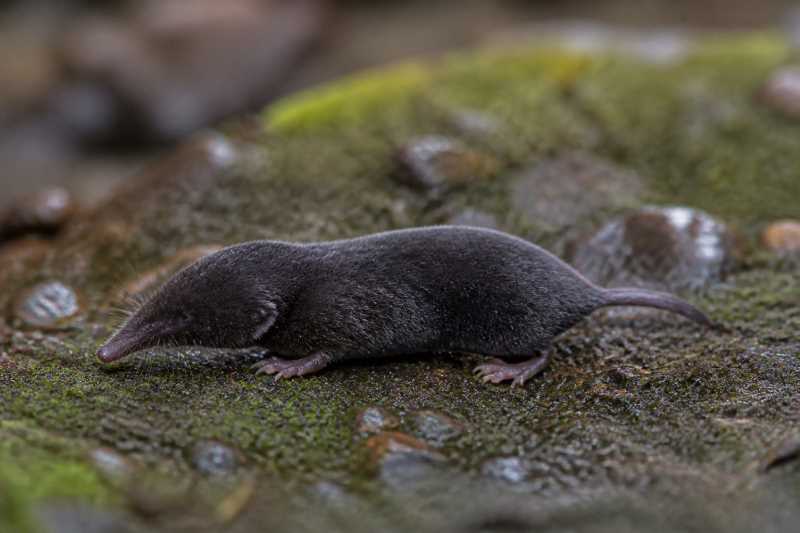
The Funiushan Shrew Mole is a small, semi-fossorial mammal characterized by its cylindrical body and pointed snout, which is a common feature among members of the Talpidae family. Typically, adults measure about 10-12 centimeters in length, with a tail that extends an additional 3-4 centimeters. Their fur is dense and velvety, predominantly dark gray or brown, which provides excellent camouflage against the forest floor.
One of the most distinguishing features of the Funiushan Shrew Mole is its forelimbs, which are adapted for digging. Unlike true moles, their limbs are not as extensively specialized for burrowing; instead, they possess claws that are slightly elongated and curved, allowing them to efficiently tunnel through loose soil and leaf litter. Additionally, the eyes of the Funiushan Shrew Mole are small and covered by skin, reflecting their reduced reliance on vision.
Range and Habitat
The Funiushan Shrew Mole is endemic to the Funiu Mountains in Henan Province, China. This region is characterized by its temperate forest ecosystem, where the species occupies a niche within the leaf litter and topsoil layers. The montane forests provide a moist and cool environment, essential for the survival of this shrew mole, which relies heavily on a stable microhabitat for foraging and reproduction.
Within these forests, the Funiushan Shrew Mole prefers areas with abundant leaf litter and loose soil, which facilitate its digging and burrowing activities. These areas also support a rich invertebrate community, providing ample food resources for the shrew mole.
Behavior and Diet
The Funiushan Shrew Mole is primarily insectivorous, feeding on a diet that includes earthworms, insects, and other small invertebrates found within the soil and leaf litter. Its pointed snout and sensitive whiskers are crucial for detecting prey, as it forages through the substrate. The shrew mole’s diet is supplemented by occasional consumption of plant matter, although this constitutes a minor portion of its nutritional intake.
Behaviorally, the Funiushan Shrew Mole is solitary and territorial, with individuals maintaining separate foraging ranges to minimize competition. It is active throughout the day, with peaks in activity occurring during the early morning and late afternoon when the ambient temperature is cooler. Despite its fossorial nature, the shrew mole spends significant time above ground, especially when searching for food or new territories.
Identification Tips (Field Recognition Cues)
Identifying the Funiushan Shrew Mole in the field requires attention to several key characteristics:
- Size and Shape: Look for a small mammal with a cylindrical body, measuring around 10-12 cm in length, with a proportionally small, 3-4 cm tail.
- Fur: Note the dense, velvety fur that is dark gray or brown, blending well with the forest floor.
- Snout and Whiskers: Observe the long, pointed snout equipped with sensitive whiskers for detecting prey.
- Forelimbs: Although not as specialized as true moles, their slightly elongated and curved claws are adapted for digging through loose soil and leaf litter.
- Activity Patterns: Watch for individuals during early morning or late afternoon, when they are more likely to be active.
Conservation Status (With Threats and Protections)
Currently, the Funiushan Shrew Mole is not extensively studied, and its conservation status is not well-documented in the IUCN Red List. However, like many species with restricted ranges, it is potentially vulnerable to habitat disturbances. The primary threats include deforestation due to logging and agricultural expansion, which can lead to habitat fragmentation and degradation.
In terms of protections, the Funiushan Shrew Mole benefits indirectly from conservation efforts aimed at preserving the Funiu Mountains’ ecosystem. These include initiatives to maintain forest cover and protect biodiversity hotspots. Future research is essential to better understand the population dynamics of this species and to develop targeted conservation strategies.
Frequently Asked Questions
1. What adaptations help the Funiushan Shrew Mole survive in its environment?
The Funiushan Shrew Mole has adapted to its environment with a cylindrical body, a pointed snout, and sensitive whiskers that help it locate prey. Its slightly elongated claws are designed for efficient digging, allowing it to navigate through loose soil and leaf litter.
2. Where can the Funiushan Shrew Mole be found?
This species is endemic to the Funiu Mountains in Henan Province, China. It thrives in the temperate montane forests of this region, where it occupies a niche within the leaf litter and topsoil layers.
3. What is the primary diet of the Funiushan Shrew Mole?
The Funiushan Shrew Mole primarily feeds on invertebrates, including earthworms and insects, which it finds by foraging through the soil and leaf litter. Occasionally, it may consume plant matter to supplement its diet.
4. How does the Funiushan Shrew Mole differ from true moles?
While both belong to the Talpidae family, the Funiushan Shrew Mole differs from true moles in its less specialized forelimbs and its more surface-oriented lifestyle. It is less reliant on burrowing compared to true moles and spends more time foraging above ground.
5. What are the conservation challenges facing the Funiushan Shrew Mole?
The main conservation challenges include habitat loss due to deforestation and agricultural expansion. Protecting the montane forest habitat in the Funiu Mountains is crucial for the survival of this species.
Related posts