Introduction
The Yellow-billed Turaco (Tauraco macrorhynchus) is a captivating bird species known for its vibrant plumage and distinctive call. This bird belongs to the Musophagidae family, which is native to the forests and woodlands of sub-Saharan Africa. The Yellow-billed Turaco stands out not only for its striking appearance but also for its role in the ecosystem.
Physical Characteristics
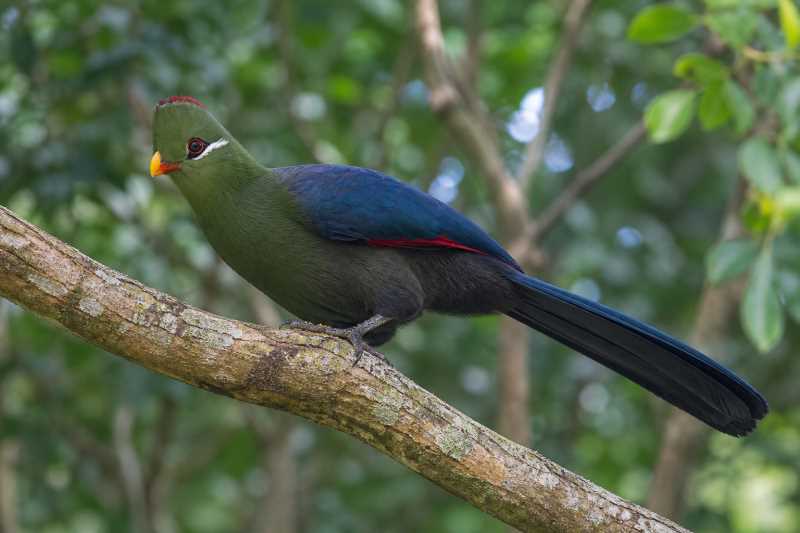
The Yellow-billed Turaco is a medium-sized bird, measuring about 40 centimeters in length, with a wingspan of approximately 50 centimeters. Its most notable feature is its bright yellow bill, which contrasts beautifully with its predominantly green plumage. The bird’s face and crest exhibit a mix of deep green and violet hues, which can shimmer in the sunlight, adding to its allure.
The species’ wings and tail feathers are a blend of dark blue and purple, creating a striking pattern that is easily recognizable. This coloration is not just for show; it plays a role in camouflage among the dense foliage of its habitat. The bird’s eyes are framed by a ring of vivid red skin, enhancing its expressive appearance.
Habitat and Distribution
Yellow-billed Turacos are primarily found in the dense forests of West and Central Africa, including countries such as Nigeria, Cameroon, and the Democratic Republic of the Congo. They thrive in humid, tropical environments where they can find ample food and shelter.
These birds are arboreal, meaning they spend most of their time in trees. They are skilled climbers and can move adeptly through the branches in search of food. Their preferred habitats are characterized by a rich diversity of flora, providing the sustenance they need to survive.
Diet and Feeding Behavior
The Yellow-billed Turaco’s diet is largely frugivorous, consisting mainly of fruits, berries, and figs. They play a crucial role in their ecosystem as seed dispersers. By consuming fruits and excreting the seeds, they help in the propagation of various plant species, thus maintaining the health and diversity of their habitat.
In addition to fruits, they may also consume flowers, leaves, and occasionally insects. This varied diet ensures they obtain all necessary nutrients for their survival. Their feeding behavior is often a social affair, with groups of turacos foraging together in the canopy.
Breeding and Reproduction
The breeding season for Yellow-billed Turacos generally coincides with the rainy season, when food is abundant. These birds are monogamous, forming strong pair bonds that last for several breeding cycles. Courtship displays are a fascinating aspect of their behavior, involving elaborate vocalizations and physical displays to attract mates.
Nesting usually takes place high in the trees, where the female lays two to three eggs. Both parents are involved in incubating the eggs and feeding the chicks once they hatch. The chicks are altricial, meaning they are born relatively underdeveloped and require significant parental care before they can fend for themselves.
Vocalizations and Communication
Yellow-billed Turacos are known for their distinctive calls, which are often described as a series of loud, rasping notes. These vocalizations serve various purposes, from marking territory to communicating with other members of their group.
Their calls are an integral part of their social structure, helping to maintain group cohesion and alert others to potential dangers. In the dense forests where they reside, sound travels better than sight, making vocal communication essential.
Conservation Status
Currently, the Yellow-billed Turaco is classified as a species of Least Concern by the International Union for Conservation of Nature (IUCN). However, like many forest-dwelling species, they are vulnerable to habitat loss due to deforestation and human encroachment.
Conservation efforts are crucial to ensuring the continued survival of this species. Protecting their natural habitats and promoting sustainable land management practices can help mitigate the risks they face.
Conclusion
The Yellow-billed Turaco is a remarkable bird that captivates with its beauty and ecological importance. Its presence in the forests of Africa is a testament to the rich biodiversity of the region. Through conservation efforts and increased awareness, we can help preserve the habitats that support not only the Yellow-billed Turaco but countless other species that share its home.
In celebrating the Yellow-billed Turaco, we are reminded of the intricate balance of nature and the role every species plays in maintaining the vitality of our planet’s ecosystems.
Related posts