African Houbara (Chlamydotis undulata): A Comprehensive Insight
Introduction
The African Houbara, scientifically known as Chlamydotis undulata, is a fascinating bird species that belongs to the bustard family, Otididae. Its enigmatic presence graces the arid and semi-arid regions of North Africa and parts of the Middle East. Revered for its elusive nature and significant ecological role, this bird has intrigued ornithologists, conservationists, and birdwatchers alike. In this article, we delve into the African Houbara’s habitat, behavior, conservation status, and its cultural significance.
Habitat and Distribution
The African Houbara inhabits a range of environments, predominantly favoring open, sparsely vegetated areas such as deserts, semi-deserts, and steppes. Its distribution spans across North Africa, from Morocco in the west, through Algeria, Tunisia, Libya, and into Egypt. The bird’s presence is also recorded in parts of the Middle East, although it is more commonly associated with the African continent.
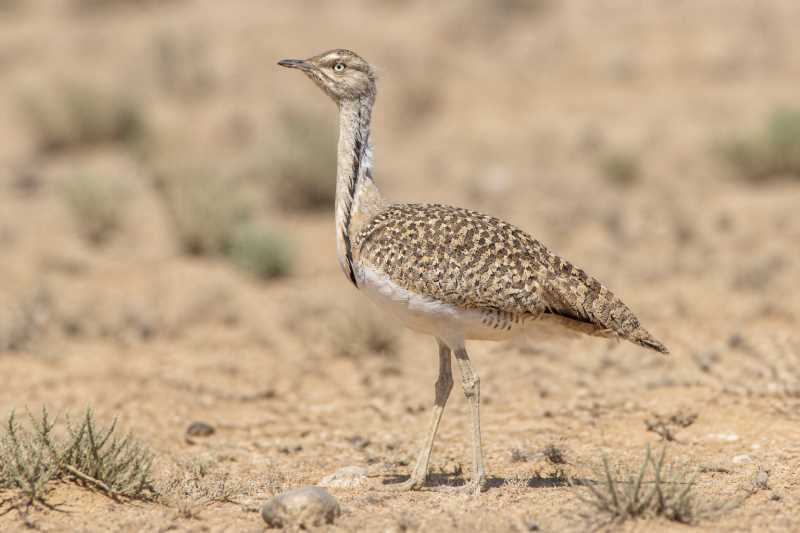
These habitats provide the Houbara with ample camouflage, thanks to their sandy and rocky landscapes, which blend seamlessly with the bird’s cryptic plumage. The Houbara’s preference for such habitats is intricately linked to its survival strategies, including foraging and predator evasion.
Physical Characteristics
The African Houbara is a medium-sized bird, measuring approximately 55 to 65 centimeters in length, with a wingspan ranging from 135 to 170 centimeters. It is characterized by its mottled brown, white, and black plumage, which provides excellent camouflage against the desert backdrop. The bird’s most distinctive feature is its elongated neck and long legs, which contribute to its elegant posture.
Sexual dimorphism is present, with males being notably larger and more adorned than females. During the breeding season, males exhibit striking displays, raising their crests and fanning their tails to attract mates.
Behavioral Patterns
The African Houbara is primarily a ground-dwelling bird, known for its elusive and solitary behavior. It is mostly active during the cooler parts of the day, such as early morning and late afternoon, to avoid the harsh midday heat. Its diet is omnivorous, consisting of seeds, insects, small reptiles, and other invertebrates, which are skillfully foraged from the ground.
One of the most fascinating aspects of the Houbara’s behavior is its courtship display. During the breeding season, which generally occurs from February to April, males engage in elaborate displays to attract females. These displays involve puffing up their plumage, making low-pitched calls, and performing a series of dance-like movements.
Reproduction and Lifespan
The breeding strategy of the African Houbara involves a lek system, where males display in specific areas to attract females. Once a female selects a mate, she will lay her eggs in a shallow scrape on the ground, lined sparsely with vegetation. Typically, a clutch consists of two to four eggs, which the female incubates for about 23 to 25 days.
The young are precocial, meaning they are relatively mature and mobile from the moment of hatching, which is crucial for their survival in predator-rich environments. The lifespan of the African Houbara in the wild is estimated to be around 10 to 15 years, although this can vary based on environmental conditions and predation pressures.
Conservation Status and Threats
The African Houbara is currently classified as Vulnerable on the IUCN Red List, primarily due to habitat loss, hunting, and trapping. The species has historically been hunted for sport and traditional purposes, particularly in the Middle East, where it is prized for its meat and as a symbol of prestige.
Habitat degradation, driven by agricultural expansion, urban development, and climate change, poses significant threats to the Houbara’s survival. These factors have resulted in fragmented populations and reduced genetic diversity, further exacerbating the species’ vulnerability.
Conservation Efforts
Numerous conservation initiatives are underway to protect and restore African Houbara populations. These efforts include habitat restoration, captive breeding programs, and stringent regulations on hunting and trade. Organizations such as the International Fund for Houbara Conservation have been instrumental in spearheading these initiatives, working closely with local governments and communities to foster sustainable conservation practices.
Public awareness and education campaigns also play a crucial role in changing perceptions and reducing illegal hunting activities. By engaging local communities and promoting eco-tourism, these efforts aim to ensure the long-term survival of the African Houbara and its habitat.
Cultural Significance
The African Houbara has significant cultural value, particularly in regions where it is traditionally hunted. In the Middle East, the bird is associated with falconry, a practice that dates back thousands of years and is deeply embedded in the cultural heritage of the region. Falconry with Houbara is often seen as a symbol of nobility and skill, and it remains a celebrated tradition in many Arab countries.
Conclusion
The African Houbara is a remarkable species that embodies the intricate balance of adaptation and survival in harsh desert environments. Despite facing numerous challenges, concerted conservation efforts offer hope for the future of this enigmatic bird. By fostering a deeper understanding of the Houbara’s ecological role and cultural significance, we can contribute to its preservation for generations to come.
Related posts