Introduction
The Formosan Giant Flying Squirrel, scientifically known as Petaurista grandis, is a remarkable species that has captured the fascination of wildlife enthusiasts and researchers alike. Endemic to Taiwan, this nocturnal mammal is renowned for its gliding ability, which allows it to move gracefully among the treetops. Its presence in the forests of Taiwan is not just a testament to the island’s rich biodiversity, but also an indicator of the health of its ecosystems. This article delves into the various aspects of the Formosan Giant Flying Squirrel, from its physical characteristics to its behavior, habitat, and conservation status.
Physical Description
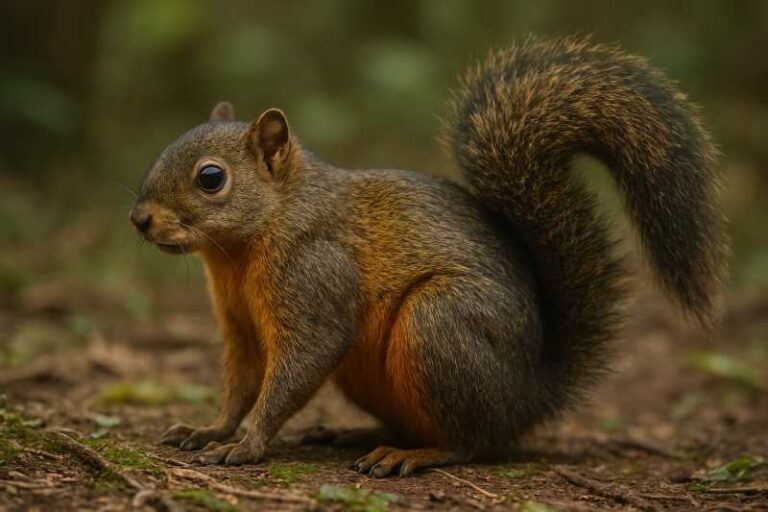
The Formosan Giant Flying Squirrel is one of the largest flying squirrels in the world, with a body length ranging from 30 to 40 centimeters (12 to 16 inches) and a tail that can measure up to 45 centimeters (18 inches). The tail is bushy and serves as a rudder during flight, aiding in balance and maneuverability. The species is covered in a thick, soft fur that is generally dark brown or reddish-brown on the back, with lighter underparts. The squirrel’s eyes are large and adapted for its nocturnal lifestyle, providing excellent night vision. Its gliding membrane, known as the patagium, stretches between its fore and hind limbs, allowing it to glide distances of up to 100 meters (328 feet) in a single leap.
Range and Habitat
The Formosan Giant Flying Squirrel is found exclusively in Taiwan, inhabiting the island’s mid to high elevation forests, predominantly between 1,000 and 3,000 meters (3,280 to 9,842 feet). These habitats include both broadleaf and mixed coniferous forests, where dense tree canopies provide the ideal environment for gliding and foraging. The squirrel relies heavily on mature forests with abundant tree cavities, which are essential for nesting and raising young. Seasonal variations in temperature and food availability across different altitudes influence their distribution and foraging behavior.
Behavior and Diet
Primarily nocturnal, the Formosan Giant Flying Squirrel is most active after dusk. It spends the majority of its life in the trees, using its gliding ability to travel between feeding sites and avoid ground predators. Its diet is herbivorous, consisting mainly of leaves, fruits, nuts, and occasionally bark and insects. The squirrel plays a crucial role in seed dispersal, contributing to forest regeneration. During the breeding season, which typically occurs in late spring, females give birth to one or two offspring. The young are reared in tree cavities, where they remain until they are ready to venture out and glide on their own.
Identification Tips (Field Recognition Cues)
Identifying the Formosan Giant Flying Squirrel in the wild can be challenging due to its nocturnal habits. However, there are several field recognition cues to aid in identification:
- Size and Shape: Look for a large, squirrel-like silhouette with a distinctively bushy tail.
- Coloration: Notice the dark brown or reddish-brown fur on the back, contrasting with lighter underparts.
- Gliding Movement: Observe the unique gliding motion, which resembles a parachute as the squirrel moves between trees.
- Nocturnal Activity: Listen for rustling sounds in the canopy at night, a telltale sign of their movement.
Conservation Status (with Threats and Protections)
The Formosan Giant Flying Squirrel is currently listed as a species of Least Concern by the International Union for Conservation of Nature (IUCN). However, it faces several threats that could impact its population in the future. Habitat destruction due to logging, agriculture, and urban development poses a significant threat, as it reduces the availability of nesting sites and food sources. Climate change also presents a risk by altering the availability of resources and suitable habitats.
Conservation efforts in Taiwan have focused on preserving forest habitats and promoting sustainable land-use practices. Protected areas and national parks play a crucial role in safeguarding the remaining populations. Public awareness campaigns and research initiatives are also vital in promoting the conservation of this unique species.
Frequently Asked Questions
What is the primary diet of the Formosan Giant Flying Squirrel?
The Formosan Giant Flying Squirrel is primarily herbivorous, feeding on leaves, fruits, nuts, and occasionally bark and insects. This diet supports its role in seed dispersal and forest regeneration.
How far can the Formosan Giant Flying Squirrel glide?
The Formosan Giant Flying Squirrel can glide distances of up to 100 meters (328 feet) in a single leap. Its gliding membrane allows for efficient movement between trees.
Where can I find the Formosan Giant Flying Squirrel in Taiwan?
This species is found in mid to high elevation forests between 1,000 and 3,000 meters (3,280 to 9,842 feet) in Taiwan, particularly in mature forests with dense canopies.
Are Formosan Giant Flying Squirrels endangered?
Currently, the Formosan Giant Flying Squirrel is listed as Least Concern by the IUCN. However, habitat destruction and climate change remain potential threats to its population.
What are the main threats to the Formosan Giant Flying Squirrel?
The main threats include habitat destruction from logging and agriculture, as well as climate change, which affects resource availability and habitat suitability.
Related posts