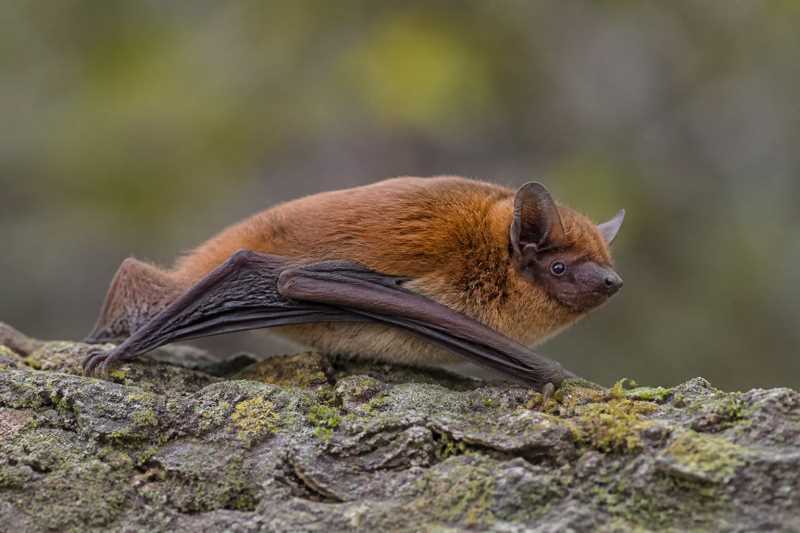
Eastern Red Bat (Lasiurus borealis)
Introduction
The Eastern Red Bat (Lasiurus borealis) is a fascinating species of bat found throughout North America. Known for its striking reddish-orange fur and solitary nature, this bat plays a crucial role in ecosystems as a voracious insect eater. As nocturnal mammals, Eastern Red Bats are often overlooked, yet they are essential for maintaining ecological balance in their habitats. This article delves into various aspects of the Eastern Red Bat, including its physical characteristics, habitat, behavior, and conservation status.
Physical Description
The Eastern Red Bat is a medium-sized bat species distinguished by its vibrant fur, which ranges from brick-red to rusty-orange, often with a frosted appearance due to white-tipped hairs. Adults typically weigh between 7 and 13 grams and have a wingspan ranging from 28 to 33 centimeters. Their body length varies from 9 to 11 centimeters. The bat’s tail is fully enclosed within the interfemoral membrane, giving it a streamlined appearance during flight.
Eastern Red Bats exhibit sexual dimorphism, with females generally being larger and having a more pronounced frosty appearance than males. Their ears are short and rounded, aiding in their acute sense of hearing, which is vital for echolocation. The Eastern Red Bat’s eyes are small, reflecting its reliance on sound rather than sight for navigation and hunting.
Range and Habitat
Eastern Red Bats are widely distributed across North America, from southern Canada through the eastern and central United States, and into parts of Mexico and the Caribbean. They thrive in a variety of habitats, including deciduous and mixed forests, farmland, and urban areas, where they can find suitable roosting sites.
These bats are tree dwellers, roosting primarily in the foliage of trees. They prefer clusters of leaves to provide camouflage against predators and protection from the elements. During the day, Eastern Red Bats hang upside down like leaves, blending seamlessly into their surroundings. In winter, they migrate to warmer regions, often moving south to avoid harsh weather conditions.
Behavior and Diet
Eastern Red Bats are solitary creatures, with males and females coming together only during the mating season. They are nocturnal, emerging at dusk to forage for food. Their diet primarily consists of moths, beetles, and other flying insects. They use echolocation to detect and capture prey mid-flight, showcasing their agility and precision.
These bats are known for their migratory behavior, traveling long distances between their summer and winter habitats. During migration, they can be seen in large numbers, although they typically roost and hunt alone. Eastern Red Bats are also capable of entering torpor, a state of decreased physiological activity, to conserve energy during cold weather spells.
Identification Tips (Field Recognition Cues)
Identifying Eastern Red Bats can be challenging due to their nocturnal habits and fast flight. However, there are several field recognition cues that can help:
- Color and Size: Look for their distinctive reddish-orange fur with a frosted appearance.
- Flight Pattern: Observe their erratic, acrobatic flight as they hunt for insects.
- Roosting Behavior: Spot them roosting in tree foliage, often appearing as dead leaves.
- Echolocation Calls: Use bat detectors to hear their high-frequency echolocation calls, which are beyond the range of human hearing.
Conservation Status (With Threats and Protections)
The Eastern Red Bat is currently listed as a species of least concern by the International Union for Conservation of Nature (IUCN). However, they face several threats that could impact their populations in the future.
Threats
- Habitat Loss: Deforestation and urban development reduce available roosting sites.
- Pesticides: Use of agricultural chemicals can reduce insect prey populations and directly harm bats.
- Wind Turbines: Collisions with wind turbines are a significant threat during migration.
Protections
- Legal Protections: These bats are protected under various environmental laws that safeguard their habitats.
- Conservation Efforts: Initiatives to preserve natural habitats and establish bat-friendly practices in agriculture and forestry are vital.
- Public Awareness: Educating the public about the importance of bats in ecosystems can foster conservation support.
Frequently Asked Questions
What do Eastern Red Bats eat?
Eastern Red Bats primarily feed on flying insects, including moths and beetles. They use echolocation to detect and capture their prey mid-flight, often consuming hundreds of insects in a single night.
How do Eastern Red Bats navigate and find food?
Eastern Red Bats rely on echolocation to navigate and find food. They emit high-frequency sounds that bounce off objects, allowing them to create a mental map of their surroundings and locate prey.
Are Eastern Red Bats vulnerable to climate change?
Climate change poses potential risks to Eastern Red Bats by altering their habitats and affecting food availability. Changes in temperature and precipitation patterns can impact their migratory patterns and roosting sites.
Why are Eastern Red Bats important to ecosystems?
Eastern Red Bats play a crucial role in controlling insect populations, thus maintaining ecological balance. Their insectivorous diet helps reduce agricultural pests and supports the health of various ecosystems.
How can we help protect Eastern Red Bats?
Protecting Eastern Red Bats involves preserving natural habitats, reducing pesticide use, and supporting renewable energy solutions that minimize harm to wildlife. Public education and conservation initiatives are also essential for their protection.
Related posts