Dama Gazelle (Nanger dama): A Comprehensive Guide
Introduction
The Dama Gazelle (Nanger dama), also known as the addra gazelle or mhorr gazelle, is a striking species of antelope that roams the arid landscapes of Africa. Renowned for their graceful stature and distinctive markings, these gazelles are not only fascinating subjects for wildlife enthusiasts but also critical components of their ecosystems. Despite their beauty, Dama Gazelles are one of the most endangered gazelle species in the world, facing a multitude of threats that have severely impacted their populations. This article delves into the physical characteristics, habitat, behavior, and conservation efforts concerning the Dama Gazelle, offering insights for both researchers and nature lovers.
Physical Description
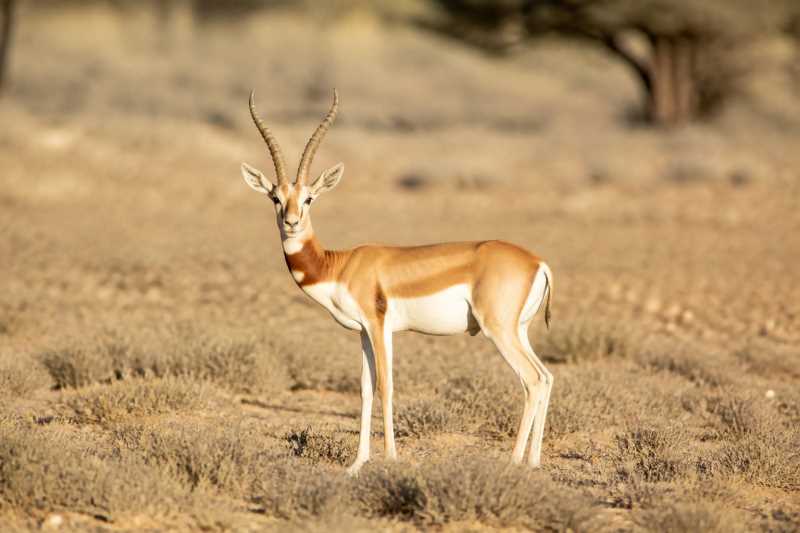
Dama Gazelles are one of the largest gazelle species, with adults typically standing about 90 to 120 cm (3 to 4 feet) at the shoulder and weighing between 40 to 75 kg (88 to 165 pounds). They possess a striking appearance characterized by a predominantly white body juxtaposed with a reddish-brown coloration that adorns their head, neck, and upper back. Their faces are marked with distinctive white patterns that contrast sharply with their reddish hues, aiding in individual identification and species recognition.
The horns of the Dama Gazelle are another notable feature. Both males and females possess horns, though they tend to be longer and thicker in males, sometimes reaching lengths of up to 35 cm (14 inches). These horns are slightly curved backward, adding to their elegant appearance. Dama Gazelles have long, slender legs that enable them to cover great distances swiftly, a necessary adaptation for survival in their expansive, open habitats.
Range and Habitat
Historically, Dama Gazelles inhabited a vast range across the Sahel and Sahara regions of Africa, from Mauritania and Mali in the west to Sudan in the east. However, their range has significantly diminished due to various human-induced pressures. Today, small, fragmented populations can still be found in parts of Chad, Niger, and Mali, but they are primarily restricted to protected areas and reserves.
Dama Gazelles thrive in arid and semi-arid environments, including open grasslands, savannas, and desert edges. They are well-adapted to harsh desert conditions, capable of surviving on minimal water intake. Their habitat preferences are influenced by the availability of sparse vegetation, which provides both nourishment and camouflage from predators.
Behavior and Diet
Dama Gazelles are diurnal animals, meaning they are most active during the early morning and late afternoon when temperatures are cooler. They are social creatures, usually found in small groups known as herds. These herds typically consist of a dominant male, several females, and their young. During the mating season, males become territorial and engage in displays of strength to win over females.
The diet of the Dama Gazelle is primarily herbivorous, consisting of leaves, grasses, shoots, and fruits. They are capable browsers, often feeding on shrubs and acacia trees when grass is scarce. Their ability to extract moisture from the plants they consume allows them to survive in environments where water is scarce.
Identification Tips (Field Recognition Cues)
Identifying a Dama Gazelle in the wild involves looking for several key characteristics:
- Coloration: Look for the striking contrast between the white body and reddish-brown head, neck, and upper back.
- Horns: Both sexes have slender, slightly curved horns, though males typically have longer and thicker horns.
- Size: As one of the largest gazelle species, Dama Gazelles have a relatively tall stature.
- Facial Markings: Distinctive white facial patterns that stand out against the reddish coloration.
- Movement: Observe their elegant, swift movements and tendency to form small, cohesive herds.
Conservation Status (With Threats and Protections)
The Dama Gazelle is currently classified as Critically Endangered on the IUCN Red List. This alarming status is attributed to several factors, including habitat loss, poaching, and competition with livestock for resources. Human expansion into their natural habitats has led to fragmentation, making it difficult for the gazelles to find sufficient food and mate.
Conservation efforts are underway to protect the remaining populations of Dama Gazelles. Various national parks and reserves across their range offer some level of protection, and captive breeding programs have been established to help bolster wild populations. International organizations are also working with local communities to promote sustainable land use practices and raise awareness about the plight of these magnificent animals.
Frequently Asked Questions
What is the current population of the Dama Gazelle?
The population of the Dama Gazelle is critically low, with estimates suggesting fewer than 500 individuals remaining in the wild. Conservation efforts are crucial to prevent further decline.
How do Dama Gazelles adapt to their desert environment?
Dama Gazelles are highly adapted to arid environments, able to survive on minimal water by extracting moisture from their plant-based diet. Their light coloration also helps reflect heat.
What are the main threats to the survival of Dama Gazelles?
The primary threats include habitat loss due to agricultural expansion, poaching, and competition for resources with domestic livestock. Climate change also exacerbates these challenges by altering their habitat.
How can I help in the conservation of Dama Gazelles?
Supporting organizations dedicated to wildlife conservation, spreading awareness, and advocating for sustainable land-use practices can all contribute to the protection of Dama Gazelles.
Are there any breeding programs for Dama Gazelles?
Yes, several breeding programs exist, particularly in zoos and wildlife reserves, aiming to increase their numbers and eventually reintroduce them into the wild.
Related posts