Latham’s Francolin: A Closer Look at the Elusive Bird of the African Savannah
Latham’s Francolin (Peliperdix lathami) is a fascinating species that captures the attention of birdwatchers and ornithologists alike with its distinctive characteristics and behaviors. This bird, part of the Phasianidae family, is native to various regions across sub-Saharan Africa, including countries such as Angola, Cameroon, and the Democratic Republic of Congo. Despite its extensive range, Latham’s Francolin remains somewhat elusive, often hidden in the dense underbrush of the African savannah. This article delves into the unique features, habitat preferences, and conservation status of this remarkable bird, offering insights into its ecology and the challenges it faces in the wild.
Physical Characteristics
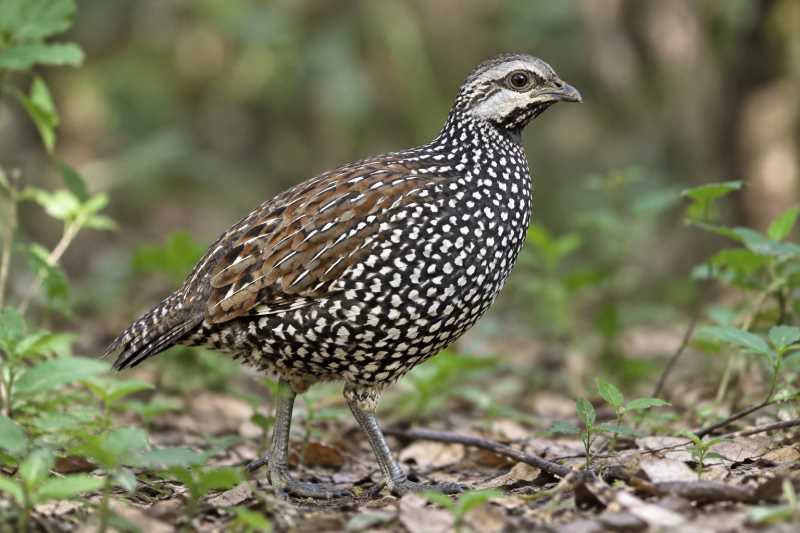
Latham’s Francolin is a medium-sized bird, measuring approximately 25 to 30 centimeters in length. It is characterized by its robust body, short rounded wings, and a relatively long tail. The plumage of the Latham’s Francolin is predominantly brown with intricate patterns that provide excellent camouflage against the dry grasses and woodland floors of its natural habitat. The bird’s head is adorned with a striking facial pattern, which includes a combination of white, black, and brown markings that enhance its distinctive appearance. The legs and feet of Latham’s Francolin are adapted for ground dwelling, being strong and well-suited for scratching the earth in search of food.
Habitat and Distribution
Latham’s Francolin inhabits a range of environments, from open grasslands to dense forests, often favoring areas with a combination of tall grasses and scattered shrubs or trees. This preference allows the bird to remain hidden from predators while foraging for food. The species is commonly found at altitudes ranging from sea level up to 2,000 meters, demonstrating its adaptability to different ecological zones. Despite its wide distribution, Latham’s Francolin populations are often patchy, with individuals occupying isolated territories within their broader range.
Diet and Foraging Behavior
The diet of Latham’s Francolin is diverse, consisting mainly of seeds, insects, and small invertebrates. This omnivorous diet allows the bird to exploit a variety of food sources, depending on availability and seasonal changes. Foraging typically occurs on the ground, where the bird uses its strong legs to scratch the soil and uncover hidden delicacies. Interestingly, Latham’s Francolin is known for its opportunistic feeding habits, occasionally consuming fruits and small reptiles when the opportunity arises.
Breeding and Reproduction
Latham’s Francolin breeds during the rainy season, which varies depending on the region it inhabits. The bird is monogamous, forming pairs that often last for several breeding seasons. Nests are constructed on the ground, usually hidden among tall grasses or under shrubs, providing protection from predators. The female typically lays a clutch of 4 to 6 eggs, which are incubated for approximately three weeks. Both parents are involved in rearing the chicks, which are precocial and able to leave the nest shortly after hatching to follow their parents in search of food.
Vocalizations and Behavior
Latham’s Francolin is known for its distinctive calls, which are often heard at dawn and dusk. These vocalizations serve multiple purposes, including territory establishment, mate attraction, and communication with family groups. The bird’s call is a series of sharp, repetitive notes that can carry over long distances, often signaling its presence in the dense underbrush.
Conservation Status
Despite its wide distribution, Latham’s Francolin faces several threats that impact its population numbers. Habitat loss due to agricultural expansion, deforestation, and human encroachment poses significant challenges for the species. Additionally, hunting pressure, both for subsistence and sport, further exacerbates the decline in certain areas. According to the International Union for Conservation of Nature (IUCN), Latham’s Francolin is currently classified as Least Concern; however, ongoing habitat destruction and hunting practices necessitate careful monitoring and conservation efforts to ensure its long-term survival.
Conclusion
Latham’s Francolin is a remarkable species that embodies the rich biodiversity of the African savannah. Its adaptability, unique behaviors, and striking appearance make it a subject of interest for bird enthusiasts and researchers. While the species is not currently endangered, the pressures of habitat loss and hunting require proactive measures to safeguard its future. Conservation efforts focused on habitat preservation and sustainable management practices will be crucial in maintaining healthy populations of Latham’s Francolin across its natural range.
By understanding the ecology and challenges faced by Latham’s Francolin, we can contribute to global efforts in preserving the intricate tapestry of life that defines our world’s ecosystems.
Related posts