Introduction
The Masked Ring-tailed Possum, scientifically known as Pseudochirulus larvatus, is a fascinating marsupial native to the lush rainforests of New Guinea. This nocturnal creature is noted for its distinctive facial markings, which resemble a mask, earning it its common name. With its unique adaptations and behaviors, the Masked Ring-tailed Possum plays a crucial role in its ecosystem, contributing to the biodiversity of its natural habitat.
Understanding the biology and ecology of the Masked Ring-tailed Possum is essential for its conservation. This article delves into the physical characteristics, habitat preferences, behavior, and conservation status of this intriguing species, providing a comprehensive overview for wildlife enthusiasts and researchers alike.
Physical Description
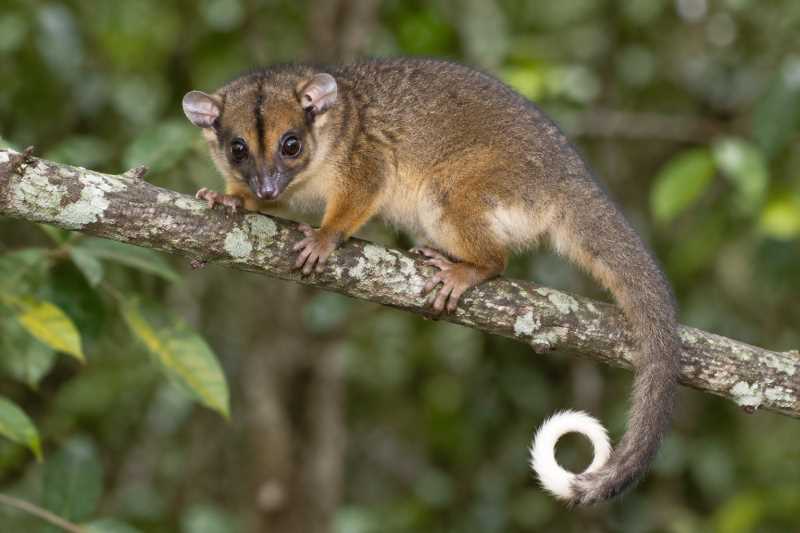
The Masked Ring-tailed Possum is a medium-sized marsupial with a body length ranging from 30 to 40 centimeters and a prehensile tail that measures approximately the same length as its body. This species typically weighs between 1.2 to 1.7 kilograms.
One of the most striking features of the Masked Ring-tailed Possum is its facial markings. It has a dark band that stretches across its eyes, resembling a mask. The rest of its fur is generally a soft gray or brown, providing camouflage among the forest canopy.
The possum’s large, round eyes are adapted for nocturnal activity, allowing it to see well in low-light conditions. Its ears are small and rounded, aiding in its acute sense of hearing. The possum’s forelimbs are equipped with sharp claws, ideal for climbing, while its hind limbs are strong and flexible, supporting its arboreal lifestyle.
Range and Habitat
The Masked Ring-tailed Possum is endemic to the island of New Guinea, inhabiting the dense tropical rainforests that cover much of the island. This species is primarily found in the montane and submontane forests, typically at elevations ranging from 1,000 to 3,500 meters above sea level.
These possums prefer the upper canopy of the forest, where they can easily navigate through the trees using their prehensile tails. The dense foliage provides not only a rich source of food but also protection from predators.
The Masked Ring-tailed Possum’s range is limited to the central mountain ranges of New Guinea, where the environment provides the necessary conditions for their survival. However, habitat destruction poses a significant threat to their continued existence.
Behavior and Diet
Masked Ring-tailed Possums are primarily nocturnal and arboreal. They spend the majority of their lives in the trees, using their prehensile tails and strong limbs to move gracefully through the canopy. These possums are solitary creatures, coming together only for mating purposes.
Their diet mainly consists of leaves, fruits, and flowers, making them folivores. They have a specialized digestive system that allows them to break down tough plant fibers. Occasionally, they may also consume small insects or other invertebrates, supplementing their primarily herbivorous diet.
The Masked Ring-tailed Possum is known for its vocalizations, which include a series of clicks and calls used to communicate with other possums, particularly during the mating season.
Identification Tips (Field Recognition Cues)
Identifying the Masked Ring-tailed Possum in the wild can be challenging due to its nocturnal and elusive nature. However, there are several field recognition cues that can aid in its identification:
- Facial Mask: Look for the distinctive dark band across the eyes, which resembles a mask.
- Habitat: Focus on the upper canopy of montane and submontane forests in New Guinea.
- Tail: Note the prehensile tail, which is often used for grasping branches.
- Vocalizations: Listen for their unique clicking sounds during the night.
- Size and Movement: Observe the medium size and agile, climbing movements.
Conservation Status (With Threats and Protections)
The Masked Ring-tailed Possum is currently listed as Near Threatened on the IUCN Red List. The primary threat to this species is habitat loss due to deforestation and land-use changes for agriculture and development.
To combat these threats, conservation efforts are focused on preserving the rainforests of New Guinea. Protected areas have been established, and there is ongoing research to better understand the ecology and needs of the Masked Ring-tailed Possum.
Community engagement and education are also essential components of conservation strategies, promoting sustainable land-use practices and highlighting the importance of biodiversity.
Frequently Asked Questions
1. What is the Masked Ring-tailed Possum’s primary diet?
The Masked Ring-tailed Possum primarily feeds on leaves, fruits, and flowers, making it a folivore. Occasionally, it may consume small insects and invertebrates.
2. Where can I find the Masked Ring-tailed Possum?
This possum is endemic to New Guinea, primarily inhabiting montane and submontane forests at elevations of 1,000 to 3,500 meters.
3. How does the Masked Ring-tailed Possum communicate?
The possum uses a series of clicks and calls to communicate, especially during the mating season.
4. Why is the Masked Ring-tailed Possum considered Near Threatened?
The species is listed as Near Threatened due to habitat loss from deforestation and land conversion for agriculture.
5. What are the unique features of the Masked Ring-tailed Possum?
Notable features include its distinctive facial mask, prehensile tail, and nocturnal, arboreal lifestyle.
Related posts