Common Sword-nosed Bat (Lonchorhina aurita): A Comprehensive Guide
Introduction
The Common Sword-nosed Bat, scientifically known as Lonchorhina aurita, is a fascinating species of bat that captivates researchers and bat enthusiasts alike due to its unique physical attributes and intriguing behaviors. This bat belongs to the family Phyllostomidae, which is notable for its diverse range of species exhibiting a wide variety of feeding habits and ecological roles. The Common Sword-nosed Bat is an integral part of its ecosystem, contributing to insect control and pollination.
Physical Description
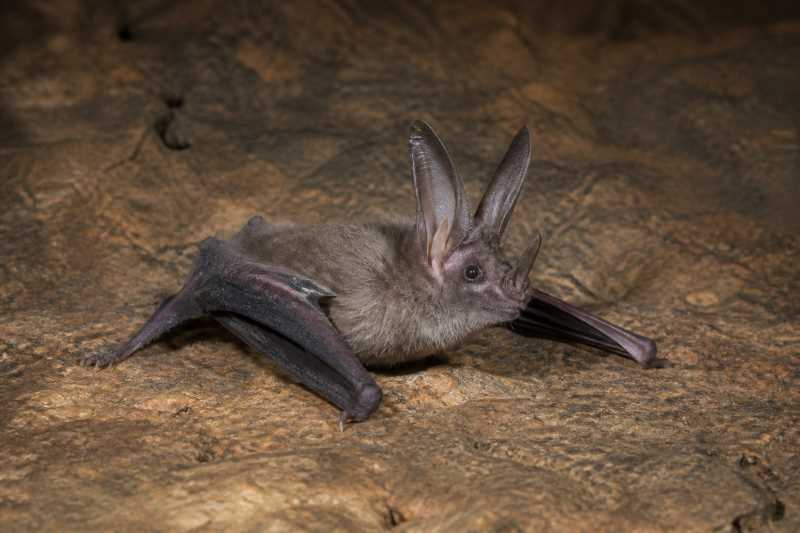
The Common Sword-nosed Bat is easily recognizable by its distinctively elongated nose leaf, which resembles a sword—hence its name. This nose leaf is not just for show; it plays a vital role in echolocation, helping the bat to navigate and hunt with precision. The body length of this bat ranges from 50 to 70 mm, and it has a wingspan that can reach up to 350 mm. The fur is generally a muted brown or gray, providing excellent camouflage against the bark and leaves of trees.
Another notable feature is its large ears, which are highly sensitive and assist in detecting the faint sounds of its prey. The ears are typically rounded and slightly tilted forward. The wings are long and narrow, adapted for agile flying through dense forest canopies.
Range and Habitat
The Common Sword-nosed Bat is native to the neotropical regions of Central and South America. Its range includes countries such as Brazil, Colombia, Venezuela, and Panama. These bats prefer habitats that offer plenty of cover and food resources, such as tropical and subtropical forests. They are often found roosting in caves, hollow trees, and sometimes in man-made structures like abandoned buildings.
The habitat of these bats is crucial for their survival, as it provides not only shelter but also the diverse array of insects that constitute their diet. Unfortunately, their habitats are increasingly threatened by human activities, which will be discussed in more detail later.
Behavior and Diet
The Common Sword-nosed Bat is primarily nocturnal, emerging at dusk to forage for food. It is a highly adept insectivore, preying on a variety of insects such as moths, beetles, and other flying insects. Its elongated nose leaf and large ears are essential for echolocation, allowing it to hunt in complete darkness with remarkable accuracy.
Socially, these bats are known to be somewhat gregarious, often forming small colonies. Roosting together in groups provides added protection from predators and harsh environmental conditions. The reproductive behavior of the Common Sword-nosed Bat is not as well-documented as other species, but like many bats, they are believed to have a breeding season that coincides with periods of food abundance.
Identification Tips (Field Recognition Cues)
Identifying the Common Sword-nosed Bat in the field can be challenging due to its nocturnal nature and the dense habitats it frequents. However, there are several cues that can aid in its identification:
- Nose Leaf: Look for the characteristic elongated nose leaf that projects forward from the face.
- Ear Size and Shape: Large, rounded ears that are slightly forward-facing.
- Flight Pattern: Observe the bat’s flight, which is typically agile and fast as it maneuvers through the forest canopy.
- Roosting Habits: Check potential roosting sites such as caves and hollow trees.
- Vocalizations: Listen for high-pitched echolocation calls, which are often audible with the help of a bat detector.
Conservation Status
As of the latest assessments, the Common Sword-nosed Bat is listed as Least Concern by the IUCN Red List. However, this status does not mean the species is free from threats. The primary threats to its survival include habitat destruction due to deforestation, agricultural expansion, and urban development.
Protection efforts for this species focus on habitat conservation and the establishment of protected areas that safeguard crucial roosting and foraging habitats. Additionally, raising awareness about the ecological importance of bats can help reduce negative perceptions and promote conservation efforts.
Frequently Asked Questions
What is the primary diet of the Common Sword-nosed Bat?
The Common Sword-nosed Bat is primarily insectivorous, feeding on a variety of insects such as moths and beetles. Its echolocation abilities allow it to hunt effectively in darkness.
Where can the Common Sword-nosed Bat be found?
This bat is native to Central and South America, with its range including countries like Brazil, Colombia, and Venezuela. It prefers tropical and subtropical forest habitats.
How does the Common Sword-nosed Bat contribute to its ecosystem?
The Common Sword-nosed Bat plays a crucial role in controlling insect populations and, by extension, helps in maintaining the balance of its ecosystem. It may also contribute to pollination.
What are the main threats to the Common Sword-nosed Bat?
Habitat destruction due to deforestation and urbanization is the primary threat to the Common Sword-nosed Bat. Conservation efforts focus on protecting these habitats.
How can one identify the Common Sword-nosed Bat?
Look for the elongated nose leaf and large rounded ears, observe its agile flight patterns, and listen for high-pitched echolocation calls using a bat detector.
Related posts