Introduction
The Common Hippopotamus (Hippopotamus amphibius) is one of the most fascinating and iconic megafauna of Africa. Known for their enormous size, semi-aquatic lifestyle, and unique social structure, hippos play a crucial role in their ecosystems. Despite their often benign appearance, these animals are among the most dangerous in Africa, contributing significantly to the biodiversity of their habitat. This article explores various aspects of the Common Hippopotamus, from physical characteristics to conservation status, providing a comprehensive look at this remarkable species.
Physical Description
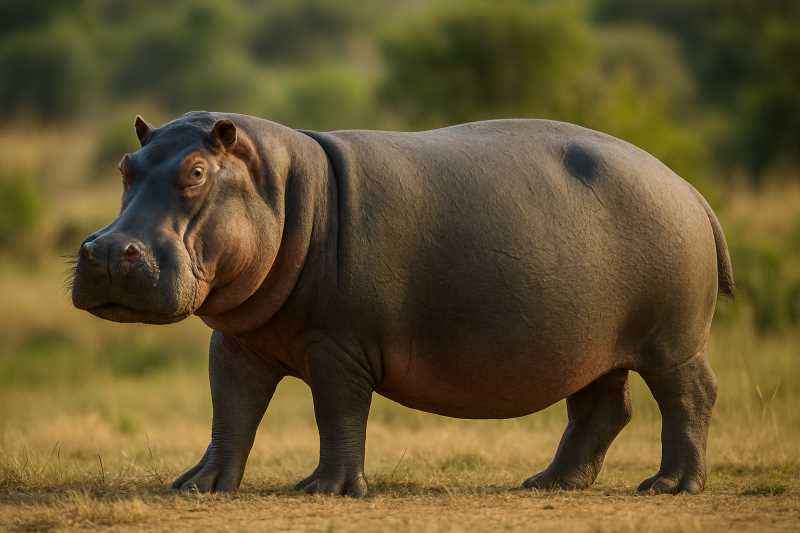
The Common Hippopotamus is one of the largest land mammals on the planet. Adult males can weigh between 1,500 to 3,200 kg (3,300 to 7,050 lbs), while females typically weigh slightly less. Hippos have a barrel-shaped body, short legs, and a large head, with their eyes, ears, and nostrils positioned on top, allowing them to see and breathe while mostly submerged in water.
Their skin is thick, measuring about 6 cm (2 inches) in places, and is mostly hairless, except for some bristles around the mouth and tail. The skin secretes a natural sunscreen known as "blood sweat," a reddish oil that offers protection from the sun and has antibacterial properties. Hippos are generally grayish-brown, with a lighter underbelly.
Their mouths are their most distinctive feature, capable of opening to almost 180 degrees. Equipped with large canines and incisors, their teeth can grow up to 50 cm (20 inches) long and are used for defense and dominance displays.
Range and Habitat
Hippos are native to sub-Saharan Africa, with their range extending from West to East Africa. They are primarily found in countries such as Zambia, Tanzania, Mozambique, and South Africa. Hippos inhabit rivers, lakes, and swamps, preferring areas with calm, slow-moving waters that provide ample opportunity for submersion.
These semi-aquatic mammals rely on water bodies for thermoregulation and protection from predators. During the day, they remain submerged, emerging at dusk to graze on land. Despite their aquatic nature, hippos cannot swim but instead walk or gallop along the riverbed.
Behavior and Diet
Hippos are known for their social behavior, living in groups called pods, herds, or bloats, typically comprising 10 to 20 individuals, although larger gatherings can occur. Dominance hierarchies exist within these groups, with one bull maintaining control over a territory and its associated females.
They are primarily herbivorous, feeding on grasses and, occasionally, aquatic plants. A hippo’s grazing habits are nocturnal, with individuals traveling several kilometers from water in search of food. Despite their size and formidable teeth, they do not hunt other animals, although they have been known to exhibit aggressive behavior towards humans and other mammals if threatened.
Identification Tips (Field Recognition Cues)
Recognizing a Common Hippopotamus in the field involves several key identifiers:
- Size and Shape: Look for a large, barrel-shaped body with relatively short legs.
- Coloration: A grayish-brown body with a lighter underside.
- Facial Features: Notice the large head with prominent eyes, ears, and nostrils.
- Behavior: Often seen partially submerged in water during the day.
- Sound: Hippos are known for their distinctive grunts, roars, and wheezes.
Conservation Status (with Threats and Protections)
The Common Hippopotamus is currently classified as "Vulnerable" by the International Union for Conservation of Nature (IUCN). The primary threats to their survival include habitat loss due to agricultural expansion, water diversion, and the effects of climate change. Illegal hunting for their ivory teeth and meat also poses significant risks.
Conservation efforts focus on habitat protection and anti-poaching measures. Protected areas and reserves play a crucial role in conserving hippo populations, and international regulations such as the Convention on International Trade in Endangered Species of Wild Fauna and Flora (CITES) aim to control the trade of hippo products.
Frequently Asked Questions
1. How fast can a hippopotamus run?
- Despite their bulky appearance, hippos can run up to 30 km/h (19 mph) on land over short distances. This speed is surprising given their size and weight.
2. Are hippos aggressive towards humans?
- Yes, hippos are considered one of the most dangerous animals in Africa. They are highly territorial and can be aggressive if they feel threatened, especially if their young are nearby.
3. How long do hippos live?
- In the wild, hippos can live for around 40 to 50 years. In captivity, with proper care, they may live slightly longer.
4. Why do hippos spend so much time in water?
- Hippos spend much of their time in water to regulate their body temperature and protect their skin from the sun. Water also offers them protection from land predators.
5. What role do hippos play in their ecosystem?
- Hippos contribute to their ecosystem by grazing on grasses, which helps maintain grassland environments. Their dung also provides important nutrients for aquatic ecosystems.
Related posts