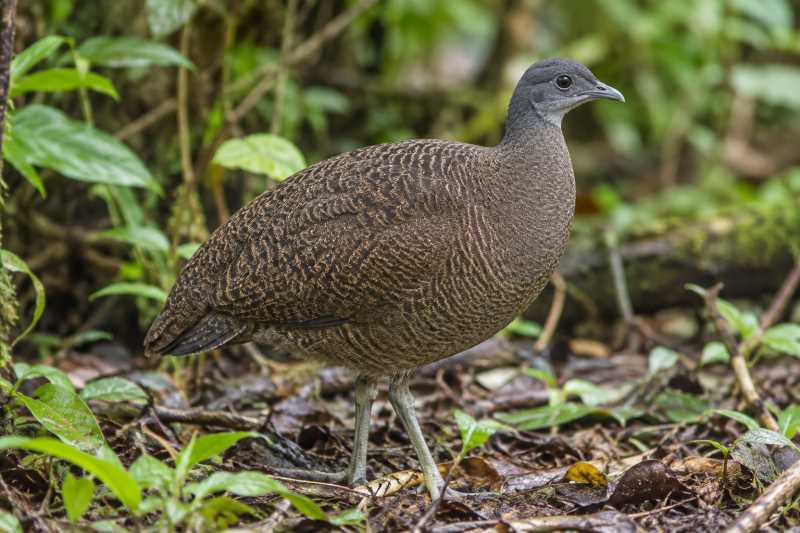
The Hooded Tinamou: A Glimpse into the Life of a Secretive Forest Inhabitant
The Hooded Tinamou, scientifically known as Nothocercus nigrocapillus, is a bird that inhabits the dense forests of South America. This elusive species, belonging to the family Tinamidae, is known for its secretive nature and distinctive appearance. Despite its fascinating characteristics, the Hooded Tinamou remains relatively understudied, primarily due to its elusive behavior and the challenging terrain it inhabits.
Taxonomy and Distribution
The Hooded Tinamou is a member of the order Tinamiformes, which is closely related to the ratites, such as ostriches and emus. This bird is predominantly found in the Andean regions, ranging from southern Colombia through Ecuador, Peru, and into Bolivia. Its preferred habitats are the subtropical and tropical montane forests, where it thrives in the understory.
The species is characterized by its medium size, measuring about 38 to 40 centimeters in length. It features a striking plumage with a contrasting black cap, which gives the bird its name. The rest of its body is covered in a mix of brown and grey feathers, providing excellent camouflage against the forest floor.
Behavior and Ecology
Hooded Tinamous are ground-dwelling birds, spending most of their time foraging for food among the leaf litter. Their diet is varied, consisting of fruits, seeds, insects, and small invertebrates. They play a vital role in their ecosystems as seed dispersers and contribute to the control of insect populations.
These birds are known for their solitary or paired existence, though occasionally, they may form small groups. Their elusive nature makes them difficult to observe in the wild, and they are more often heard than seen. Their calls, which are a series of low, resonant whistles, can be heard echoing through the forest, especially during the early morning or late evening.
Reproduction and Lifespan
The breeding season of the Hooded Tinamou varies depending on the geographic location but generally coincides with the rainy season when food is abundant. Males are responsible for incubating the eggs and caring for the young. After the female lays the eggs, she typically leaves the male to tend to the nest.
The nests are simple scrapes on the ground, lined with leaves and vegetation. The eggs are remarkably glossy and come in shades of brown and olive. After an incubation period of about 16 to 20 days, the chicks hatch and are precocial, meaning they are relatively mature and mobile from the moment of birth.
Conservation Status
The Hooded Tinamou is currently listed as a species of Least Concern by the International Union for Conservation of Nature (IUCN). However, like many forest-dependent species, it faces threats from habitat destruction due to deforestation and agricultural expansion. Conservation efforts aimed at preserving its natural habitat are crucial for ensuring the survival of this species.
Challenges in Study and Conservation
Studying the Hooded Tinamou presents numerous challenges due to its secretive habits and the inhospitable environments it inhabits. Researchers often rely on indirect methods such as listening for calls or using camera traps to gather data. Conservationists emphasize the importance of protecting large areas of forest to maintain viable populations.
Conclusion
The Hooded Tinamou is a fascinating bird that embodies the beauty and mystery of the Andean forests. While much remains to be learned about this elusive species, what is clear is the importance of its role in the ecosystem. Continued research and conservation efforts are essential to ensure its preservation for future generations. By safeguarding the habitats of the Hooded Tinamou, we also protect the myriad of other species that share its home, maintaining the rich biodiversity of the region.
Related posts