Introduction
Bobrinski’s Jerboa, scientifically known as Allactodipus bobrinskii, is a fascinating and unique species of rodent that belongs to the Dipodoidea family. This diminutive mammal is primarily found in the arid regions of Central Asia, where it has adapted to thrive in harsh desert environments. Known for its distinctive hopping locomotion, Bobrinski’s Jerboa is an exemplary study in evolutionary adaptation and ecological specialization. Despite its relatively obscure status in the broader rodent family, this species plays a crucial role in its ecosystem, serving as both prey and seed disperser. This article delves into the various aspects of Bobrinski’s Jerboa, including its physical characteristics, habitat preferences, behavior, and conservation status.
Physical Description
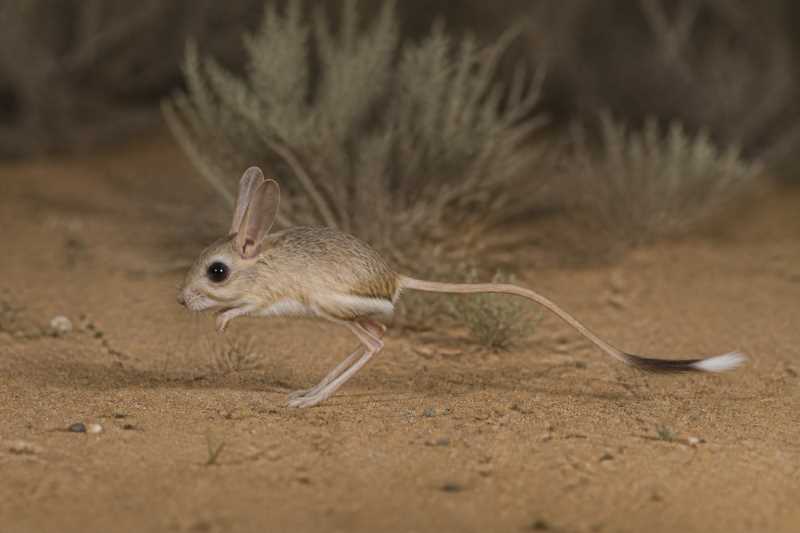
Bobrinski’s Jerboa is a small, nocturnal rodent, typically measuring between 15 to 20 centimeters in length, including its tail. The species is characterized by its long hind legs and feet, which are significantly larger than its forelimbs. This adaptation is crucial for its distinctive mode of locomotion, allowing it to leap great distances relative to its body size. The jerboa’s tail is usually as long or longer than its body, providing balance and support during its agile movements.
The fur of Bobrinski’s Jerboa is soft and dense, predominantly sandy or grayish-brown, which provides camouflage against the desert landscape. The underbelly is typically lighter, often white or cream-colored. This coloration helps in reflecting the harsh sunlight, keeping the animal cooler in its hot environment. The species also has large eyes and ears, adaptations that enhance its ability to detect predators and navigate in low-light conditions.
Range and Habitat
Bobrinski’s Jerboa is endemic to the arid and semi-arid regions of Central Asia. Its range includes parts of Kazakhstan, Uzbekistan, Turkmenistan, and possibly extending into surrounding areas. The species favors desert plains, sandy dunes, and semi-desert steppes, where vegetation is sparse but sufficient for its dietary needs.
Adapted to extreme conditions, Bobrinski’s Jerboa has evolved to survive with minimal water intake, deriving moisture from the food it consumes. Its burrowing behavior is a key survival strategy, as it helps regulate body temperature and provides protection from predators. The burrows are often complex, with multiple entrances and chambers, allowing the jerboa to escape quickly if threatened.
Behavior and Diet
Bobrinski’s Jerboa is primarily nocturnal, venturing out of its burrow under the cover of darkness to forage for food. Its diet primarily consists of seeds, roots, and other plant materials, although it may occasionally consume insects. The species is well adapted to its arid environment, with a highly efficient metabolism that conserves water and energy.
Socially, Bobrinski’s Jerboa is typically solitary, except during the breeding season. Communication between individuals is largely non-verbal, relying on scent markings and occasional vocalizations. The species is known for its remarkable jumping ability, which not only aids in locomotion but also serves as an evasion tactic against predators such as owls, snakes, and foxes.
Identification Tips (Field Recognition Cues)
Identifying Bobrinski’s Jerboa in the wild can be challenging due to its nocturnal and elusive nature. However, several field recognition cues can aid in identification:
- Locomotion: Look for distinctive hopping movements, characterized by long leaps using the powerful hind legs.
- Physical Appearance: Note the long tail and large hind legs, as well as the sandy brown coloration that blends with the desert landscape.
- Burrow Patterns: Seek out complex burrow systems with multiple entrances in sandy soils.
- Activity Timing: Conduct observations during nighttime hours when the jerboa is most active.
Conservation Status (With Threats and Protections)
Bobrinski’s Jerboa is currently listed as a species of Least Concern on the IUCN Red List. However, its populations face threats from habitat destruction, climate change, and human encroachment. Desertification and agricultural expansion are primary factors contributing to habitat loss, while climate change alters the delicate balance of arid ecosystems.
Conservation efforts for Bobrinski’s Jerboa include habitat protection and restoration initiatives. Establishing protected areas and promoting sustainable land use practices are crucial for ensuring the survival of this species. Additionally, further research is needed to understand the ecological role of Bobrinski’s Jerboa and its interactions with other species in its habitat.
Frequently Asked Questions
Why is this species unique?
Bobrinski’s Jerboa is unique due to its exceptional adaptations for desert living. Its long hind legs and tail facilitate agile hopping, while its nocturnal behavior and burrowing habits help conserve energy and evade predators. These adaptations make it a fascinating subject for studies in evolutionary biology.
How does Bobrinski’s Jerboa survive in the desert?
The jerboa survives in the desert through a combination of behavioral and physiological adaptations. It conserves water by being active at night, when temperatures are cooler, and by obtaining moisture from its plant-based diet. Its burrows provide shelter from the heat and predators.
What are the main threats to Bobrinski’s Jerboa?
The main threats to Bobrinski’s Jerboa include habitat loss due to agricultural expansion and climate change, which can lead to desertification. Human encroachment and environmental changes pose significant risks to its survival and the delicate balance of its ecosystem.
Related posts