The Maui Parrotbill: A Jewel of Hawaiian Avifauna
Introduction
Nestled within the lush, verdant forests of Maui, Hawaii, lives one of the most intriguing and endangered birds of the archipelago: the Maui Parrotbill, scientifically known as Pseudonestor xanthophrys. This small, vibrant bird is a symbol of Hawaii’s unique biodiversity and a testament to the delicate balance of island ecosystems. As a critically endangered species, the Maui Parrotbill’s story is a poignant reminder of the challenges faced by native wildlife in the face of environmental change.
Description and Characteristics
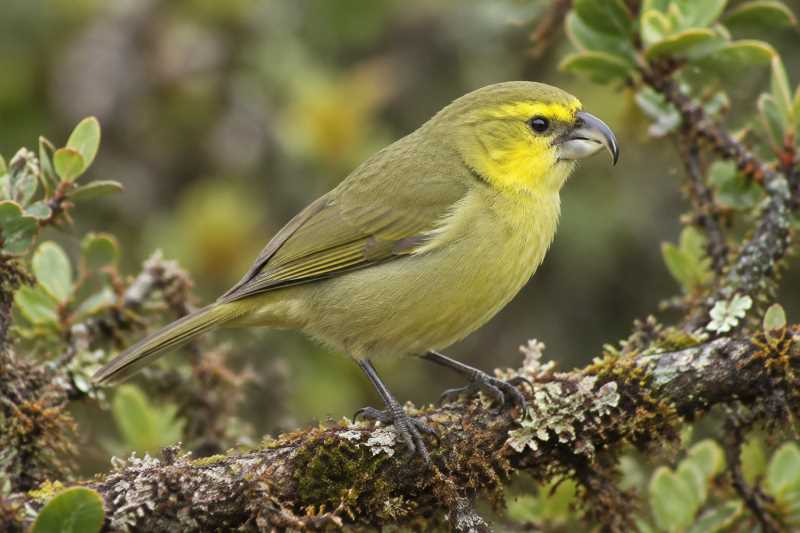
The Maui Parrotbill is not your average songbird. At approximately 5.5 to 6 inches in length, it is relatively small, yet it possesses a robust, parrot-like beak that is its most distinctive feature. This powerful, curved bill is perfectly adapted to its feeding habits, allowing it to pry open branches and bark in search of insects and larvae, which constitute a significant portion of its diet.
The Parrotbill’s plumage is a muted olive-green, blending seamlessly with the dense foliage of its forest habitat. Its underparts are a brighter yellow, providing a striking contrast. The bird’s eyes are encircled by a pale yellow ring, giving it an alert and inquisitive expression.
Habitat and Distribution
Historically, the Maui Parrotbill could be found throughout the montane rainforests of East Maui. However, their range has significantly diminished due to habitat loss and fragmentation. Today, they are primarily confined to the Hanawi Natural Area Reserve and adjacent areas of Haleakalā National Park, at elevations between 4,000 and 7,000 feet.
The Parrotbill’s habitat is characterized by wet, dense forests dominated by native tree species such as `ōhiʻa lehua (Metrosideros polymorpha) and koa (Acacia koa). These forests provide not only food but also the necessary cover for nesting and protection from predators.
Diet and Foraging Behavior
The Maui Parrotbill is an insectivore, with a diet comprised mainly of insects and their larvae. It is particularly fond of beetle larvae and caterpillars, which it extracts from tree bark and twigs using its strong beak. The bird employs a methodical foraging technique, moving slowly and deliberately through the forest canopy in search of food.
This dietary specialization makes the Parrotbill vulnerable to changes in its environment. The introduction of invasive species, such as the predatory Argentine ant, poses a threat by reducing the availability of native insect prey.
Reproduction and Lifespan
The breeding season for the Maui Parrotbill typically occurs from November to June. The species is monogamous, with pairs forming strong bonds that last through the breeding season. They build cup-shaped nests high in the forest canopy, using twigs and moss to construct a secure environment for their young.
Females lay a clutch of one to two eggs, which they incubate for approximately 16 days. Both parents participate in feeding the chicks, which fledge after about three weeks. Despite this parental investment, the Maui Parrotbill has a low reproductive rate, with many pairs only successfully raising one chick per season.
Conservation Challenges
The Maui Parrotbill faces a multitude of threats that have pushed it to the brink of extinction. Habitat loss due to land development, agriculture, and the spread of non-native plant species has significantly reduced the available living space for this bird. Additionally, the introduction of predators such as rats, cats, and mongoose has further endangered their populations by preying on eggs and young birds.
Climate change presents another significant threat, as shifting weather patterns can alter the structure of the Parrotbill’s montane forest habitat, affecting food availability and nesting sites. Diseases such as avian malaria, spread by introduced mosquitoes, have also been devastating to native bird populations, including the Maui Parrotbill.
Conservation Efforts
Efforts to conserve the Maui Parrotbill have been underway for several decades. Organizations such as the Maui Forest Bird Recovery Project have been instrumental in monitoring populations, restoring native habitats, and managing threats. Conservationists are focused on habitat restoration, including the removal of invasive plant species and reforestation with native trees.
Captive breeding programs have been initiated to increase population numbers, with the hope of reintroducing individuals to the wild. In addition, predator control efforts are crucial to protect existing populations from further decline.
Conclusion
The Maui Parrotbill stands as a symbol of the urgent need to protect Hawaii’s unique avian diversity. While the challenges are significant, ongoing conservation efforts provide hope for its future. By addressing the threats of habitat loss, invasive species, and climate change, we can work towards ensuring that this remarkable bird continues to thrive in its native forests for generations to come.
The story of the Maui Parrotbill is a reminder of the intricate connections within ecosystems and the profound impact of human actions on the natural world. It calls for a renewed commitment to conservation, not only to save this species but to preserve the rich biodiversity of our planet.
References
- Maui Forest Bird Recovery Project. (n.d.). Maui Parrotbill. Retrieved from [https://mauiforestbirds.org]
- BirdLife International. (2020). Pseudonestor xanthophrys. The IUCN Red List of Threatened Species 2020.
- U.S. Fish and Wildlife Service. (2017). Recovery Plan for the Maui Parrotbill (Pseudonestor xanthophrys).
Further Reading
- Pratt, H. D., Bruner, P. L., & Berrett, D. G. (1987). A Field Guide to the Birds of Hawaii and the Tropical Pacific.
- Simon, J. C., & Baker, P. E. (1998). The role of introduced diseases in the decline of endemic Hawaiian avifauna.
Acknowledgments
Special thanks to the dedicated conservationists working tirelessly to protect the Maui Parrotbill and the native forests of Hawaii.
Related posts