The Red-billed Buffalo Weaver: A Social Aviary Architect
The Red-billed Buffalo Weaver (Bubalornis niger) is an intriguing bird species native to the savannas and open woodlands of sub-Saharan Africa. Known for its gregarious nature and industrious nest-building habits, this bird represents a fascinating subject for ornithologists and bird enthusiasts alike. This article delves into the life, habitat, and behaviors of the Red-billed Buffalo Weaver, offering insights into its social dynamics, nesting practices, and ecological role.
Taxonomy and Description
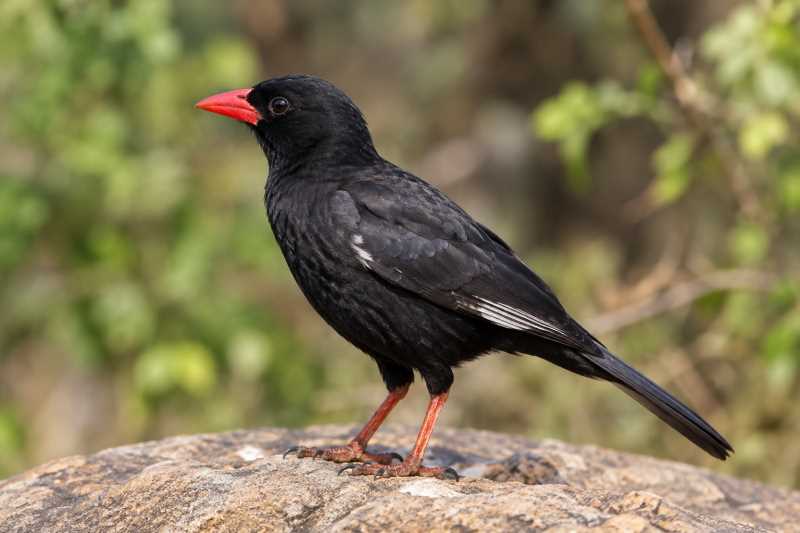
Belonging to the family Ploceidae, the Red-billed Buffalo Weaver is part of a group of birds renowned for their unique weaving abilities. The species name, Bubalornis niger, highlights its distinctive black plumage, although some individuals exhibit varying shades of brown. Adult males and females are similar in appearance, both sporting a striking red bill that contrasts sharply with their darker feathers. Measuring about 23 centimeters in length, these birds are robustly built, with short tails and stout bodies.
Habitat and Distribution
The Red-billed Buffalo Weaver is predominantly found across East and Southern Africa, inhabiting countries such as Kenya, Tanzania, Zimbabwe, and Botswana. They prefer open savannas, thornveld, and dry woodlands, often near water sources. The availability of food and suitable nesting trees significantly influences their distribution. These birds are highly adaptable, thriving in both natural and altered landscapes, including agricultural areas and parks.
Diet and Foraging
Omnivorous by nature, the Red-billed Buffalo Weaver has a varied diet. It primarily feeds on seeds, grains, and insects, demonstrating opportunistic feeding behavior. During the breeding season, their diet is more insect-focused, providing the necessary protein for growing chicks. These birds forage in groups, often seen rummaging through grasses or around livestock, benefiting from insects stirred up by the animals.
Social Structure and Behavior
One of the most remarkable aspects of the Red-billed Buffalo Weaver is its social structure. These birds are highly gregarious and live in colonies that can number from a few pairs to several dozen. Their social organization is complex, with a hierarchy that influences breeding rights and nesting sites. The colonies are noisy and bustling, with constant communication among members through a variety of calls and songs.
These birds are known for their co-operative breeding behavior. While dominant pairs within a colony have primary breeding rights, subordinate members often assist in raising the young. This cooperative behavior extends to tasks such as nest building and defending the colony from predators.
Nesting Habits
The nest-building abilities of the Red-billed Buffalo Weaver are nothing short of impressive. Their nests are large, communal structures made from twigs and grasses, often built in thorny acacia trees to deter predators. A single tree can host multiple nests, each housing several pairs.
The nests are intricately constructed, with multiple chambers and entrances, providing shelter and protection. The communal nature of their nests reflects their social lifestyle, as they often share nesting trees with other colonies and species.
Breeding and Lifespan
The breeding season for the Red-billed Buffalo Weaver varies geographically but generally coincides with the rainy season when food is abundant. Females lay between two to four eggs, which are incubated for approximately two weeks. Both parents participate in feeding the chicks, which fledge about three weeks after hatching.
In their natural habitat, Red-billed Buffalo Weavers can live up to 10 years, although this can be influenced by predation and environmental factors.
Ecological Role and Conservation
Red-billed Buffalo Weavers play a crucial role in their ecosystems. By controlling insect populations, they contribute to the ecological balance. Their nesting habits also provide habitats for other species, such as smaller birds and insects.
Currently, the Red-billed Buffalo Weaver is not considered threatened. However, habitat loss and changes in land use due to agricultural expansion pose potential risks. Conservation efforts focus on habitat preservation and ensuring sustainable land-use practices.
Conclusion
The Red-billed Buffalo Weaver is a testament to the intricate social structures and survival strategies found in the avian world. Its adaptability, cooperative behavior, and architectural skills make it a fascinating subject of study. Understanding and protecting this species and its habitat is essential for maintaining the biodiversity of the African savannas.
Through continued research and conservation efforts, we can ensure that the Red-billed Buffalo Weaver continues to thrive, offering invaluable insights into the complexities of avian life and the delicate balance of our ecosystems.
Related posts