Black-shanked Douc (Pygathrix nigripes): A Comprehensive Guide
Introduction
The Black-shanked Douc (Pygathrix nigripes) is a captivating primate species that belongs to the Old World monkey family. Known for its striking appearance and complex social behaviors, this primate inhabits the dense forests of Southeast Asia. This article explores the various facets of the Black-shanked Douc, including its physical attributes, habitat preferences, behavioral patterns, and conservation status.
Physical Description
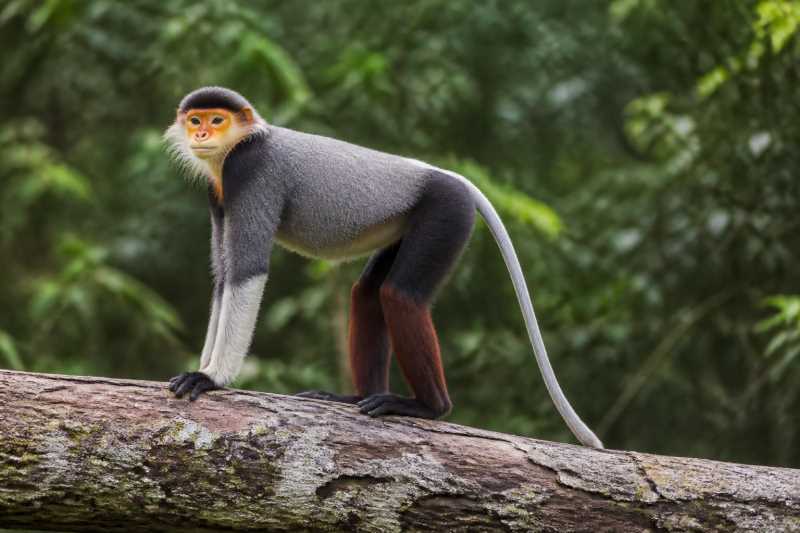
The Black-shanked Douc is renowned for its distinctive and vibrant coloration, which has earned it the nickname "costumed ape." This species exhibits a unique blend of colors, with a black face framed by a white beard and a striking pair of orange-pink eyelids. Its body fur is predominantly gray, with a darker shade on the shanks, giving the species its name. The limbs are slender yet muscular, facilitating agile movement through the forest canopy.
Adult males are generally larger than females, measuring about 60 to 70 centimeters in body length, excluding the tail, which adds an additional 55 to 75 centimeters. Males weigh between 11 and 15 kilograms, while females are slightly lighter, ranging from 8 to 11 kilograms. The species’ prehensile tail is a crucial adaptation for balance and maneuvering among the treetops.
Range and Habitat
The Black-shanked Douc is endemic to Vietnam and Cambodia, where it inhabits evergreen and semi-evergreen forests, as well as mixed deciduous forests. Its range is primarily concentrated in the Annamite Range, where the elevation varies from lowland areas to mountainous regions up to 1,600 meters above sea level. This arboreal primate relies on the dense canopy for shelter and sustenance, making forest conservation critical for its survival.
In recent years, habitat fragmentation and deforestation have significantly impacted the Black-shanked Douc’s range, leading to isolated populations and increased vulnerability to extinction.
Behavior and Diet
The Black-shanked Douc is a diurnal primate, most active during the early morning and late afternoon. It lives in social groups typically consisting of 10 to 50 individuals, although groups of up to 100 have been observed. These groups are characterized by a complex social hierarchy, with dominant males leading and protecting the group.
Communication within the group is facilitated through a combination of vocalizations, facial expressions, and body postures. The species is known for its "chirp" and "growl" sounds, which convey various messages, from alerting the group to potential threats to coordinating movement and foraging activities.
The diet of the Black-shanked Douc is primarily folivorous, consisting mainly of leaves, fruits, flowers, and seeds. This diet is supplemented by occasional consumption of bark and insects. The species’ specialized digestive system, with its multi-chambered stomach, allows it to efficiently break down fibrous plant material.
Identification Tips
Field identification of the Black-shanked Douc can be challenging due to its arboreal nature and dense forest habitat. However, several key features can aid in recognition:
- Coloration: Look for the unique combination of a black face, white beard, and orange-pink eyelids.
- Movement: Note the agile and graceful movement through the canopy, often involving leaping between branches.
- Vocalizations: Listen for the characteristic chirps and growls, especially in the early morning and late afternoon.
- Group Size: Observe large social groups, often seen foraging or resting together in the treetops.
Conservation Status
The Black-shanked Douc is classified as "Endangered" by the International Union for Conservation of Nature (IUCN). The species faces several significant threats, primarily habitat destruction due to logging, agricultural expansion, and infrastructure development. Illegal hunting for bushmeat and the pet trade further exacerbates the decline of this species.
Conservation efforts are underway to protect the Black-shanked Douc, including the establishment of protected areas and wildlife corridors to facilitate movement between fragmented habitats. International and local organizations are also working to raise awareness and implement anti-poaching measures.
Frequently Asked Questions
What is the primary diet of the Black-shanked Douc?
The Black-shanked Douc primarily feeds on leaves, fruits, flowers, and seeds. Its diet is adapted to the available vegetation in its forest habitat, and its specialized digestive system helps process fibrous plant material.
Where can you find the Black-shanked Douc in the wild?
The Black-shanked Douc is found in the forests of Vietnam and Cambodia, particularly in the Annamite Range. It inhabits evergreen and semi-evergreen forests, as well as mixed deciduous forests.
How does the Black-shanked Douc communicate?
Communication among Black-shanked Doucs involves vocalizations, such as chirps and growls, as well as facial expressions and body postures. These signals help coordinate group activities and alert members to potential threats.
Why is the Black-shanked Douc endangered?
The Black-shanked Douc is endangered primarily due to habitat destruction from logging and agricultural expansion, as well as illegal hunting for bushmeat and the pet trade.
How can we help conserve the Black-shanked Douc?
Conservation efforts include supporting protected areas, promoting sustainable land-use practices, and raising awareness about the threats this species faces. Supporting local and international conservation organizations can also make a significant impact.
Related posts