Black-fronted Titi (Callicebus nigrifrons): A Detailed Overview
Introduction
The Black-fronted Titi Monkey, scientifically known as Callicebus nigrifrons, is a captivating primate species that inhabits the lush forests of Brazil. Known for their expressive eyes and playful nature, these titi monkeys are a fascinating subject for both researchers and wildlife enthusiasts. This article will explore various aspects of the Black-fronted Titi, including its physical characteristics, habitat, behavior, diet, and conservation status. We will also provide tips for identifying these primates in the wild and answer frequently asked questions to deepen your understanding of this intriguing species.
Physical Description
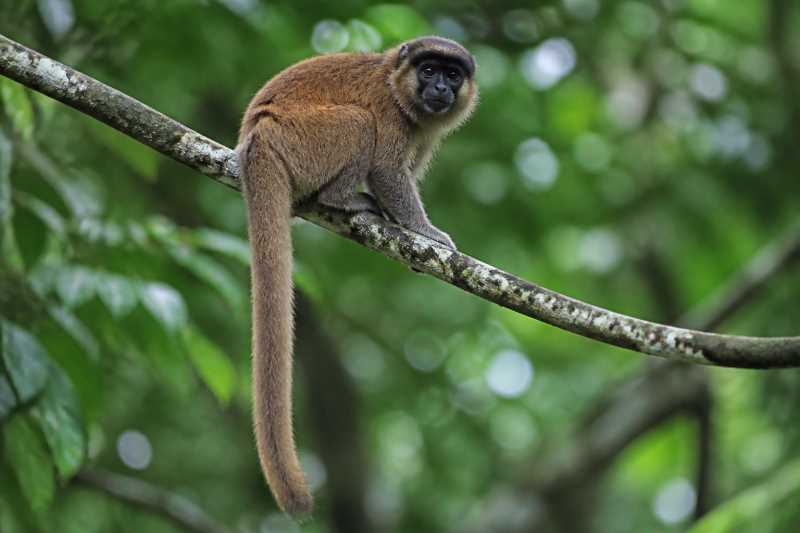
The Black-fronted Titi is a small to medium-sized primate, with adults typically weighing between 800 to 1,200 grams. They are characterized by their dense, soft fur, which is predominantly grayish-brown with a distinctive black forehead and crown, giving them their name. The tail is long and bushy, often darker than the rest of the body, which aids in balance as they navigate through the treetops.
Their expressive facial features include large, round eyes that convey a sense of curiosity and intelligence. Unlike some other primates, Black-fronted Titis lack a prehensile tail, which means their tail is not used for grasping. Instead, they rely on their strong limbs to move adeptly through their arboreal habitat.
Range and Habitat
The natural range of the Black-fronted Titi is confined to the Atlantic Forest of southeastern Brazil. This rich and diverse ecosystem provides the perfect backdrop for their survival, offering abundant food sources and ample shelter. These monkeys are primarily found in the states of Minas Gerais, Espírito Santo, and Rio de Janeiro.
Their preferred habitat includes both primary and secondary forests, often in areas where dense foliage offers protection from predators. They are also known to inhabit forest edges and can occasionally be spotted in degraded forest patches, showcasing their adaptability to changing environments.
Behavior and Diet
Black-fronted Titis are diurnal and arboreal, spending the majority of their time in the trees. They are social animals, typically living in small family groups consisting of a monogamous pair and their offspring. This strong family bond is a hallmark of their social structure, with pairs often seen grooming each other and engaging in mutual care.
Communication within groups is facilitated through a series of vocalizations, ranging from high-pitched calls to warn of predators to softer sounds used in social bonding. Their diet primarily consists of fruits, leaves, and insects, making them frugivores with a penchant for occasional protein supplements from insects and small invertebrates.
Identification Tips (Field Recognition Cues)
Identifying a Black-fronted Titi in the field can be a rewarding experience for wildlife enthusiasts. Here are some tips to recognize them:
- Distinctive Black Forehead: Look for the characteristic black patch on the forehead and crown, which contrasts with their grayish-brown body fur.
- Bushy Tail: Their long, bushy tail is a key feature, helping distinguish them from other primates in the region.
- Size and Movement: Observe their size and agile movements through the trees, often in small family groups.
- Vocalizations: Listen for their distinct calls, especially during morning hours when they are most active.
Conservation Status (with Threats and Protections)
The Black-fronted Titi is currently listed as Near Threatened on the IUCN Red List. The primary threats to their survival include habitat destruction due to logging, agricultural expansion, and urbanization. As their forest habitat is fragmented, populations become isolated, making them more vulnerable to extinction.
Conservation efforts are underway to protect the remaining habitats of the Black-fronted Titi. These include the establishment of protected areas and wildlife corridors that facilitate gene flow between isolated populations. Furthermore, reforestation projects and environmental education programs aim to raise awareness about the importance of preserving the Atlantic Forest and its inhabitants.
Frequently Asked Questions
Q1: What adaptations do Black-fronted Titis have for arboreal life?
A1: Black-fronted Titis possess strong, agile limbs that allow them to navigate the treetops with ease. Their bushy tails aid in balance, and their keen eyesight helps them spot predators and locate food sources in the dense foliage.
Q2: How do Black-fronted Titis communicate within their groups?
A2: These primates use a range of vocalizations to communicate. High-pitched calls are used to warn of danger, while softer sounds facilitate social bonding and coordination within the group.
Q3: What role do Black-fronted Titis play in their ecosystem?
A3: As frugivores, Black-fronted Titis play a crucial role in seed dispersal, aiding in the maintenance of forest biodiversity. Their consumption of insects also helps control insect populations.
Q4: Are there any conservation programs focused on Black-fronted Titis?
A4: Yes, several conservation programs are dedicated to preserving the habitat of the Black-fronted Titi, including protected areas, reforestation projects, and environmental awareness campaigns.
Q5: Can Black-fronted Titis be found in zoos or wildlife sanctuaries?
A5: While not commonly found in zoos, a few wildlife sanctuaries in Brazil may house Black-fronted Titis as part of conservation and educational efforts.
Related posts