Pronghorn (Antilocapra americana): A Comprehensive Guide
Introduction
The pronghorn (Antilocapra americana) is one of North America’s most iconic mammals, often celebrated for its incredible speed and unique evolutionary history. Commonly mistaken for a member of the antelope family, the pronghorn is actually the sole surviving member of the Antilocapridae family, making it a truly unique species on the continent. This article delves into the fascinating world of the pronghorn, covering its physical characteristics, habitat, behavior, and conservation status, while also providing tips for identification in the wild.
Physical Description
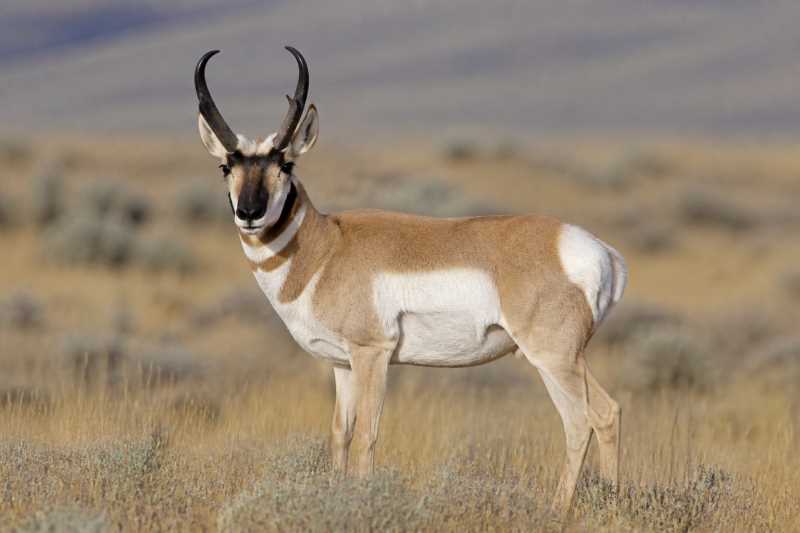
Pronghorns are easily recognizable by their distinctive appearance. Adult pronghorns stand about 3 feet tall at the shoulder, with males typically weighing between 100 to 150 pounds, while females are slightly smaller, weighing between 75 to 110 pounds. The pronghorn’s coat is a striking tan to reddish-brown color, with a white underbelly and prominent white patches on the rump and throat.
One of the pronghorn’s most notable features is its horns. Unlike true antelopes, pronghorns have branched horns that are shed and regrown each year. Both males and females possess these horns, but they are more pronounced in males, reaching lengths of up to 12 inches.
Pronghorns have large, expressive eyes positioned high on their heads, providing them with a panoramic view of their surroundings. This adaptation is crucial for detecting predators across the vast open landscapes they inhabit. Additionally, their long, slender legs are built for speed, allowing them to reach running speeds of up to 60 miles per hour, making the pronghorn the fastest land mammal in North America.
Range and Habitat
Pronghorns are native to North America, with their range extending from southern Canada through the western United States and into northern Mexico. They are most commonly found in open plains, grasslands, and deserts, where their keen eyesight and speed give them an advantage over predators.
The pronghorn’s habitat is characterized by wide-open spaces with minimal tree cover. They thrive in areas with short vegetation that allows for unobstructed visibility and easy escape routes. Despite their preference for open country, pronghorns are quite adaptable and can also be found in shrublands and semi-desert regions.
Behavior and Diet
Pronghorns are highly social animals, often forming herds that can range from a few individuals to several hundred, depending on the season and availability of resources. During the spring and summer months, pronghorns typically form smaller groups, while in the winter, they gather in larger herds for better protection against predators and harsh weather conditions.
The pronghorn’s diet primarily consists of a variety of grasses, forbs, and shrubs. They are opportunistic feeders, adjusting their diet based on the availability of food sources throughout the year. In the summer, they prefer succulent plants, while in the winter, they rely more on shrubs and other woody vegetation.
Water is another essential component of the pronghorn’s habitat. Although they can obtain much of their moisture from the plants they eat, pronghorns will seek out water sources when necessary, especially during the hotter months.
Identification Tips (Field Recognition Cues)
Identifying pronghorns in the wild can be a rewarding experience for wildlife enthusiasts. Here are some key field recognition cues to help you spot these remarkable animals:
- Distinctive Horns: Look for the unique, black horns that curve backward. Males have more prominent horns, but females usually have smaller, less noticeable ones.
- Coloration: Note the tan to reddish-brown coat with white markings on the belly, throat, and rump. The white rump patch is especially visible when pronghorns are alarmed.
- Speed and Movement: Pronghorns are incredibly fast and agile. If you see an animal sprinting across the plains at high speed, it’s likely a pronghorn.
- Large, Expressive Eyes: Their large eyes are situated high on the head, providing a wide field of view, which is helpful in recognizing them from a distance.
- Social Behavior: Pronghorns often move in groups. If you see a herd of animals grazing or resting together in open grassland, they are likely pronghorns.
Conservation Status (With Threats and Protections)
The pronghorn population is currently stable, with an estimated 700,000 individuals across their range. However, they face several threats that could impact their long-term survival.
Threats
- Habitat Loss: The conversion of grasslands and open plains into agricultural and urban areas poses a significant threat to pronghorns, as it fragments their habitat and restricts their movement.
- Fencing: Pronghorns are not adept at jumping fences, which can impede their migration routes and lead to habitat fragmentation.
- Climate Change: Alterations in precipitation patterns and temperatures can affect the availability of food and water resources, impacting pronghorn survival.
- Predation: Coyotes, bobcats, and golden eagles are among the primary predators of pronghorns, particularly targeting young fawns.
Protections
Conservation efforts to protect pronghorns include habitat restoration, fencing modifications to allow for safe passage, and legal protections. In the United States, pronghorns are managed under state wildlife agencies, and hunting is regulated to ensure sustainable populations.
Frequently Asked Questions
- What is the fastest land animal in North America?
The pronghorn is the fastest land animal in North America, capable of reaching speeds up to 60 miles per hour. This incredible speed helps them evade predators and is a key factor in their survival in open habitats.
- Are pronghorns related to antelopes?
Despite their resemblance to antelopes, pronghorns belong to a different family, Antilocapridae. They are the only surviving member of this family and are more closely related to giraffes than true antelopes.
- How do pronghorns adapt to harsh weather conditions?
Pronghorns are highly adaptable and can survive harsh weather conditions by forming larger herds in winter for better protection. Their diet flexibility also allows them to switch to available food sources during different seasons.
- What role do pronghorns play in their ecosystem?
Pronghorns are important grazers in their ecosystem, helping to maintain healthy grassland habitats. Their presence also supports a diverse range of predators and scavengers, contributing to the overall balance of their native ecosystems.
- How can I help in pronghorn conservation efforts?
You can support pronghorn conservation by advocating for the protection of their habitats, supporting organizations focused on wildlife conservation, and promoting awareness about the challenges pronghorns face.
Related posts