Introduction
The Red-bellied Titi, scientifically known as Plecturocebus moloch, is a captivating primate species belonging to the family Pitheciidae. These small, arboreal monkeys are native to South America and are renowned for their striking appearance and unique social behaviors. As a key species in their ecosystem, they play a vital role in seed dispersal and maintaining the health of tropical forests. This article delves into various aspects of the Red-bellied Titi, providing insights into their physical characteristics, habitat preferences, behavior, and conservation status.
Physical Description
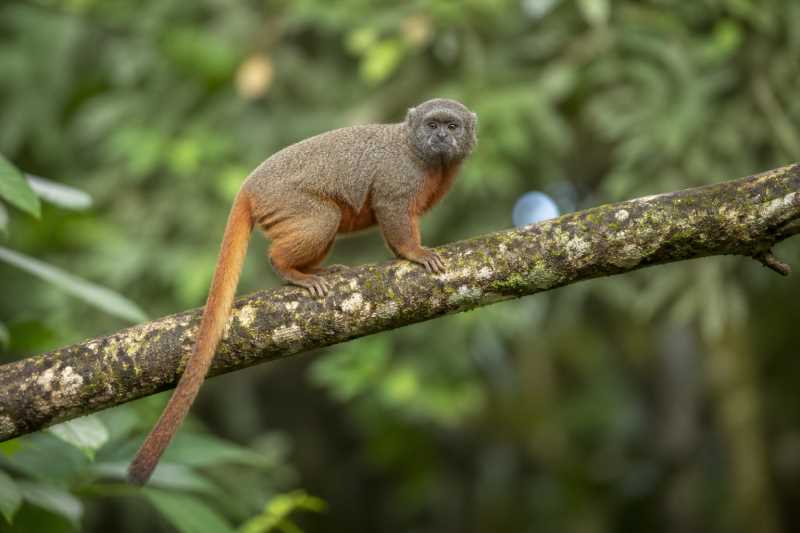
The Red-bellied Titi is a small primate, with adults typically weighing between 800 grams to 1 kilogram (1.76 to 2.2 pounds). They measure approximately 30 to 45 centimeters (12 to 18 inches) in body length, with a tail that is almost as long as their body, aiding in balance as they navigate their arboreal environment. The most distinctive feature of this species is its reddish-orange belly, which contrasts with the otherwise gray or brown fur that covers the rest of its body. Their fur is dense and soft, providing insulation against the elements. The face of the Red-bellied Titi is framed by a mane of fur, giving it a characteristic appearance that is both endearing and distinctive.
Range and Habitat
The Red-bellied Titi is primarily found in the Amazon Basin, with its range extending across parts of Brazil, Peru, and Bolivia. They inhabit lowland rainforests and are particularly associated with dense, secondary growth and riverine forests. These monkeys are adept at living in a variety of forest types, including terra firme (non-flooded) forests and várzea (seasonally flooded) forests. The ability to thrive in diverse habitats is partly due to their flexible diet and social structure, which allows them to adapt to changing environmental conditions.
Behavior and Diet
Red-bellied Titis are diurnal and arboreal, spending most of their time in the trees. They live in small family groups typically consisting of a monogamous pair and their offspring. These groups are highly territorial, often using vocalizations and scent-marking to defend their territory from other groups. Monogamous bonding is reinforced through grooming and tail-twining, a behavior where two individuals intertwine their tails while sitting together.
Their diet is primarily frugivorous, with fruits making up the bulk of their intake. However, they also consume leaves, flowers, and insects, offering them a diverse diet that can fluctuate with seasonal availability. This dietary adaptability is crucial for survival, especially in habitats where food resources can vary greatly throughout the year.
Identification Tips (Field Recognition Cues)
Identifying the Red-bellied Titi in the wild can be a rewarding experience for wildlife enthusiasts and researchers alike. Key identification tips include:
- Coloration: Look for the distinctive reddish-orange belly that sets them apart from other titi monkeys.
- Vocalizations: Their vocal repertoire includes a range of calls, from soft chirps to loud territorial calls, which can often be heard before the animals are seen.
- Tail-Twining Behavior: Observing pairs engaging in tail-twining can be a clear indication of Red-bellied Titis, as this behavior is a bonding activity unique to them.
- Social Structure: Look for small family groups moving together, often with synchronized movements between the monogamous pair and their young.
Conservation Status (With Threats and Protections)
The Red-bellied Titi is currently listed as Least Concern by the International Union for Conservation of Nature (IUCN). However, like many other species in the Amazon, they face threats from habitat destruction due to deforestation and land conversion for agriculture. Illegal pet trade also poses a risk, with young monkeys often being captured and sold.
Conservation efforts are crucial to ensuring the survival of this species. Protected areas within their range, such as national parks and reserves, provide safe havens where they can thrive. Additionally, conservation programs focused on habitat restoration and anti-poaching measures are vital components of their protection.
Frequently Asked Questions
1. What is the lifespan of a Red-bellied Titi in the wild? Red-bellied Titis typically live up to 12 years in the wild, though this can vary depending on environmental conditions and threats.
2. How do Red-bellied Titis communicate with each other? They use a variety of vocalizations, including chirps and calls, to communicate within their group. Tail-twining and grooming also play a role in social bonding.
3. What role do Red-bellied Titis play in their ecosystem? As frugivores, they are important seed dispersers, contributing to forest regeneration and ecological balance.
4. Are Red-bellied Titis endangered? Currently, they are not endangered, but they face threats from habitat loss and the pet trade, making conservation efforts important.
5. Can Red-bellied Titis be found in captivity? While they can be found in some zoos and rehabilitation centers, their complex social and dietary needs make them challenging to care for in captivity, and they are best observed in their natural habitat.
Related posts