Black-bearded Flying Fox: A Comprehensive Overview
Introduction
The Black-bearded Flying Fox, scientifically known as Pteropus melanopogon, is a fascinating species of megabat that plays a crucial role in the ecosystems it inhabits. Known for their impressive size and distinctive appearance, these bats are a vital part of the natural balance, contributing to seed dispersal and pollination. This article delves into the intricacies of the Black-bearded Flying Fox, covering its physical description, natural habitat, behavior, and conservation efforts aimed at protecting this unique species.
Physical Description
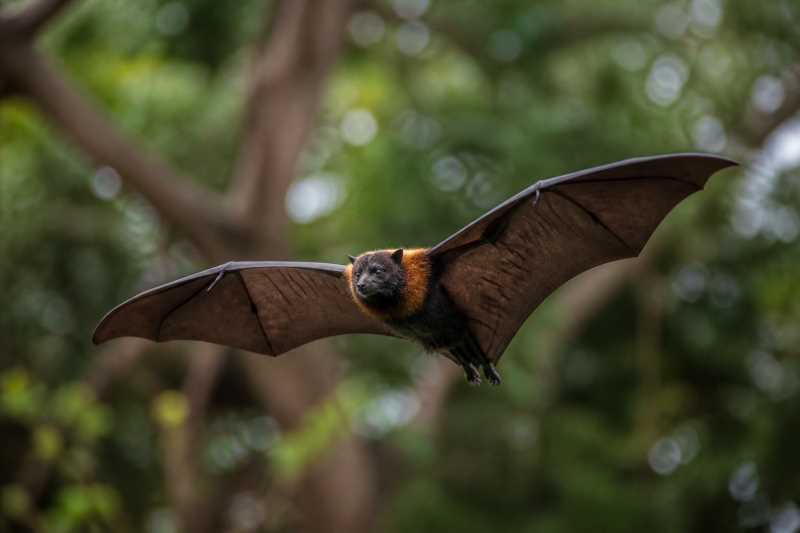
The Black-bearded Flying Fox is one of the larger species within the Pteropus genus. It is easily recognizable due to its distinctive physical features. This species typically exhibits a wingspan ranging from 1.2 to 1.5 meters (4 to 5 feet), making it a formidable sight in the skies. The body length of these bats can reach up to 40 centimeters (approximately 16 inches), with a weight that varies between 600 to 900 grams (1.3 to 2 pounds).
The most striking characteristic of the Black-bearded Flying Fox is its fur, which is predominantly black, lending the species its common name. The fur around the neck and face is slightly lighter, often appearing as a deep brown or even a golden hue in certain lights. This variation in fur coloration is what gives the impression of a "beard," especially prominent in males.
Their faces are dog-like, a common trait among flying foxes, with large, expressive eyes that aid in night navigation. Unlike many other bat species, the Black-bearded Flying Fox does not rely on echolocation, instead using its keen vision and sense of smell to locate food.
Range and Habitat
The natural range of the Black-bearded Flying Fox is primarily limited to the islands of Indonesia, particularly within the Maluku Islands and surrounding regions. They thrive in tropical and subtropical environments, favoring dense forests where there is an abundance of fruiting trees, which are essential for their diet.
These bats are typically found in lowland forests but are also known to inhabit mangroves and coconut plantations, where they can easily access their preferred food sources. Their roosting habits are communal, often forming large colonies in trees, which provide safety in numbers from potential predators.
Behavior and Diet
The Black-bearded Flying Fox is predominantly nocturnal, emerging at dusk to forage for food. As frugivores, their diet consists mainly of fruits, nectar, and flowers. They play a pivotal role in their ecosystems by aiding in seed dispersal and pollination, thus contributing to the regeneration of forests.
These bats are known for their strong social structures, often roosting together in large colonies that can number in the thousands. Communication within these colonies is vital, with a range of vocalizations used to establish territory, signal distress, or coordinate foraging activities.
Identification Tips
Field identification of the Black-bearded Flying Fox can be accomplished by noting several key characteristics:
- Size and Wingspan: One of the largest bats, with a wingspan of up to 1.5 meters.
- Fur Coloration: Predominantly black fur with lighter, sometimes golden, hues around the neck and face.
- Facial Features: Dog-like face with large eyes, lacking the prominent nose-leaf found in echolocating bats.
- Roosting Habits: Look for large colonies in trees, often near fruiting plants and water sources.
Conservation Status
The Black-bearded Flying Fox faces several threats that have resulted in its classification as Near Threatened by the International Union for Conservation of Nature (IUCN). The primary threats include habitat destruction due to deforestation, hunting for bushmeat, and persecution due to perceived competition with agricultural interests.
Conservation efforts are underway to protect this species, focusing on habitat preservation and legal protection from hunting. Organizations are working to raise awareness about the ecological importance of these bats and the need for sustainable practices that allow for coexistence with human agricultural activities.
Frequently Asked Questions
What is the primary diet of the Black-bearded Flying Fox?
The Black-bearded Flying Fox primarily feeds on fruits, nectar, and flowers. They are frugivorous, playing a crucial role in seed dispersal and pollination.
How can you differentiate a Black-bearded Flying Fox from other bats?
Key features include its large size, black fur with lighter "beard" around the neck, and lack of echolocation, relying instead on vision and smell.
Where can the Black-bearded Flying Fox be found?
This species is found in the Maluku Islands of Indonesia, inhabiting tropical and subtropical lowland forests.
What are the main threats to the Black-bearded Flying Fox?
The main threats include habitat destruction, hunting for bushmeat, and conflicts with agriculture.
How does the Black-bearded Flying Fox contribute to its ecosystem?
They help with seed dispersal and pollination, which are vital for forest regeneration and biodiversity maintenance.
Related posts