Introduction
The South Moluccan Flying Fox, scientifically known as Pteropus chrysoproctus, is a fascinating member of the megabat family. Renowned for its impressive wingspan and crucial ecological role, this flying fox is an integral part of the biodiversity in the South Moluccas, Indonesia. Despite its importance, this species faces numerous challenges that threaten its survival, making it a subject of interest for conservationists worldwide.
Physical Description
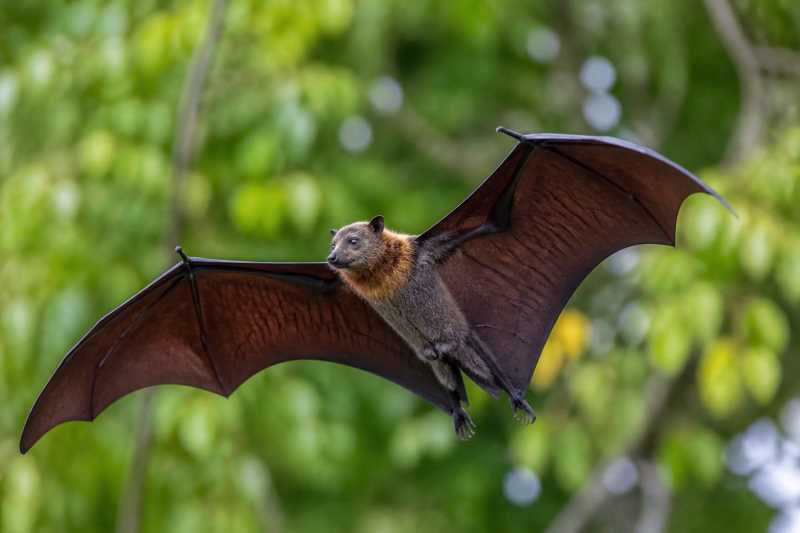
The South Moluccan Flying Fox is a visually striking mammal. It boasts a robust body size, with adult specimens often weighing between 500 to 1,200 grams. The wingspan of this species can reach up to 1.5 meters, allowing it to glide effortlessly across the forest canopy. Its fur is predominantly dark brown to black, complemented by a distinctive golden patch around the rump, a feature from which its scientific name, chrysoproctus (golden rump), is derived. The face is fox-like, with large eyes adapted for excellent night vision, and it lacks the echolocation abilities found in microbats, relying instead on its keen eyesight and sense of smell.
Range and Habitat
The South Moluccan Flying Fox is endemic to the Maluku Islands in Indonesia, specifically the southern group, including islands like Seram and Ambon. This region is characterized by tropical rainforest ecosystems, where the flying fox finds abundant food resources and roosting sites. These bats prefer lowland tropical forests, mangroves, and coconut plantations, where they can find fruit-bearing trees. They are also known to inhabit secondary forests and are occasionally seen near human settlements when natural resources are scarce.
Behavior and Diet
South Moluccan Flying Foxes are primarily nocturnal, emerging at dusk to forage for food. They are frugivorous, feeding mainly on a diet of fruits, particularly figs and other native fruiting trees. This diet plays a crucial role in forest ecology as these bats are significant seed dispersers, aiding in forest regeneration. They have a social structure and often roost in large colonies that can number in the thousands. These colonies provide safety in numbers from predators and allow for efficient sharing of information about food sources. Their foraging behavior is also influenced by the lunar cycle, with reduced activity during full moon nights to avoid predation.
Identification Tips
Identifying the South Moluccan Flying Fox in the field can be relatively straightforward with the right cues:
- Wingspan and Flight: Look for a large bat with an expansive wingspan of up to 1.5 meters, gliding gracefully through the canopy.
- Coloration: Note the dark brown to black fur with the characteristic golden patch on the rump.
- Roosting Habits: These bats are often found roosting in large groups in tall trees during the day, making them easier to spot.
- Location: Confirm their presence in the Maluku Islands, particularly around the coastal and forested areas.
Conservation Status
The South Moluccan Flying Fox is currently classified as Vulnerable on the IUCN Red List. The primary threats to this species are habitat loss due to deforestation, hunting for bushmeat, and disturbance from human activities. In particular, the conversion of forests into agricultural land and logging operations has significantly reduced their natural habitat. Additionally, they are sometimes persecuted by farmers who view them as pests. Conservation efforts are focused on habitat protection and restoration, along with community education programs to promote coexistence. Legal protections are in place, but enforcement remains a challenge due to limited resources.
Frequently Asked Questions
What is the diet of the South Moluccan Flying Fox?
The South Moluccan Flying Fox primarily feeds on fruits, with a preference for figs and other native fruiting trees. They play a vital role in seed dispersal and forest regeneration through their frugivorous diet.
Where can the South Moluccan Flying Fox be found?
This species is endemic to the Maluku Islands of Indonesia, specifically in the southern group of islands such as Seram and Ambon, where they inhabit tropical rainforests and mangroves.
How can I identify a South Moluccan Flying Fox?
Look for a large bat with a wingspan up to 1.5 meters, dark brown to black fur, and a distinctive golden patch on the rump. They are often seen roosting in large colonies during the day.
What are the conservation challenges faced by the South Moluccan Flying Fox?
The main challenges include habitat loss due to deforestation, hunting, and human disturbances. Conservation efforts focus on habitat protection and community education.
Are South Moluccan Flying Foxes dangerous to humans?
Generally, South Moluccan Flying Foxes are not dangerous to humans. They are non-aggressive and play a crucial ecological role, but they should be respected and observed from a distance.
Related posts