Beecroft’s Anomalure: A Comprehensive Guide
Introduction
Beecroft’s Anomalure, scientifically known as Anomalurus beecrofti, is a fascinating mammal species that inhabits the lush rainforests of West and Central Africa. This elusive creature, often referred to as a "flying squirrel," captivates wildlife enthusiasts with its unique adaptations and enigmatic behavior. In this article, we delve into the physical characteristics, habitat, diet, behavior, and conservation status of Beecroft’s Anomalure, providing a detailed understanding of this remarkable species.
Physical Description
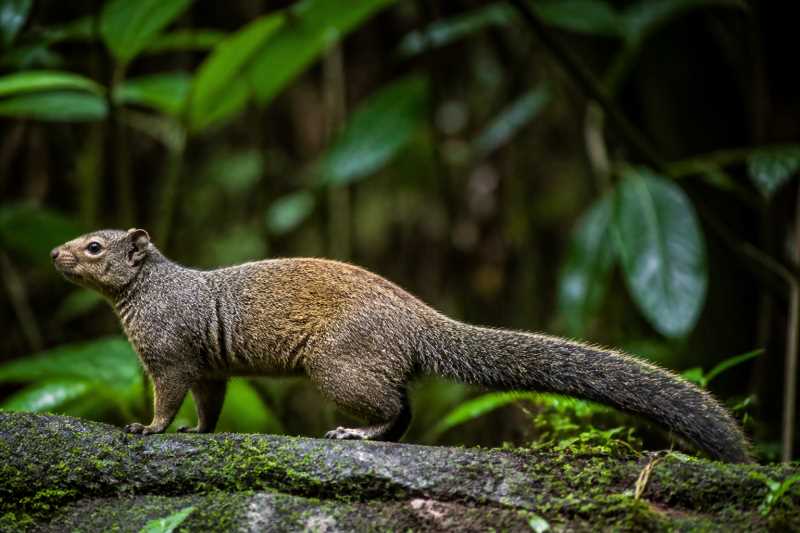
Beecroft’s Anomalure is a medium-sized rodent with distinct features that differentiate it from other gliding mammals. Adult anomalures typically measure between 30 to 40 centimeters in body length, with a tail that can extend up to 45 centimeters, aiding in balance and gliding. One of the most striking features of this species is the patagium, a membrane that stretches between its limbs, allowing it to glide efficiently from tree to tree.
The fur of Beecroft’s Anomalure is dense and soft, providing insulation against the humid rainforest climate. Its coloration ranges from brown to grayish-brown, with a lighter underbelly. The large, rounded eyes of the anomalure are adapted for nocturnal activity, providing excellent night vision. Additionally, this species possesses specialized incisors that continuously grow and are essential for gnawing on bark and other plant materials.
Range and Habitat
Beecroft’s Anomalure is predominantly found in the dense, tropical rainforests of West and Central Africa. Its range extends from Sierra Leone and Liberia in the west, through Côte d’Ivoire, Ghana, and Nigeria, to Cameroon and the Democratic Republic of the Congo in the east. This species thrives in primary and secondary forests, where it can find ample food resources and suitable nesting sites.
The anomalure prefers habitats with a rich canopy cover, which provides protection from predators and facilitates its gliding locomotion. It is also known to inhabit forest edges and occasionally ventures into agricultural areas in search of food. However, Beecroft’s Anomalure is highly dependent on forested environments, making it vulnerable to habitat loss due to deforestation and land conversion.
Behavior and Diet
Beecroft’s Anomalure is primarily nocturnal, spending the daylight hours resting in tree cavities or nests made of leaves and twigs. As night falls, this arboreal mammal becomes active, foraging for food and socializing with conspecifics. Its social structure is not well-documented, but it is believed to exhibit a solitary or small group lifestyle.
The diet of Beecroft’s Anomalure consists mainly of plant materials, including leaves, fruits, bark, and seeds. It has been observed feeding on the leaves of various tree species, as well as fruits and nuts, which provide essential nutrients for its survival. The species’ strong incisors are adapted to gnaw through tough plant materials, while its keen sense of smell aids in locating food sources.
Identification Tips (Field Recognition Cues)
Identifying Beecroft’s Anomalure in the wild can be challenging due to its nocturnal habits and elusive nature. However, certain field recognition cues can aid in identification:
- Gliding Behavior: Look for the distinctive gliding motion as the anomalure moves between trees. Its patagium enables it to cover significant distances in a single glide.
- Vocalizations: Listen for its unique vocalizations, which include a series of high-pitched chirps and whistles, often used for communication among individuals.
- Tree Preferences: Observe the species’ tendency to frequent trees with dense foliage or those with accessible cavities for nesting.
- Nocturnal Activity: Beecroft’s Anomalure is most active at night, so sightings are more likely during nocturnal surveys.
Conservation Status (With Threats and Protections)
Beecroft’s Anomalure is currently listed as "Least Concern" on the IUCN Red List of Threatened Species. However, its population is believed to be declining due to several threats, primarily habitat destruction. Deforestation for agriculture, logging, and infrastructure development poses significant risks to its forest habitat.
Despite its "Least Concern" status, conservation efforts are essential to ensure the long-term survival of this species. Protected areas and national parks within its range provide some refuge from habitat loss. Additionally, initiatives promoting sustainable forestry practices and habitat restoration can contribute to the preservation of Beecroft’s Anomalure.
Frequently Asked Questions
- What is the primary diet of Beecroft’s Anomalure?
Beecroft’s Anomalure primarily feeds on plant materials, such as leaves, fruits, bark, and seeds. Its strong incisors are adapted for gnawing through tough plant matter.
- Where can Beecroft’s Anomalure be found?
This species is native to the tropical rainforests of West and Central Africa, ranging from Sierra Leone and Liberia to Cameroon and the Democratic Republic of the Congo.
- How does Beecroft’s Anomalure glide?
Beecroft’s Anomalure glides using a patagium, a membrane that stretches between its limbs, allowing it to move efficiently between trees.
- Is Beecroft’s Anomalure endangered?
While currently listed as "Least Concern," Beecroft’s Anomalure faces threats from habitat destruction, particularly due to deforestation and land conversion.
- How can I identify Beecroft’s Anomalure in the wild?
Look for its gliding behavior, listen for high-pitched vocalizations, observe its preference for dense trees, and note its nocturnal activity patterns.
Related posts