Introduction
The Bahian Hairy Dwarf Porcupine, scientifically known as Coendou insidiosus, is a remarkable species of rodent found primarily in the Atlantic Forests of Brazil. Known for its unique appearance and arboreal lifestyle, this porcupine species contributes significantly to the biodiversity of its habitat. Despite its relatively obscure presence in scientific literature, the Bahian Hairy Dwarf Porcupine plays a crucial role in the ecosystem. This article explores the various aspects of this intriguing mammal, including its physical characteristics, habitat, behavior, diet, and conservation status.
Physical Description
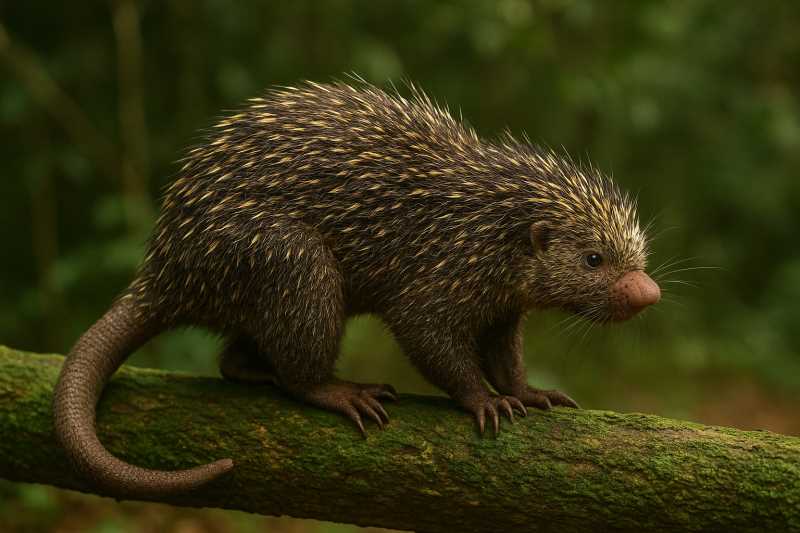
The Bahian Hairy Dwarf Porcupine is a small to medium-sized rodent, characterized by its distinctive coat of quills and hair. Unlike the more commonly known North American porcupines, this species has a more subtle appearance. The quills, which are modified hairs, are shorter and thinner, providing a spiky defense mechanism against predators.
Typically, the Bahian Hairy Dwarf Porcupine measures between 30 to 45 centimeters in length, with an additional prehensile tail that can reach up to 33 centimeters. This tail is a vital adaptation, allowing the porcupine to maneuver adeptly through the dense forest canopy. Its body is covered with a mix of yellowish-brown fur and interspersed quills, offering effective camouflage among the branches and leaves of its arboreal habitat.
The head of the Bahian Hairy Dwarf Porcupine is small and rounded, featuring a blunt snout. It possesses large, expressive eyes adapted for nocturnal vision, and its ears are small and rounded. The feet are equipped with strong claws, facilitating its climbing abilities.
Range and Habitat
The Bahian Hairy Dwarf Porcupine is endemic to Brazil, with its distribution primarily confined to the Atlantic Forest biome. This region, known for its exceptional biodiversity, stretches along the eastern coast of Brazil, from the state of Rio Grande do Norte to Rio Grande do Sul.
These porcupines inhabit a variety of forested environments within this biome, including lowland rainforests, montane forests, and secondary forests. They are arboreal by nature, spending the majority of their lives in the trees where they find both food and protection. Their presence is crucial for the maintenance of the forest ecosystem, as they contribute to seed dispersal through their feeding habits.
Behavior and Diet
The Bahian Hairy Dwarf Porcupine is primarily nocturnal, exhibiting peak activity during the night. This behavior helps them avoid many diurnal predators. During the day, they rest in tree hollows or dense foliage, relying on their camouflage and quills for protection.
Their diet consists mainly of plant material, including leaves, fruits, seeds, and bark. They are known to forage alone, using their keen sense of smell to locate food. The porcupine’s strong teeth and jaw muscles enable it to chew through tough vegetation, making it an effective herbivore in its environment.
Social interactions among Bahian Hairy Dwarf Porcupines are limited, with individuals generally leading solitary lives. However, they communicate through a series of vocalizations, scents, and physical gestures, particularly during the mating season.
Identification Tips (Field Recognition Cues)
Recognizing the Bahian Hairy Dwarf Porcupine in the wild requires attention to several key characteristics:
- Size and Shape: Look for a small to medium-sized rodent with a compact, rounded body and a long, prehensile tail.
- Coloration: Note the yellowish-brown fur interspersed with shorter, thinner quills that are not as prominent as those of other porcupine species.
- Habitat: They are typically found in the trees of the Atlantic Forest, so scanning the canopy in these regions can increase chances of spotting them.
- Behavior: Nocturnal activity and solitary behavior are indicative of this species. Listen for rustling leaves or vocalizations at night.
Conservation Status (With Threats and Protections)
The Bahian Hairy Dwarf Porcupine is currently listed as Least Concern by the International Union for Conservation of Nature (IUCN). However, like many species within the Atlantic Forest, it faces significant threats due to habitat loss and fragmentation.
Deforestation for agriculture, urban development, and logging are the primary drivers of habitat destruction in the region. These activities not only reduce the available habitat but also isolate populations, making it difficult for genetic diversity to be maintained.
Conservation efforts are focused on protecting and restoring the Atlantic Forest through reforestation projects and the establishment of protected areas. Organizations are working to promote sustainable land-use practices that benefit both wildlife and local communities.
Frequently Asked Questions
1. What is the primary diet of the Bahian Hairy Dwarf Porcupine? The Bahian Hairy Dwarf Porcupine primarily feeds on leaves, fruits, seeds, and bark, making it an essential herbivore in its forest ecosystem.
2. How does the Bahian Hairy Dwarf Porcupine protect itself from predators? This species relies on its camouflage and a coat of shorter, thinner quills for protection. When threatened, it uses its quills defensively.
3. Where can the Bahian Hairy Dwarf Porcupine be found? Endemic to Brazil, it is primarily found in the Atlantic Forest biome, inhabiting various forested environments along the eastern coast.
4. What are the main threats to the Bahian Hairy Dwarf Porcupine? The primary threats include habitat loss and fragmentation due to deforestation for agriculture, urban development, and logging activities.
5. Are Bahian Hairy Dwarf Porcupines social animals? No, they are generally solitary but communicate through vocalizations, scents, and gestures, especially during mating season.
Related posts